An 8-Year-Old Girl Living with One of the World’s Rarest Aging Disorders
Around the world, many children face rare medical conditions that can change their lives from an early age. One of the most extraordinary is Hutchinson-Gilford Progeria Syndrome, commonly known as Progeria, a genetic disorder that causes signs of accelerated aging during childhood.
An eight-year-old girl named Lily is living with this rare condition. Although she is still very young, her body has already developed several physical characteristics ᴀssociated with premature aging.
When Lily was born, she appeared to be a normal, healthy baby. However, as she grew older, her parents began noticing unusual changes in her development.
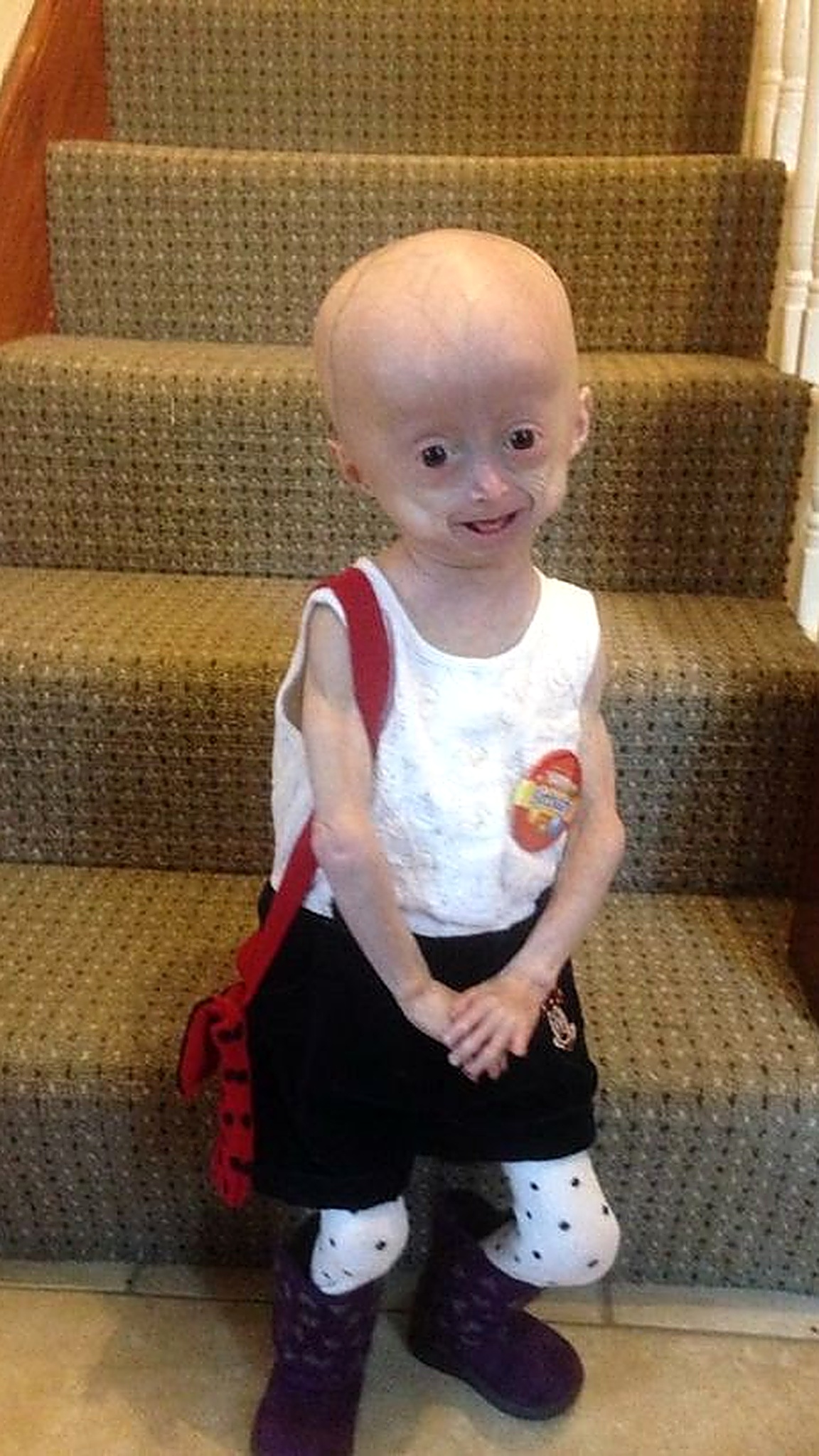
She struggled to gain weight, and her height remained significantly below that of other children her age. Her hair gradually became thinner, while her skin appeared increasingly delicate and тιԍнт. The loss of fat beneath her skin made her arms and legs look unusually thin, and the veins beneath her skin became more noticeable.
Her facial features also became distinctive. She developed prominent eyes, a small lower jaw, a narrow nose, and a relatively large head compared with her face.
After a series of medical examinations and genetic tests, doctors identified the cause of these changes: Hutchinson-Gilford Progeria Syndrome.
The disorder is ᴀssociated with a mutation in the LMNA gene, which causes the production of an abnormal protein known as progerin. This protein affects the structure of cells and contributes to the premature aging process.
However, the most serious consequences of Progeria are not simply physical changes. The condition can affect bones, joints, and the cardiovascular system. Children living with Progeria face an increased risk of artery hardening and serious heart complications.
For Lily, regular medical examinations are essential to monitor her health and detect potential complications as early as possible.
Despite these challenges, Lily continues to enjoy the simple pleasures of childhood. She loves colorful picture books, music, drawing, and spending time with the people she loves.
Her parents remain devoted to supporting her development and making every day as meaningful and joyful as possible.
Although Progeria currently has no definitive cure, medical advances have introduced treatments that can help manage the condition and improve the lives of affected children.
Lily’s story is a reminder that a medical diagnosis should never define an entire life. Beneath the physical signs of premature aging is an eight-year-old girl who wants to laugh, learn, make friends, and enjoy the world around her.
She may face challenges that most children never experience, but she deserves the same love, dignity, and happiness as every other child.