A Little Girl Born with Severe Hydrocephalus: Her Battle Began Before Birth
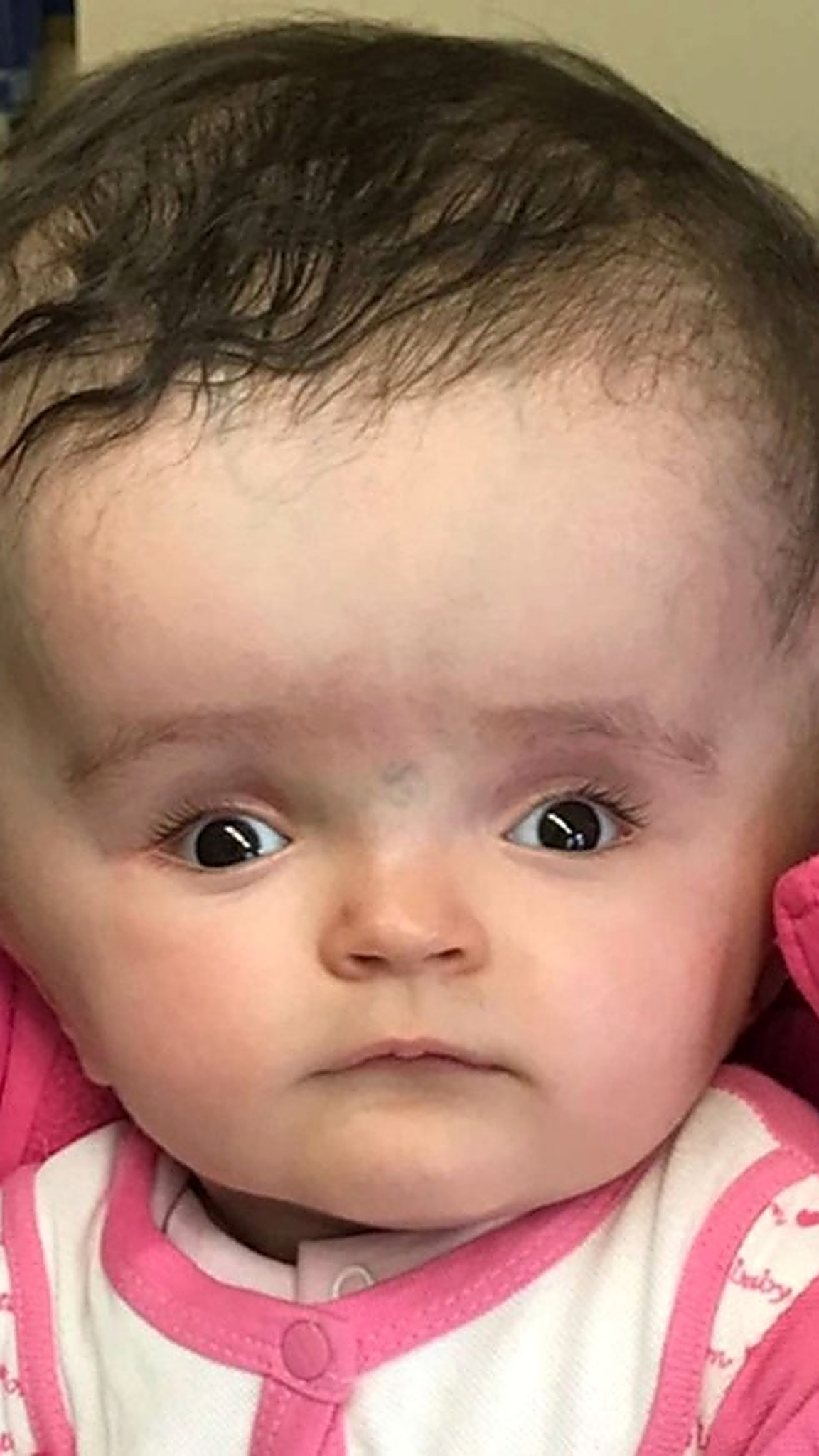
In a family living in North Africa, the excitement of expecting a new baby was overshadowed by devastating news during pregnancy.
During a prenatal ultrasound, doctors discovered that the unborn girl’s head was growing abnormally large. Further examinations revealed an accumulation of cerebrospinal fluid inside her brain, indicating a condition known as hydrocephalus.
From that moment, her parents knew their daughter would face a difficult medical journey.
As the pregnancy progressed, the fluid continued to accumulate, causing the baby’s head to become increasingly enlarged. Her parents worried about the potential damage to her brain and the complications she might experience after birth.
When she finally entered the world, the physical signs of the condition were immediately noticeable. Her head was disproportionately large compared with her small body, making her appearance very different from that of other newborns.
Hydrocephalus is a neurological condition caused by an abnormal accumulation of cerebrospinal fluid within the brain’s ventricles. This fluid normally protects the brain and spinal cord, but when its circulation or absorption is disrupted, it can build up and increase pressure inside the skull.
In newborns and infants, this pressure can cause the skull to expand because the bones have not yet completely fused. Without appropriate treatment, prolonged pressure may damage brain tissue and interfere with normal development.
Depending on the severity of the condition, affected children may experience developmental delays, vision problems, difficulties with movement, seizures, and other neurological complications.
For this little girl, medical attention was necessary from the very beginning. Doctors needed to ᴀssess the severity of the fluid accumulation and determine whether surgery could help relieve the pressure inside her brain.
One commonly used treatment is the placement of a shunt, a small medical device that drains excess cerebrospinal fluid from the brain into another part of the body, usually the abdomen. In selected cases, other surgical procedures may be considered.
For her parents, every day brought a mixture of fear, hope, and uncertainty. They could not change the diagnosis, but they remained determined to give their daughter the best possible care.
Her journey is a reminder that some children’s medical battles begin long before their first breath. Although hydrocephalus can be a serious and potentially life-threatening condition, early diagnosis and appropriate treatment can make a significant difference.
She is not defined by the size of her head or the condition she was born with. She is a child who deserves compᴀssion, medical support, and the chance to experience a future filled with love.