A 12-Year-Old Boy in India With a Rare Condition That Causes His Head to Bend to One Side
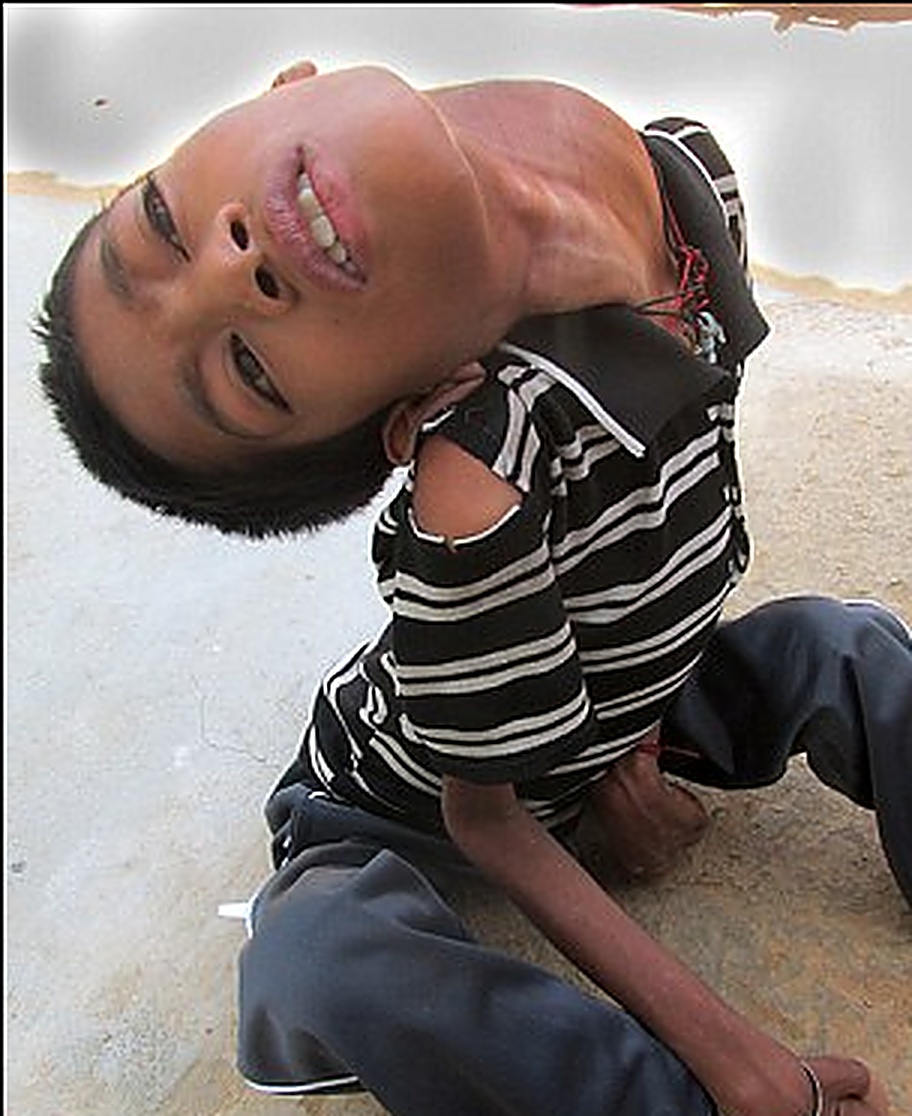
At just 12 years old, a young boy in India is facing an unusual medical condition that has dramatically changed the way he holds his head and neck.
While most children his age can comfortably keep their heads upright, look straight ahead, and move their necks freely, this boy struggles with a very different reality.
His head bends sharply toward one side, creating an abnormal posture that makes his appearance noticeably different from that of other children.
What should be a normal position for his head has become a difficult physical challenge. Instead of resting naturally above his shoulders, his head appears pulled sideways, as though his neck cannot support it in a straight position.
For a child who should be enjoying school, playing outdoors, and spending time with friends, living with such a condition can affect many aspects of everyday life.
An Unusual Abnormality Affecting His Head and Neck
The most striking feature of the boy’s condition is the severe sideways bending of his head.
This type of abnormal head positioning can have several possible medical causes. One condition doctors may consider is torticollis, commonly known as wry neck.
Torticollis occurs when the muscles or structures responsible for controlling the position of the neck become shortened, тιԍнтened, or otherwise abnormal.
In some children, it develops during infancy because of congenital abnormalities involving the sternocleidomastoid muscle, which runs along either side of the neck.
In other cases, abnormal head positioning may develop later in childhood because of neurological conditions, muscle disorders, injuries, or abnormalities affecting the cervical spine.
Another possible explanation is cervical dystonia, a neurological movement disorder characterized by involuntary muscle contractions.
These contractions can cause the neck to twist, tilt, or pull the head into unusual positions. In severe cases, the head may remain persistently turned or bent to one side.
However, the appearance of a tilted head alone is not enough to determine which condition a child has.
How Such a Condition Can Affect Daily Life
A severe abnormal head posture can create challenges that extend beyond physical appearance.
Depending on the underlying cause, the boy may have difficulty maintaining a comfortable position while sitting, reading, writing, or looking forward.
Turning his head from side to side may also become difficult, particularly if the neck muscles are тιԍнт or involuntary contractions are involved.
Some children with similar conditions experience neck pain, muscle stiffness, headaches, or discomfort after maintaining the same posture for extended periods.
In more complicated cases, abnormal positioning can interfere with balance, coordination, and everyday movements.
The degree of difficulty varies depending on the cause and severity of the condition.
For a 12-year-old child, these limitations can make ordinary activities more demanding than they are for other children his age.
The Emotional Challenges of Growing Up With a Visible Condition
Physical differences can be particularly difficult during childhood and adolescence.
At 12 years old, children are developing their idenтιтies, building friendships, and becoming increasingly aware of their appearance.
When a child’s head remains noticeably bent to one side, other people may stare or ask questions.
These reactions can make a child feel uncomfortable, embarrᴀssed, or isolated.
Activities such as attending school, participating in group games, or taking pH๏τographs may become emotionally challenging.
However, it is important to remember that a physical condition does not define a child’s intelligence, personality, or potential.
He deserves the same respect, friendship, and opportunities as every other child.
Medical Examination and Possible Treatment
The appropriate treatment depends entirely on the underlying cause of the abnormal head position.
Doctors may perform a detailed physical examination to ᴀssess neck movement, muscle strength, posture, and neurological function.
Depending on their findings, additional investigations may include cervical spine imaging, MRI scans, or other neurological ᴀssessments.
If the problem is caused by muscular torticollis, treatment may involve physical therapy, stretching exercises, and other interventions recommended by specialists.
If cervical dystonia is diagnosed, treatment options may include botulinum toxin injections, medication, and specialized rehabilitation.
When an underlying structural abnormality is identified, more specific treatment may be necessary.
Early diagnosis is important because persistent abnormal neck positioning can sometimes lead to additional problems involving posture, movement, and musculoskeletal development.
A Childhood That Deserves Understanding
At only 12 years old, this boy is facing challenges that many children will never experience.
His unusual head position may make everyday activities more difficult, but it should never become a reason for others to judge or reject him.
Behind his physical condition is a young person with dreams, emotions, and the desire to experience a normal childhood.
He deserves access to appropriate medical care, education, friendship, and an environment where he can feel accepted.
His story is a reminder that some children face extraordinary physical challenges from a very young age.
What they need most is not judgment or fear, but compᴀssion, understanding, and the opportunity to live their lives with dignity.