PART 2 – THE WIFE HE THOUGHT WOULD ALWAYS WAIT
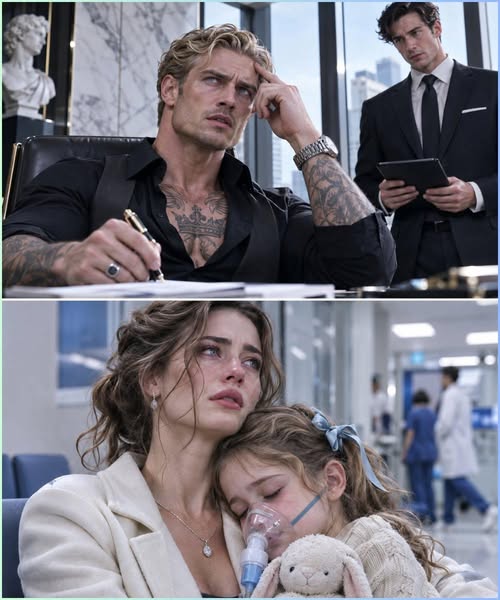
Instead, she glanced through the gallery windows at Russell and Tessa standing beneath the enormous Harborstone presentation screen.
“Your husband is building something important. You should be proud of him instead of constantly demanding his attention.”
I looked at her.
“Did you know he gave my exhibition to Tessa?”
“Russell made a business decision.”
“My father’s drawings were already installed.”
“And they can be installed again.”
“One of them was destroyed.”
Lorraine’s expression barely changed.
“Then perhaps you should have been more careful with something so valuable.”
I stared at her, suddenly understanding something I had spent five years refusing to accept.
This family didn’t consider my feelings important.
They considered my silence convenient.
I placed the remaining exhibition catalogs on a nearby table.
“Please tell Russell that I won’t be coming home tonight.”
Lorraine smiled.
“Don’t be dramatic, Maren.”
I walked away without answering.
That was the last time I tried to explain myself to her.
At home, Poppy was sitting on the living room rug, surrounded by birthday decorations she had helped me prepare.
She was four years old, with Russell’s dark hair and my father’s habit of asking questions nobody expected.
“Mommy, did Daddy come to your birthday party?”
I knelt beside her.
“No, sweetheart.”
“Is he coming tomorrow?”
I brushed a strand of hair from her forehead.
“I don’t know.”
She considered that answer.
Then she picked up a small paper crown.
“I made this for Daddy too.”
My heart тιԍнтened.
“That’s very sweet, baby.”
“Can I put it in his office?”
I couldn’t answer immediately.
That night, after Poppy fell asleep, I opened my laptop.
I searched through my old architectural files.
Three years earlier, I had developed the original Harborstone concept. I had created the preliminary designs, researched the accessibility requirements, and prepared the structural coordination documents.
Russell had told me the project was too expensive.
He had rejected it.
Now Tessa was presenting the same concept as her own.
I opened the original files.
My name was still attached to every document.
The revision history was intact.
So were the dated emails in which I had sent Russell the complete concept.
Then I found something that made my stomach turn.
A newer engineering report had been uploaded into the project folder.
It contained several changes I had never approved.
The proposed reduction in structural materials had been presented as technically validated.
But the original calculations showed that the design required further review before those changes could be considered safe.
I read the report twice.
Then I called Daniel Hayes.
Daniel had been my father’s closest professional colleague and was now a senior structural engineer at an independent consulting firm in Boston.
He answered despite the late hour.
“Maren? Is everything okay?”
“Daniel, I need you to look at something.”
I sent him the files.
There was a long silence.
Finally, he said, “Where did you get this version?”
“From Whitcomb Development’s project folder.”
“Did you authorize these revisions?”
“No.”
“Did you sign the engineering approval?”
“No.”
His voice became serious.
“Maren, don’t touch these files. Preserve every original version, every email, and every transmission record. This needs an independent review.”
I swallowed.
“Do you think it’s dangerous?”
“I think nobody should be presenting these calculations as approved until they’ve been properly verified.”
That was the moment I realized Russell hadn’t simply taken my work.
He had allowed someone to attach my professional history to a document I had never approved.
And if something went wrong, my name could be dragged into it.
I spent the rest of the night making copies of everything.
At six the next morning, I packed a suitcase.
I put Poppy’s clothes in one bag, my father’s surviving drawings in another, and the few personal documents I needed into a folder.
Before leaving, I walked into Russell’s office.
His wedding pH๏τograph was still on the desk.
He was smiling in it, his arm around my waist.
I remembered the man in that pH๏τograph.
I wasn’t sure he had ever existed outside my memories.
I took off my wedding ring and placed it beside the pH๏τograph.
Then I wrote a note.
I am no longer waiting.
I left Greenwich with my daughter before sunrise.
By noon, we were on a flight to California.
I had no intention of returning to the life I had spent years trying to repair.
Russell didn’t notice I was gone until the following evening.
He had spent the entire night celebrating Harborstone’s successful investor presentation.
Tessa had been beside him.
Lorraine had praised her in front of everyone.
And Russell had received three congratulations from potential investors who believed the project was entirely Tessa’s achievement.
At approximately nine the next morning, he finally called me.
My phone was switched off.
He tried again.
Then he called the house.
Nobody answered.
He called the housekeeper.
“Where’s Maren?”
There was a pause.
“Mrs. Whitcomb left yesterday morning, sir.”
“Left where?”
“I don’t know, sir. She packed her things and took Poppy.”
Russell stood up.
“What do you mean she took Poppy?”
“She said she was going away.”
“Why didn’t you tell me?”
The housekeeper sounded uncomfortable.
“Sir, I thought you knew.”
He ended the call and immediately contacted Simon.
Within twenty minutes, Simon was standing in his office.
“Find out where my wife is.”
Simon didn’t move.
“Sir, there’s something you need to see.”
He placed a folder on the desk.
Inside were copies of the divorce notification, a letter from my attorney, and a formal request that Russell communicate through legal representatives regarding custody and financial arrangements.
Russell stared at the documents.
“She filed for divorce?”
“Yes, sir.”
“When?”
“Three weeks ago.”
“Why wasn’t I told?”
“Your attorney received the documents. You were copied on the correspondence.”
Russell opened his email.
There it was.
A message he had dismissed as routine legal correspondence.
He had never opened the attachment.
For a moment, he looked genuinely confused.
Then his expression hardened.
“She can’t just take my daughter across the country.”
Simon spoke carefully.
“Mrs. Whitcomb has been Poppy’s primary caregiver for years. Her attorney has provided the necessary documentation regarding the move and the proposed custody arrangements.”
Russell pushed the folder away.
“This is ridiculous. She’ll come back.”
Simon said nothing.
Russell looked up.
“Why are you looking at me like that?”
“Because, sir, I don’t think you understand how serious this is.”
“I’m her husband.”
“Legally, for the moment. But that doesn’t mean she intends to remain your wife.”
Three days later, Russell drove to our house.
He expected to find an argument waiting for him.
He expected my clothes in the closet, my books on the shelves, and Poppy’s toys scattered across the bedroom floor.
Instead, he found empty spaces.
My dressing table was bare.
The pH๏τographs were gone.
Even the little ceramic bird my father had given me before my wedding had disappeared.
Russell entered Poppy’s bedroom.
Her favorite stuffed rabbit was missing.
So was her little pink backpack.
On the bedside table, he found a folded hospital discharge report.
His eyes moved across the page.
Poppy Whitcomb.
Emergency pediatric evaluation.
Dehydration and high fever.
The date was five weeks earlier.
He frowned.
He hadn’t known about this.
He turned the page.
There was a declined credit card receipt from the same evening.
The amount was relatively small.
But beneath it, a handwritten note explained that I had needed to use another payment method after the family card was declined.
He remembered that evening.
He had been in Manhattan with Tessa.
I had called him twice.
He had declined both calls because he was discussing a major investment.
He had sent me a message afterward.
I’m busy. Ask the housekeeper if you need anything.
Russell sat down on Poppy’s bed.
Then he noticed a drawing taped to the wall.
Three figures stood beside a birthday cake.
A woman.
A little girl.
And an empty space where another person might have been.
At the bottom, in crooked purple letters, Poppy had written:
Mommy and me. Daddy is working.
Russell stared at it for a long time.
He remembered the night I had asked him to read Poppy a bedtime story.
He had told me to do it because he had a meeting.
He remembered her first dance recital.
He had promised to attend but sent Tessa in his place with a bouquet of flowers.
He remembered the school family picnic.
He had been too busy.
Suddenly, he realized that he couldn’t remember the last time he had personally taken his daughter to the doctor.
He couldn’t remember the last time he had put her to bed.
He couldn’t even remember what her favorite bedtime story was.
His phone rang.
It was Lorraine.
“Russell, darling, are you coming to dinner? Tessa will be there.”
He looked at the drawing.
“Mother, did you know Maren was taking Poppy to the hospital?”
A pause.
“Oh, that little fever? She was being overly anxious.”
“She was in the emergency department.”
“Children get sick. It happens.”
“Why didn’t anyone tell me?”
Lorraine sighed.
“Because you have a company to run. Maren knows that.”
Russell closed his eyes.
“Did you know she was leaving?”
“I suspected she was trying to get your attention.”
“Mother, she filed for divorce.”
Silence.
Then Lorraine said something that made him grip the phone.
“Don’t worry. Women like Maren always come back when they realize how difficult life is without a wealthy husband.”
Russell ended the call.
For the first time, he didn’t know what to say to his mother.
Meanwhile, in California, I was beginning a different life.
It wasn’t glamorous.
I rented a modest two-bedroom apartment in Pasadena.
The furniture came from secondhand stores. The kitchen table had a scratch across the middle, and the bedroom curtains didn’t quite reach the floor.
But every morning, I woke up without wondering whether Russell would be angry.
I enrolled Poppy in a nearby preschool.
I also contacted an architecture firm that had previously expressed interest in my work.
The owner, Evelyn Carter, was a woman in her late fifties who had spent thirty years designing public libraries and community buildings.
She reviewed my portfolio for nearly an hour.
Then she looked at me.
“Why haven’t you worked under your own name?”
I smiled sadly.
“Life got complicated.”
“That’s not an answer.”
I looked down at my hands.
“My husband had a company. I helped with projects, but my contributions were never formally recognized.”
Evelyn closed the portfolio.
“Then perhaps it’s time somebody recognized them.”
She offered me a position as a senior design consultant.
It wasn’t a fortune.
But it was mine.
For the first time in years, I signed a professional contract using my own name.
I cried in the parking lot afterward.
Not because I was unhappy.
Because I had finally remembered who I was.
Russell’s first attempt to contact me came four days later.
He called from his personal number.
I answered because I knew he would keep trying.
“Maren.”
His voice sounded different.
Tired.
“Hello, Russell.”
“Where are you?”
“California.”
“I know that. Where in California?”
“That’s not something you need to know right now.”
He exhaled sharply.
“Can we stop playing games?”
I almost laughed.
“Which game are you referring to?”
“Don’t do this.”
“Do what?”
“Punish me because of one business decision.”
I was silent for several seconds.
Then I said, “You think I left because of one exhibition?”
“Of course. We can arrange another one. I’ll give you the gallery for an entire month.”
“Russell, my father’s exhibition was not the problem.”
“Then what is?”
I looked through the kitchen doorway.
Poppy was sitting at the table, drawing a house with a yellow roof.
I lowered my voice.
“You didn’t come when she was sick.”
“I didn’t know.”
“You didn’t ask.”
“I was working.”
“You didn’t come to her recital.”
“I sent flowers.”
“She wanted her father.”
Russell was quiet.
I continued.
“You canceled my birthday, took my father’s work off the walls, and handed my designs to another woman. You let your mother speak to me as if I were an inconvenience in your life. And you allowed someone to submit engineering revisions under my professional name without my approval.”
“That last part is being exaggerated.”
“Then explain the revision history.”
He hesitated.
“Tessa handled the presentation.”
“Did you review the documents?”
“I’m not an engineer.”
“Exactly. Neither is Tessa. That’s why the engineering approval matters.”
His voice became defensive.
“We’ll discuss that when you come home.”
“I’m not coming home.”
“Maren, I’m your husband.”
“Not for much longer.”
He went silent.
Then he asked, “What about Poppy?”
“She has a father, Russell. She just hasn’t seen much of him.”
“That isn’t fair.”
I looked at my daughter again.
“No. It wasn’t fair to her.”
I ended the call.
The following Monday, Russell received another surprise.
An independent engineering firm had requested a formal clarification regarding the Harborstone structural documentation.
Daniel Hayes had submitted a professional concern after reviewing the files I had preserved.
The issue wasn’t simply that the design had been changed.
It was that the revised calculations had been presented as verified when the necessary independent ᴀssessment had not been completed.
Russell summoned Tessa to his office.
“What exactly did you submit?”
Tessa looked startled.
“The Harborstone package.”
“Who approved the revised calculations?”
“The engineering department.”
“Which engineer?”
She hesitated.
“It’s all in the documentation.”
“I’m asking you a question.”
Tessa placed her handbag on the chair.
“Russell, why are you interrogating me?”
“Because an independent firm has raised questions about the approval.”
Her expression changed.
“That’s ridiculous. Maren is probably behind this.”
Russell looked up.
“What?”
“She was furious about the exhibition. She knows those drawings better than anyone. Maybe she’s trying to sabotage the project.”
“Did Maren approve the revisions?”
Tessa looked away.
“She helped develop the original concept.”
“That isn’t what I asked.”
Tessa’s voice became colder.
“You gave me responsibility for the presentation. You said you trusted me.”
“I did.”
“And now you’re questioning me because your wife decided to leave?”
Russell stared at her.
For the first time, he noticed how quickly she had turned a professional question into a personal accusation.
He requested the original files.
Tessa tried to change the subject.
He refused.
Within hours, the company’s compliance department had identified discrepancies between the original design documents and the presentation submitted to investors.
Several revisions had been attributed to my professional credentials.
None had my authorization.
The project was temporarily placed under review.
And suddenly, Russell had a much bigger problem than a wife who refused to answer his calls.
Two weeks later, he flew to California.
He arrived outside my apartment shortly after six in the evening.
I was returning from work with Poppy when I saw him standing beside his car.
She stopped walking.
“Daddy?”
Russell’s face changed immediately.
He crouched.
“Hello, sweetheart.”
Poppy didn’t run toward him.
She held my hand.
“Are you staying for dinner?”
Russell looked at me.
Then at his daughter.
“If your mommy says it’s okay.”
Poppy considered this.
“Can you read my rabbit book?”
He swallowed.
“I’d love to.”
I allowed him to spend an hour with her in the apartment.
He sat on the rug while she showed him her drawings.
He listened to a story about a rabbit who couldn’t find his family.
He asked her about preschool.
And when she showed him a picture of three people standing beside a cake, he recognized it immediately.
“Is this the birthday picture you made?”
Poppy nodded.
“I made you a crown too, Daddy. But you didn’t come.”
Russell’s face тιԍнтened.
“I know, sweetheart. I’m sorry.”
“Were you working?”
“Yes.”
She looked at him seriously.
“Are you always working?”
He didn’t answer.
For once, he had no excuse that a four-year-old could understand.
After Poppy went to brush her teeth, Russell approached me.
“Can we talk?”
“We can talk here.”
He looked around the apartment.
“You’re living like this?”
I folded my arms.
“Like what?”
“Like you don’t have anything.”
“I have a job, a home, and a daughter who knows I will show up when she needs me.”
He looked down.
“I can give you everything you had before.”
“That was never the problem.”
“I’ve made mistakes.”
“You made choices, Russell.”
He rubbed his forehead.
“I didn’t realize how bad things had become.”
“That is precisely why I left.”
His eyes filled with frustration.
“Tell me what you want me to do.”
I looked directly at him.
“Stop asking what it takes to bring me back. Start asking why I had to leave.”
He stood motionless.
Then he whispered, “I miss you.”
I felt the familiar ache.
But it no longer controlled me.
“You miss the person who made your life easier,” I said. “You miss having someone at home who understood you, someone who solved problems before you even knew they existed. But you never stopped to wonder whether she was happy.”
“That isn’t true.”
“Then tell me something about my life that has nothing to do with your company.”
He opened his mouth.
Nothing came out.
I nodded.
“That’s what I thought.”
He looked toward Poppy’s bedroom.
“Can I see her again?”
“Yes. We can arrange visits through our attorneys.”
He looked at me.
“And us?”
I took a slow breath.
“There is no us to arrange anymore.”
The following month, the Harborstone situation became public within the industry.
An independent technical review identified serious unresolved questions in the revised documentation. The project was suspended pending additional engineering work and a full examination of the approval process.
Whitcomb Development issued a statement.
Tessa was placed on administrative leave while the company investigated the matter.
Russell was questioned about his role in approving the presentation.
He was not accused of personally preparing the disputed calculations, but his decision to proceed without ensuring proper verification had damaged the company’s credibility.
The board demanded accountability.
And for the first time, Russell had to explain his decisions without hiding behind the people who had trusted him.
Meanwhile, my attorney submitted my original design files, dated emails, and the revision history establishing my actual contributions.
I also requested formal correction of the professional attribution.
I wasn’t interested in revenge.
I wanted my work returned to my name.
Three months after I left Greenwich, Russell sent me a letter.
It wasn’t a demand.
It wasn’t a promise of expensive gifts.
It was an apology.
He wrote about the hospital night, Poppy’s recital, my father’s exhibition, and the years he had mistaken my patience for permission.
He admitted that he had allowed Tessa to take credit for work she hadn’t created.
He admitted that he had dismissed my concerns because acknowledging them would have forced him to confront his own behavior.
And he admitted something else.
I thought you would always be there because you had always been there. I never understood that your staying was a choice, not an obligation.
I read the letter twice.
Then I placed it in a drawer.
I didn’t reply.
Because an apology could acknowledge the past.
It couldn’t automatically restore the future.
Six months later, I stood inside a newly renovated public library in Pasadena.
The building had large windows, wide accessible entrances, a children’s reading area, and a courtyard filled with native plants.
My design had been selected for the renovation.
My name appeared on the architectural plaque beside the entrance.
Maren Fletcher.
Not Mrs. Russell Whitcomb.
Just my name.
Poppy stood beside me holding a small bouquet of white roses.
“Mommy, are these for Grandpa?”
I smiled.
“Yes, sweetheart.”
We had arranged a small display of my father’s surviving drawings inside the library.
His bridge sketch, carefully restored, occupied the center of the exhibition.
Daniel had helped arrange the archival materials.
Evelyn had written a beautiful introduction.
And for the first time, people were looking at my father’s work because it deserved to be seen.
Not because it was useful to somebody else’s business presentation.
As I stood beside the display, my phone vibrated.
A message from Russell.
I heard about the library. Congratulations, Maren. Your father would have been proud.
I stared at the screen.
Then another message arrived.
I know you don’t owe me another chance. I just want you to know that I’m finally learning how to be a father. Poppy deserves better than the man I was.
I didn’t respond immediately.
Across the room, Poppy was showing Daniel her drawing.
This time, it contained three people.
A little girl.
Her mother.
And her grandfather, standing beside a large building.
There was no empty space.
I put my phone away.
Russell had finally learned that a family wasn’t something a man could neglect and expect to find waiting exactly where he had left it.
And I had learned something equally important.
I didn’t need him to regret losing me.
I needed to stop losing myself.
That evening, as the library lights illuminated the restored drawings, Poppy slipped her little hand into mine.
“Mommy?”
“Yes, baby?”
“Are we happy now?”
I knelt and kissed her forehead.
“Yes, sweetheart.”
She smiled.
“Good. Because I like our new home.”
I held her close.
And for the first time in a very long time, I believed her.
The End of Part 2.