**Shah Gul Mazari, 9 Years Old – The Boy Whose Abdomen Swelled Larger Than a Ball Due to a Rare Intestinal Disease**
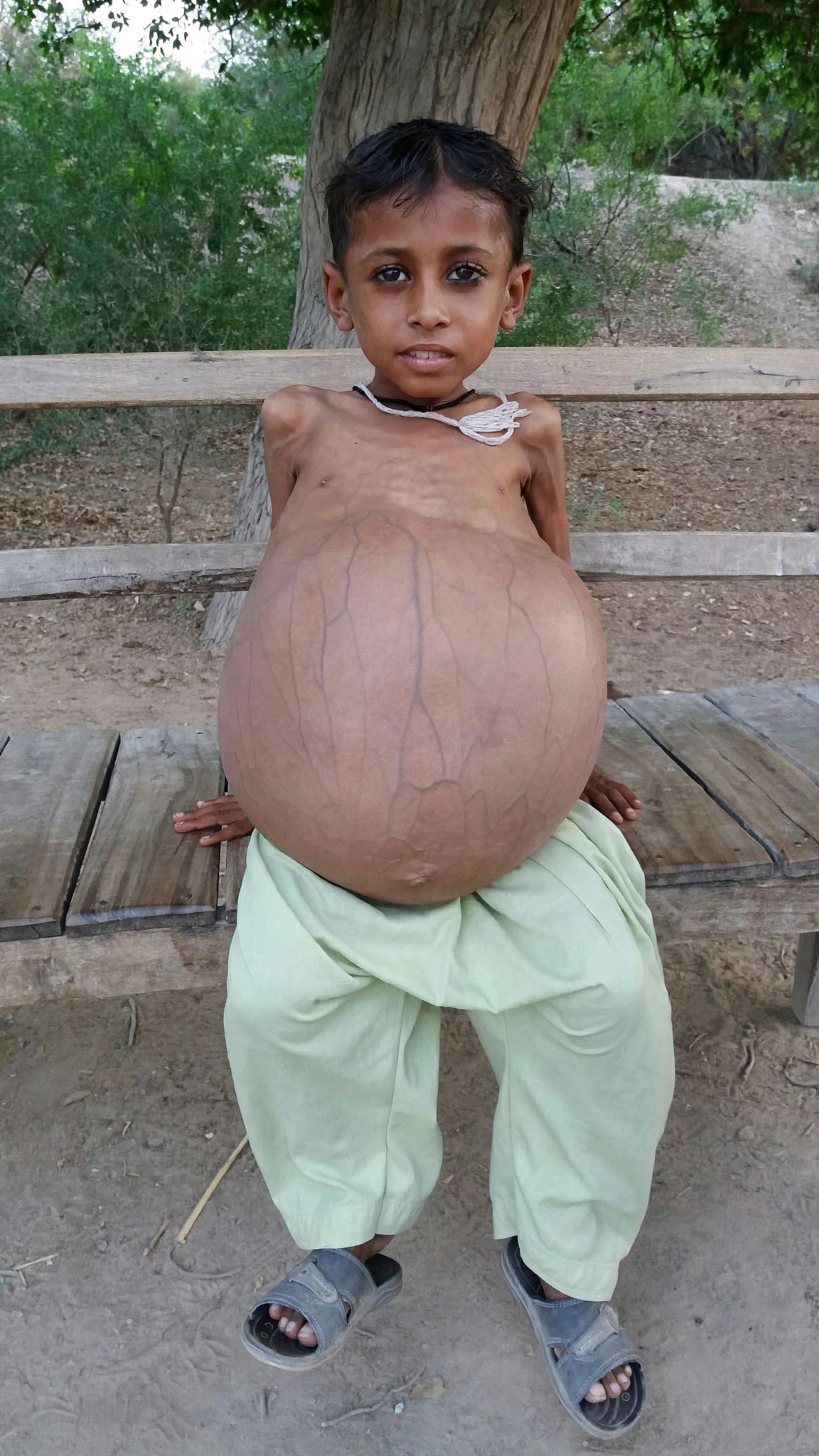
Shah Gul Mazari is a 9-year-old boy from Pakistan who has been living with a serious congenital digestive disorder known as **Hirschsprung’s disease**, also called congenital megacolon. This rare condition affects the nerves responsible for controlling normal movement inside the large intestine, preventing stool from pᴀssing through the bowel properly. 😢
As a result of this condition, waste gradually accumulates inside Shah’s intestines instead of being eliminated normally. Over time, the large intestine becomes increasingly distended as stool and gas build up behind the affected section of the bowel.
The most alarming feature of Shah’s condition is his enormous abdomen. His belly has become severely enlarged, protruding outward and appearing much larger than the rest of his body. Its rounded shape resembles an inflated ball, creating a striking difference between his swollen abdomen and his relatively thin limbs.
The swelling is not simply caused by ordinary digestive discomfort. It is the result of a serious obstruction in the normal movement of intestinal contents. As pressure builds inside the bowel, Shah may experience persistent constipation, abdominal pain, loss of appeтιтe, vomiting, and difficulty pᴀssing stool. 💔
For a child of only nine years old, living with such a condition can be exhausting. His enlarged abdomen may make it difficult to sit comfortably, walk normally, sleep, or participate in activities with other children. Eating can also become challenging because his digestive system cannot move waste through the intestines as it should.
The condition can become life-threatening if left untreated. Severe intestinal distension may lead to inflammation, intestinal infection known as enterocolitis, bowel perforation, and dangerous complications affecting the entire body.
Doctors need to evaluate Shah urgently through abdominal examinations, imaging studies, and specialized tests such as a rectal biopsy. A biopsy can identify the absence of ganglion cells in the affected section of the intestine, which is the defining feature of Hirschsprung’s disease.
Treatment generally involves surgery to remove the portion of the intestine that lacks normal nerve cells and connect the healthy bowel to the rectum. Depending on the child’s condition, doctors may first need to decompress the intestine or create a temporary colostomy before performing the definitive operation.
His family faces an extremely difficult situation. They understand that timely treatment is essential and that delaying surgery could expose their son to serious complications. Their greatest hope is to find the medical care necessary to relieve the intestinal obstruction and give Shah a chance to live a healthier life. 🙏
Behind his dramatically swollen abdomen is a 9-year-old boy who deserves to enjoy his childhood without constant pain and medical difficulties. He deserves the chance to return to school, play with friends, eat comfortably, and grow up with hope for the future.
🌷 With timely diagnosis, appropriate surgery, and careful medical follow-up, many children with Hirschsprung’s disease can achieve significant improvements in their quality of life.
❤️ May Shah Gul Mazari receive the treatment he urgently needs, overcome this difficult illness, and grow up healthy and strong. Sending love, courage, and heartfelt wishes for recovery to Shah and every child fighting a serious disease around the world! ❤️