Lu-Na: The Little Girl Adopted From China Who Found New Possibilities With a Prosthetic Leg
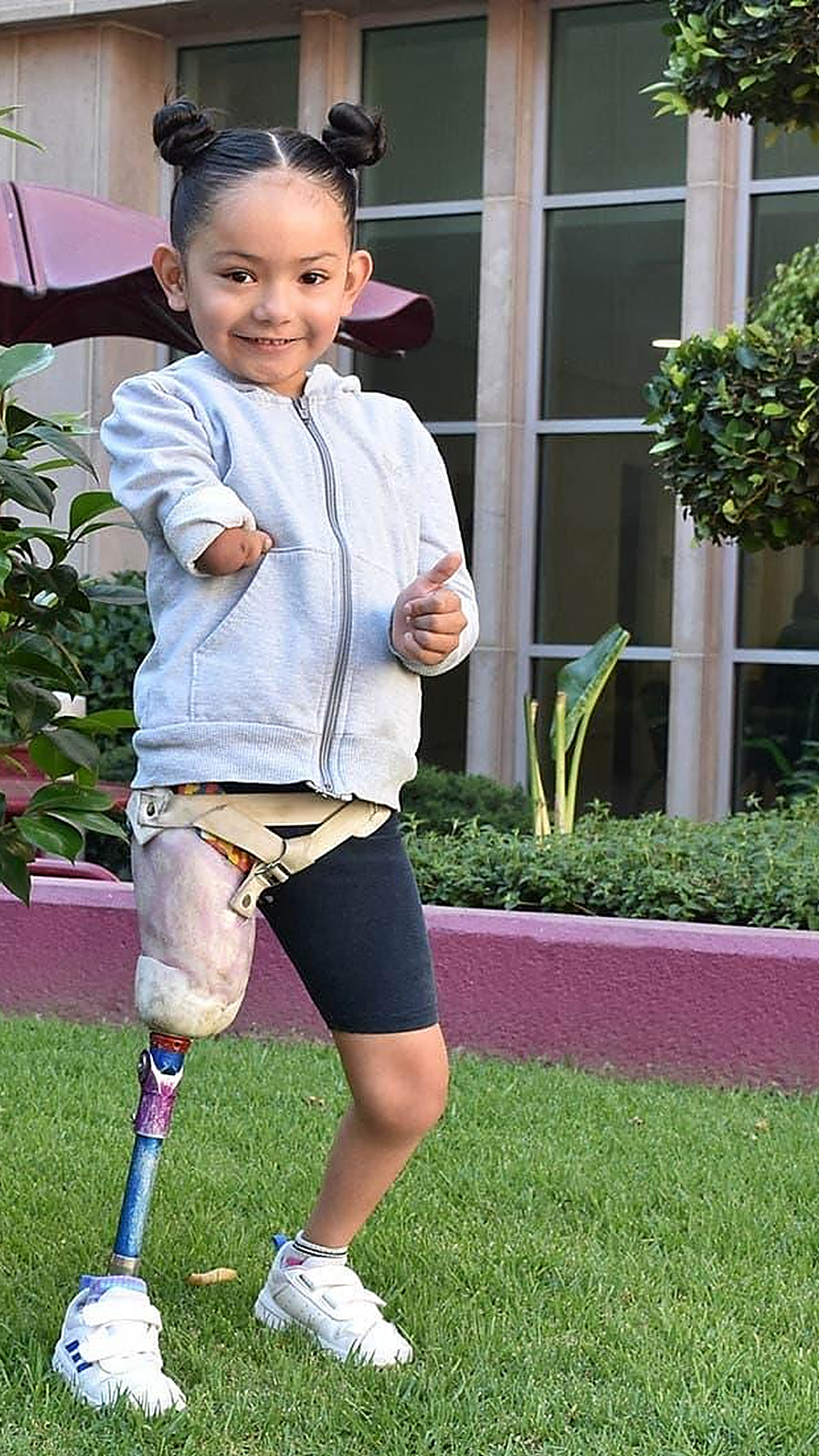
Lu-Na was born in China with a rare congenital condition that affected the development of her right leg. Her tibia, the main bone in the lower leg, had not developed properly, leaving her with a significant physical difference that affected the structure and movement of her leg.
During the adoption process, her future parents in the United States learned about her medical condition. They were informed that Lu-Na would likely face physical challenges throughout childhood and might require medical treatment, surgery, and specialized prosthetic equipment.
Despite knowing that the journey ahead could involve difficult medical decisions and long-term care, the family decided to proceed with the adoption. They wanted to give the little girl a permanent home where she would be loved, supported, and encouraged to experience life to the fullest.
When Lu-Na joined her adoptive family in the United States, her parents began preparing for the medical care she would need. They understood that her condition would require ongoing attention, particularly as she grew and her mobility needs changed.
When she was two years old, doctors performed an operation to amputate her right leg below the knee. The procedure was intended to provide a more suitable foundation for using a prosthetic limb, allowing her to develop greater mobility as she grew older.
After surgery, Lu-Na began adapting to life with a prosthetic leg. Learning to move with the device was a gradual process. She needed time to become comfortable with its fit, develop balance, and practice walking.
Her family remained beside her throughout rehabilitation, encouraging her as she learned new movements and became more confident.
As Lu-Na grew older, another important part of her journey became increasingly familiar: replacing and adjusting her prosthetic leg. Because children grow quickly, their prosthetic devices must be regularly modified or replaced to accommodate changes in their bodies.
Each new prosthesis represented another stage of her development. It offered her the opportunity to improve her movement, participate in more activities, and explore the world with greater independence.
For Lu-Na, these changes were not simply about receiving new medical equipment. They were opportunities to discover what she could do. Running, playing, and exploring became important parts of the childhood her parents had hoped she would enjoy.
Her journey also demonstrated the importance of family support. From the moment her parents learned about her condition during the adoption process, they remained committed to helping her overcome the challenges ᴀssociated with her physical development.
They wanted Lu-Na to grow up knowing that her missing lower leg did not determine her value or limit her dreams. They hoped she would develop confidence, independence, and the courage to try new things.
Lu-Na’s story is a beautiful reminder that adoption can bring together people from different parts of the world and create a family through love and commitment.
Her childhood may have included surgery, rehabilitation, and many prosthetic replacements, but each stage also brought new opportunities.
And with every new prosthetic leg, Lu-Na gained another chance to take steps toward the life her family had always hoped she could enjoy.