The Little Boy Living With Recessive Dystrophic Epidermolysis Bullosa: A Rare Disease That Makes His Skin Extremely Fragile
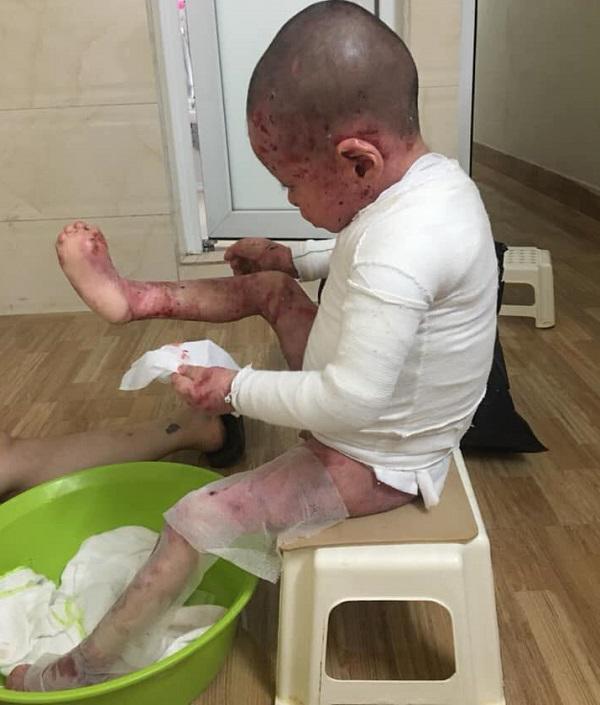
For most children, a simple hug, a playful touch, or running around outside is an ordinary part of childhood. But for one little boy, even these everyday experiences can become painful and frightening.
His skin is so fragile that minor friction or pressure can cause large, painful blisters to develop. Sometimes, simply rubbing against clothing or accidentally bumping into an object can leave his skin damaged.
The boy suffers from Recessive Dystrophic Epidermolysis Bullosa (RDEB), a rare and severe inherited skin disorder commonly known as ʙuттerfly Skin Disease.
Unlike ordinary skin injuries, which usually heal without leaving significant damage, the wounds ᴀssociated with this condition can recur throughout life. Repeated blistering and healing may gradually cause extensive scarring, deformities, and serious complications affecting other parts of the body.
What Is Recessive Dystrophic Epidermolysis Bullosa?
Recessive Dystrophic Epidermolysis Bullosa is a severe subtype of Epidermolysis Bullosa (EB), a group of rare genetic disorders characterized by extremely fragile skin.
The condition is caused by mutations in both copies of the COL7A1 gene.
This gene is responsible for producing type VII collagen, a protein that forms tiny structures called anchoring fibrils.
These fibrils help attach the outer layer of the skin, known as the epidermis, to the underlying dermis.
In children with RDEB, type VII collagen is either severely reduced, abnormal, or absent.
Without these essential anchoring structures, the layers of skin cannot remain securely attached.
Even relatively minor friction can cause the skin to separate, resulting in fluid-filled blisters, painful wounds, and tissue damage.
Because the condition is inherited in an autosomal recessive pattern, an affected child usually inherits one altered copy of the gene from each parent.
A Skin Condition That Can Turn the Smallest Touch Into an Injury
One of the most heartbreaking aspects of severe RDEB is the extreme fragility of the skin.
Blisters may appear shortly after birth or during early infancy.
They can develop on almost any part of the body, particularly areas exposed to friction, including the hands, feet, elbows, knees, and other pressure points.
When a blister breaks, it leaves behind an open wound that may require extensive cleaning, dressing, and medical attention.
Unlike ordinary scratches or cuts, these wounds can take a long time to heal and may repeatedly reopen.
Over time, the affected areas can become covered with thick scar tissue.
For the little boy, activities that other children perform without thinking can require considerable care.
Getting dressed, bathing, walking, holding toys, and even being carried may cause additional friction and skin damage.
Why Can His Fingers and Toes Become Fused Together?
One of the most severe complications of recessive dystrophic epidermolysis bullosa involves the hands and feet.
Repeated blistering and wound healing can cause extensive scarring.
As scar tissue gradually contracts, the fingers and toes may become pulled together.
In advanced cases, individual fingers can become almost completely enclosed within scar tissue, creating a mitten-like appearance.
This condition is known as mitten deformity or pseudosyndactyly.
The child may gradually lose the ability to move individual fingers, grasp objects, or perform simple tasks independently.
Some patients require reconstructive surgery to release the scar tissue and separate the fingers.
However, the deformities can recur because the underlying genetic condition continues to make the skin vulnerable to injury.
The Disease Can Affect More Than Just the Skin
Although the skin is the most visibly affected organ, severe RDEB can also damage the mucous membranes lining the inside of the body.
The mouth and esophagus are particularly vulnerable.
Blisters and scar formation inside the mouth can make eating painful. Repeated injury to the esophagus may cause narrowing, known as esophageal stricture.
This can make swallowing increasingly difficult, especially when eating solid foods.
As a result, affected children may struggle to consume enough calories and nutrients to support normal growth.
Other serious complications may include:
Chronic wounds and recurrent bacterial infections.
Iron-deficiency anemia and chronic inflammation.
Malnutrition and delayed physical development.
Reduced mobility caused by scarring and joint contractures.
Dental abnormalities and difficulty maintaining oral hygiene.
Eye injuries involving the surface of the eye.
An increased risk of aggressive squamous cell carcinoma, particularly during adolescence and adulthood.
The severity of these complications varies from one patient to another.
Why Is It Called ʙuттerfly Skin Disease?
The nickname ʙuттerfly Skin Disease comes from the extraordinary fragility of the skin.
Just as the delicate wings of a ʙuттerfly can be damaged by rough handling, the skin of a child with severe epidermolysis bullosa can be injured by very gentle friction.
However, RDEB is much more than a skin condition.
It is a lifelong genetic disorder that can affect nutrition, movement, physical development, and overall health.
For children with severe disease, everyday life often involves repeated wound care, medical appointments, pain management, and careful protection against injuries.
Is There a Cure for RDEB?
There is no universal cure that permanently eliminates all forms of recessive dystrophic epidermolysis bullosa.
However, treatment options have advanced considerably.
Medical care focuses on protecting the skin, preventing infections, controlling pain, maintaining nutrition, and managing complications.
Specialized wound care
Affected children often need non-adherent dressings that can protect open wounds without sticking to the fragile skin.
Dressing changes must be performed carefully to avoid creating additional injuries.
Pain management
Pain can occur during blister formation, wound cleaning, dressing changes, and everyday movement.
Doctors may prescribe appropriate pain-relieving medications and develop individualized care plans.
Nutritional support
Because swallowing difficulties and chronic wounds can increase nutritional demands, children may require specialized diets, supplements, or additional feeding support.
Surgical treatment
Surgery may be considered for complications such as fused fingers, contractures, or narrowing of the esophagus.
However, surgical wounds also require careful management because the underlying skin remains fragile.
Advanced treatments
Some patients may be eligible for newer therapies, including gene-based treatments and specialized wound therapies, depending on the country, medical approval, and individual circumstances.
Long-term monitoring is especially important because people with severe RDEB face an increased risk of aggressive skin cancer.
A Little Boy Who Deserves a Life Beyond His Disease
For this little boy, childhood is very different from that of most children his age.
Instead of freely running, playing, and exploring the world, he must live with the constant possibility that a small accident could create another painful wound.
His body requires careful protection, and even ordinary activities may involve discomfort and medical attention.
Yet his condition does not define who he is.
He is still a child who deserves to laugh, play, learn, make friends, and experience the happiness of growing up.
Recessive Dystrophic Epidermolysis Bullosa is an extraordinarily difficult disease, but with specialized medical care, family support, and advances in treatment, affected children can receive better protection and improved quality of life.
His story reminds us that some of the greatest struggles are invisible beneath the surface of a child’s skin.
Every child deserves to be held with tenderness, treated with dignity, and given the opportunity to live a life filled with love and hope.