Patau Syndrome (Trisomy 13): The Remarkable Story of a Girl Who Survived to Eight Years Old
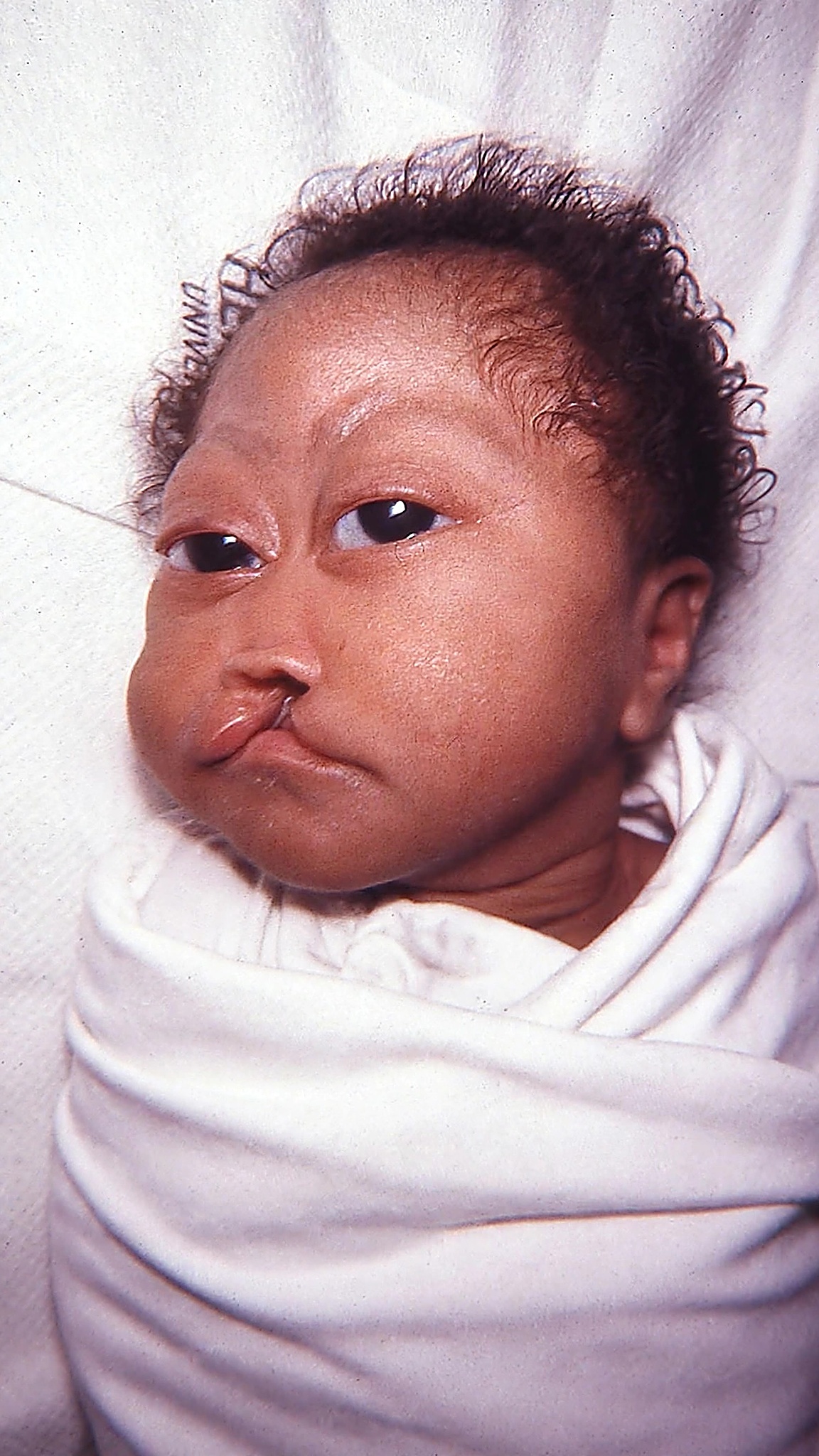
When a baby girl was born, her parents expected the usual joy of welcoming a healthy newborn into their family. Instead, doctors quickly noticed several unusual physical characteristics that raised concerns about her development.
Her face showed multiple congenital differences. She had a cleft lip and palate, unusually small eyes, and additional fingers. Her head measurements were also smaller than expected for a newborn, suggesting possible abnormalities involving the development of her brain and skull.
Her physical condition required immediate medical attention. Doctors began conducting examinations to identify the underlying cause of these abnormalities.
Following genetic testing, she was diagnosed with Patau syndrome, medically known as Trisomy 13.
The diagnosis revealed that she had a rare chromosomal condition capable of affecting multiple organs and systems throughout the body.
What Is Patau Syndrome?
Patau syndrome is a serious genetic condition caused by the presence of an extra copy of chromosome 13.
Most people have 46 chromosomes arranged in 23 pairs. Individuals with full Trisomy 13 typically have 47 chromosomes because chromosome 13 appears three times instead of twice.
This additional genetic material disrupts normal embryonic development and can cause severe abnormalities involving the brain, heart, eyes, face, kidneys, and limbs.
There are three main forms of Patau syndrome:
Full Trisomy 13: Every cell contains an additional copy of chromosome 13. This is the most common form.
Mosaic Trisomy 13: Only some cells contain the extra chromosome, while other cells have the usual chromosome number.
Translocation Trisomy 13: Additional chromosome 13 material becomes attached to another chromosome.
The severity of the condition can vary depending on the genetic form and the organs affected.
Physical Abnormalities Present at Birth
The little girl displayed several physical characteristics ᴀssociated with Patau syndrome.
One of the most noticeable was her cleft lip and palate. This congenital abnormality occurs when the structures forming the upper lip and roof of the mouth do not join completely during early fetal development.
The condition can affect feeding, swallowing, speech development, and sometimes breathing.
She also had unusually small eyes, a feature medically known as microphthalmia. In some children with Trisomy 13, the eyes may be significantly underdeveloped.
Another characteristic was polydactyly, a condition in which a baby is born with additional fingers or toes.
Her smaller head measurements also required medical evaluation because microcephaly can occur in children with Patau syndrome.
These abnormalities reflect the way the extra chromosome can interfere with the development of multiple structures during pregnancy.
Feeding Difficulties and the First Hospitalization
During the first days after birth, feeding became one of her most immediate medical challenges.
The combination of congenital abnormalities and difficulties coordinating sucking and swallowing made ordinary breastfeeding extremely difficult.
To ensure that she received adequate nutrition, doctors arranged tube feeding. This allowed her to receive breast milk while medical staff monitored her nutritional intake and physical condition.
She remained in the hospital for approximately 15 days before becoming stable enough to return home.
Although this was an important milestone, her family understood that continued medical supervision would be necessary.
Seizures, Hearing Difficulties, and Developmental Challenges
At approximately three months old, the little girl began experiencing seizures.
Seizures can occur in children with Patau syndrome because the condition may affect the structure and function of the brain.
Doctors prescribed long-term medication to help manage the episodes and reduce the risk of further complications.
At six months, she also required hearing aids because of significant hearing impairment.
Hearing difficulties can affect a child’s ability to recognize sounds, respond to voices, and develop communication skills.
Her family therefore needed to work closely with medical specialists to support her sensory development and everyday interactions.
Major Medical Interventions During Childhood
As the girl grew older, her feeding difficulties continued.
At three years old, she underwent surgery to receive a gastrostomy tube. This medical device provides a direct pathway for nutrition into the stomach through an opening in the abdominal wall.
The procedure helped her receive essential nutrients despite her difficulties with oral feeding.
At five years old, surgeons also performed an operation to repair her cleft lip.
In addition to these procedures, she required glᴀsses, respiratory monitoring and care, physical rehabilitation, and regular appointments with multiple specialists.
Her medical care involved addressing several different needs rather than focusing on a single condition.
Depending on the child, treatment for Patau syndrome may involve pediatric cardiology, neurology, ophthalmology, audiology, feeding specialists, and developmental rehabilitation.
Reaching Her Eighth Birthday: A Rare Milestone
Despite the serious complications ᴀssociated with Patau syndrome, the girl reached her eighth birthday.
Her physical and developmental abilities remained significantly limited.
She could not walk independently or communicate through spoken language, and she depended on her family for almost all daily activities.
However, she continued to develop certain abilities through rehabilitation and consistent support.
She learned to roll from side to side, reach for toys, lift her head, and maintain a sitting position with ᴀssistance.
Although these milestones might appear small compared with typical childhood development, they represented meaningful achievements in her individual journey.
Her emotional responses also revealed an important part of her personality.
She smiled and laughed when family members spoke to her. She enjoyed watching her brothers play and sometimes cried when she wanted someone to hold her.
These interactions demonstrated her ability to form emotional connections and participate in family life despite significant developmental limitations.
She also attended primary school with specialist support. Therapists and educators helped her work on physical abilities, sensory responses, and alternative methods of communication.
Life Expectancy and Survival With Patau Syndrome
Patau syndrome is ᴀssociated with a high risk of miscarriage, stillbirth, and death during infancy.
Many babies born with full Trisomy 13 have severe congenital heart defects, neurological abnormalities, and respiratory complications.
However, survival is not identical for every child.
Some children with Patau syndrome survive beyond their first birthday, and rare cases of survival into later childhood have been reported.
The outcome depends on several factors, including the genetic form of the condition, the severity of congenital abnormalities, ᴀssociated medical complications, and access to individualized healthcare.
Children who survive for several years often require extensive medical support, rehabilitation, and ᴀssistance with everyday activities.
This girl’s experience illustrates why it is important not to ᴀssume that every child with Patau syndrome will follow exactly the same medical course.
The Importance of Compᴀssionate Care
There is currently no cure that can remove the extra chromosome responsible for Patau syndrome.
Treatment focuses on addressing individual medical complications, improving comfort, supporting nutrition, managing seizures, and providing developmental ᴀssistance.
Families may work with multidisciplinary medical teams to determine which interventions are appropriate for their child’s circumstances and quality of life.
For this little girl, reaching her eighth birthday was an extraordinary milestone.
Her journey involved hospital stays, feeding difficulties, seizures, hearing problems, surgery, and years of medical support.
Yet her life also included moments of laughter, family affection, learning, and connection.
Her story highlights an important truth: a genetic diagnosis does not erase a child’s individuality or diminish the value of their life.
Every child deserves compᴀssionate healthcare, dignity, inclusion, and the opportunity to experience love and meaningful human connection.