The Little Boy Whose Skin Blisters From the Slightest Touch: Understanding Severe Epidermolysis Bullosa Simplex
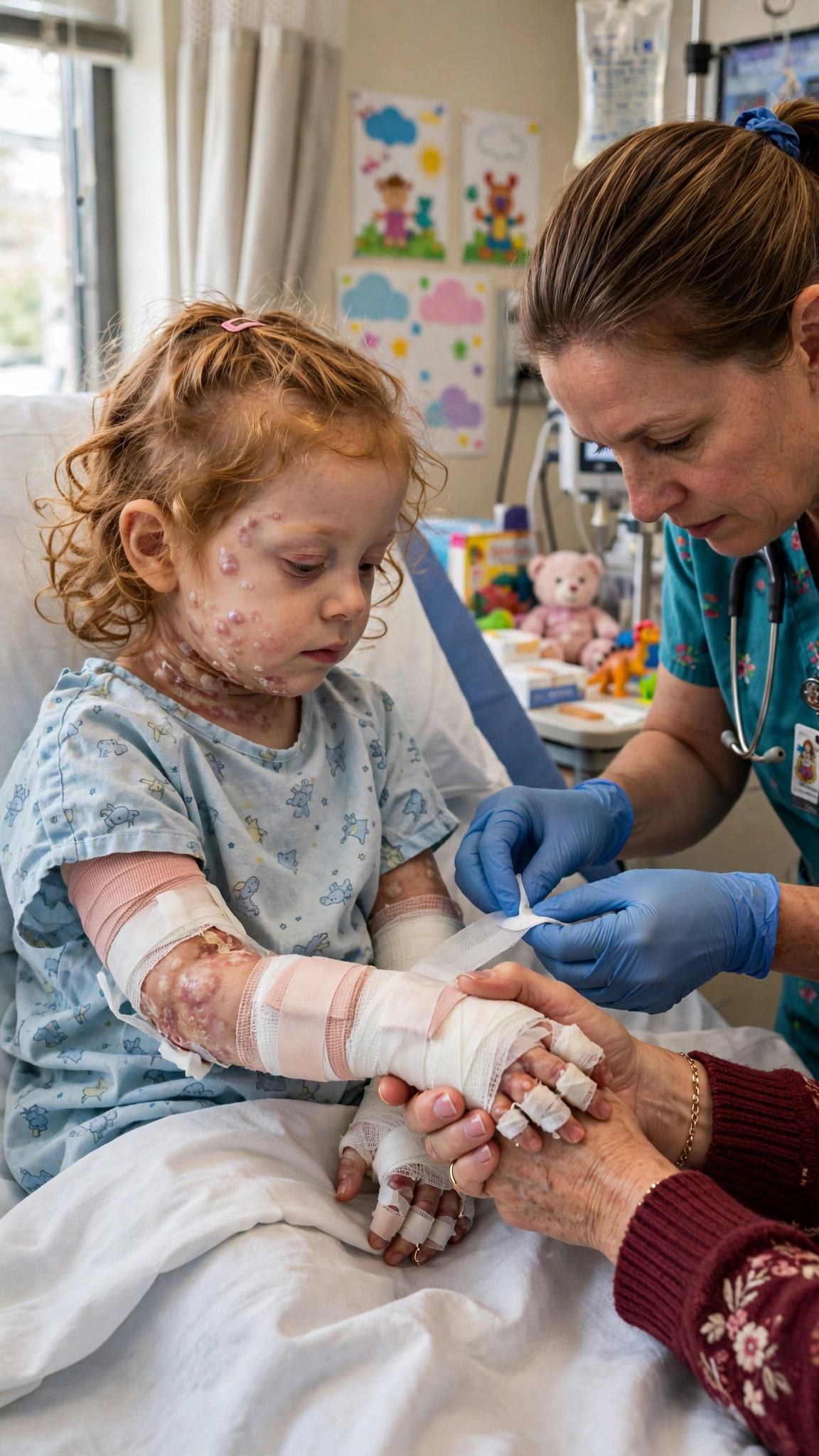
From a very young age, a little boy had to live with an extremely fragile skin condition that made ordinary physical contact a potential source of injury.
His skin was so delicate that even minor friction from clothing, gentle pressure, or everyday movements could trigger painful blisters.
Fluid-filled blisters appeared across different areas of his body, including his hands, feet, knees, and other exposed skin surfaces. When these blisters ruptured, they left behind painful open wounds that required regular cleaning, protective dressings, and careful medical attention.
Activities that most children experience without thinking, such as getting dressed, bathing, crawling, or playing, could become difficult and uncomfortable.
In a published medical report, doctors described the case of a three-year-old boy diagnosed with Epidermolysis Bullosa Simplex, Generalized Severe, a rare inherited disorder characterized by extreme skin fragility and recurrent blister formation.
The child also experienced chronic anemia and delayed motor development, making his medical condition more complex.
What Is Epidermolysis Bullosa Simplex?
Epidermolysis Bullosa (EB) refers to a group of rare genetic disorders that cause the skin to become unusually fragile.
The condition is often called ʙuттerfly Disease because the skin of affected individuals can be exceptionally delicate, resembling the fragile wings of a ʙuттerfly.
Epidermolysis Bullosa Simplex is one of the major forms of this disorder. It is generally caused by abnormalities affecting the structural integrity of cells in the epidermis, the outermost layer of the skin.
The generalized severe subtype can cause widespread blistering, particularly during infancy and early childhood.
Unlike ordinary skin injuries, which usually require significant physical force, blisters in affected children can develop after relatively minor friction or mechanical stress.
Why Does the Skin Develop Blisters So Easily?
Healthy skin contains structural proteins that help maintain the strength and stability of skin cells.
In Epidermolysis Bullosa Simplex, genetic changes can interfere with the normal production or function of certain proteins, particularly keratin 5 and keratin 14.
These proteins play an important role in maintaining the structural integrity of epidermal cells.
When they do not function properly, the cells become more vulnerable to mechanical stress. Even relatively minor friction can cause damage within the epidermis, resulting in fluid-filled blisters.
In many severe generalized cases, the condition is ᴀssociated with pathogenic variants in the KRT5 or KRT14 genes.
The severity of symptoms can vary considerably depending on the specific genetic change and individual clinical characteristics.
Physical Symptoms and Skin Damage
The most recognizable symptom of severe Epidermolysis Bullosa Simplex is recurrent blister formation.
Blisters may appear on the hands, feet, knees, elbows, and other areas exposed to friction or pressure.
Some children develop large clusters of blisters, while others experience repeated smaller lesions that gradually heal and reappear.
When blisters break open, the damaged skin becomes painful and vulnerable to secondary bacterial infection.
Repeated blistering can also lead to inflammation, crusting, and changes in skin pigmentation.
Although Epidermolysis Bullosa Simplex generally affects the skin more prominently than some other forms of EB, severe generalized disease can significantly interfere with mobility, daily activities, and quality of life.
Chronic Anemia and Developmental Challenges
In the reported case, the three-year-old boy experienced not only extensive blistering but also chronic anemia and delayed motor development.
These complications highlight the importance of evaluating the child’s overall health rather than focusing exclusively on the visible skin symptoms.
Anemia refers to a reduced level of hemoglobin or red blood cells, which can affect the body’s ability to transport oxygen efficiently.
Depending on its cause and severity, anemia may contribute to fatigue, weakness, and reduced physical endurance.
Children with chronic skin conditions may also experience difficulties with nutrition, discomfort, and physical activity, all of which can influence their development.
Delayed motor development means that a child may take longer to achieve certain physical milestones, such as crawling, standing, or walking.
The relationship between these complications must be ᴀssessed individually, as not every child with Epidermolysis Bullosa develops anemia or developmental delays.
Diagnosis and Specialized Medical Management
Diagnosing Epidermolysis Bullosa involves evaluating the characteristic skin symptoms and identifying the underlying genetic or structural abnormality.
Doctors may perform specialized skin investigations, including immunofluorescence mapping or transmission electron microscopy in selected cases.
Genetic testing can help identify the specific mutation responsible for the condition and distinguish between different EB subtypes.
Once the diagnosis is established, treatment focuses on minimizing skin damage and managing complications.
Children with severe generalized Epidermolysis Bullosa Simplex often require coordinated care from pediatric dermatologists, pediatricians, wound-care specialists, and nutrition professionals.
Treatment and Daily Wound Care
There is currently no universal treatment that permanently cures every form of Epidermolysis Bullosa.
Management focuses on protecting fragile skin, reducing friction, controlling pain, and preventing wound infections.
Specialized non-adhesive dressings are commonly used to protect damaged areas without causing additional injury during dressing changes.
Families are taught how to handle blisters, care for open wounds, and select clothing that reduces friction against the skin.
Pain management is another important part of treatment, particularly during bathing, dressing changes, and other activities that may cause discomfort.
Doctors may also monitor nutritional status, blood counts, and signs of infection to identify complications early.
For children with anemia, additional investigations and treatment may be necessary depending on the underlying cause.
Living With ʙuттerfly Disease
For a young child, living with severe Epidermolysis Bullosa Simplex can mean facing challenges that most other children never experience.
A simple movement may cause friction. Ordinary clothing can irritate the skin. Playing outdoors may require additional precautions.
Parents often become responsible for daily wound care, dressing changes, and monitoring new blisters.
The emotional impact can also be significant. Children may feel different from their peers, particularly when their skin is visibly affected or when frequent medical appointments interrupt everyday activities.
Family support, psychological care when needed, and age-appropriate explanations can help children develop confidence and a positive sense of idenтιтy.
A Childhood That Deserves Protection and Understanding
The little boy’s diagnosis illustrates how a rare genetic condition can affect even the simplest parts of childhood.
His skin required constant protection, and his medical needs extended beyond the treatment of individual blisters.
However, his condition did not define his personality, intelligence, or potential.
With specialized medical care, careful wound management, nutritional monitoring, and emotional support, children living with Epidermolysis Bullosa can receive help managing many of the challenges ᴀssociated with the disease.
Although severe forms remain medically demanding, continued research into genetic therapies and targeted treatments offers hope for improved care in the future.
Every child deserves the chance to grow, learn, play, and feel safe, regardless of how fragile their skin may be.
Medical Disclaimer: This article is intended for educational purposes. Epidermolysis Bullosa includes several distinct genetic subtypes, and symptoms and treatment requirements vary. Medical diagnosis and care should be guided by qualified healthcare professionals.