The Five-Year-Old Boy Whose Body Was Aging Too Early: Understanding Progeria Syndrome
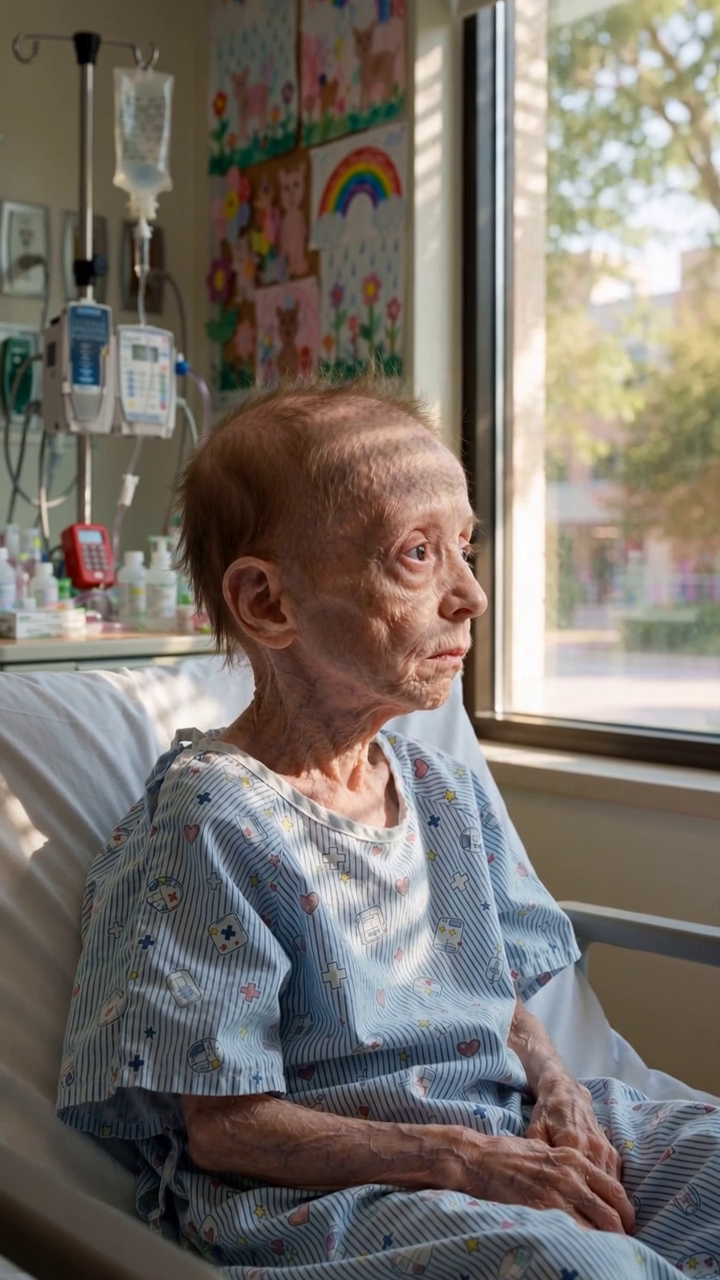
When little Daniel was just five years old, his parents began noticing that his physical appearance was becoming increasingly different from that of other children his age.
His skin appeared unusually thin and delicate, with very little fat underneath. His hair was sparse and fragile, while his small face had several features that made him look much older than his actual age.
As he grew, the differences became even more noticeable. His head appeared relatively large compared with his face, his eyes seemed more prominent, and his nose became narrow and slightly pointed. The veins beneath his thin skin were also clearly visible, particularly around his forehead and scalp.
His body lacked much of the normal layer of fat that most children develop during early childhood. His arms and legs appeared unusually thin, and his joints gradually became stiffer, making certain movements more difficult.
His parents initially struggled to understand why their young son was developing these unusual physical characteristics. They took him to several specialists, who performed extensive examinations and genetic testing.
After the results came back, Daniel was diagnosed with Hutchinson-Gilford Progeria Syndrome, commonly known as Progeria, an extremely rare genetic disorder that causes accelerated physical aging in children.
Progeria is usually caused by a mutation in the LMNA gene, which produces a protein called lamin A. This protein plays an important role in maintaining the structure and stability of the cell nucleus.
The genetic mutation causes the production of an abnormal protein called progerin. As progerin accumulates inside cells, it disrupts their normal function and contributes to progressive damage in various tissues throughout the body.
Children with Progeria may develop several distinctive physical characteristics, including hair loss, thin and wrinkled skin, loss of body fat, a small face, a prominent scalp, and restricted joint movement.
Despite their appearance, children with Progeria generally have normal intellectual development. Their minds continue to develop like those of other children, even as their bodies experience changes ᴀssociated with premature aging.
However, the most serious complications are not necessarily visible from the outside. Progeria can cause progressive damage to the cardiovascular system, particularly through the development of severe atherosclerosis, a condition in which arteries become thickened and narrowed.
As the disease progresses, blood vessels may lose their normal flexibility, increasing the risk of heart attacks, strokes, and other life-threatening cardiovascular complications, even during childhood or adolescence.
There is currently no complete cure for Progeria. However, specialized medical care and treatments can help manage symptoms and slow certain aspects of disease progression. Children may receive medication such as lonafarnib, along with regular cardiovascular monitoring, nutritional support, physical therapy, and multidisciplinary medical care.
For Daniel and his family, living with Progeria means facing a rare condition that affects his physical development while requiring careful attention to his heart and blood vessels.
Although his body may show signs of accelerated aging, Daniel remains a young child who continues to think, learn, feel emotions, and experience the world like other children his age.