The Baby Born With an Unusually Small Head: Understanding Congenital Microcephaly
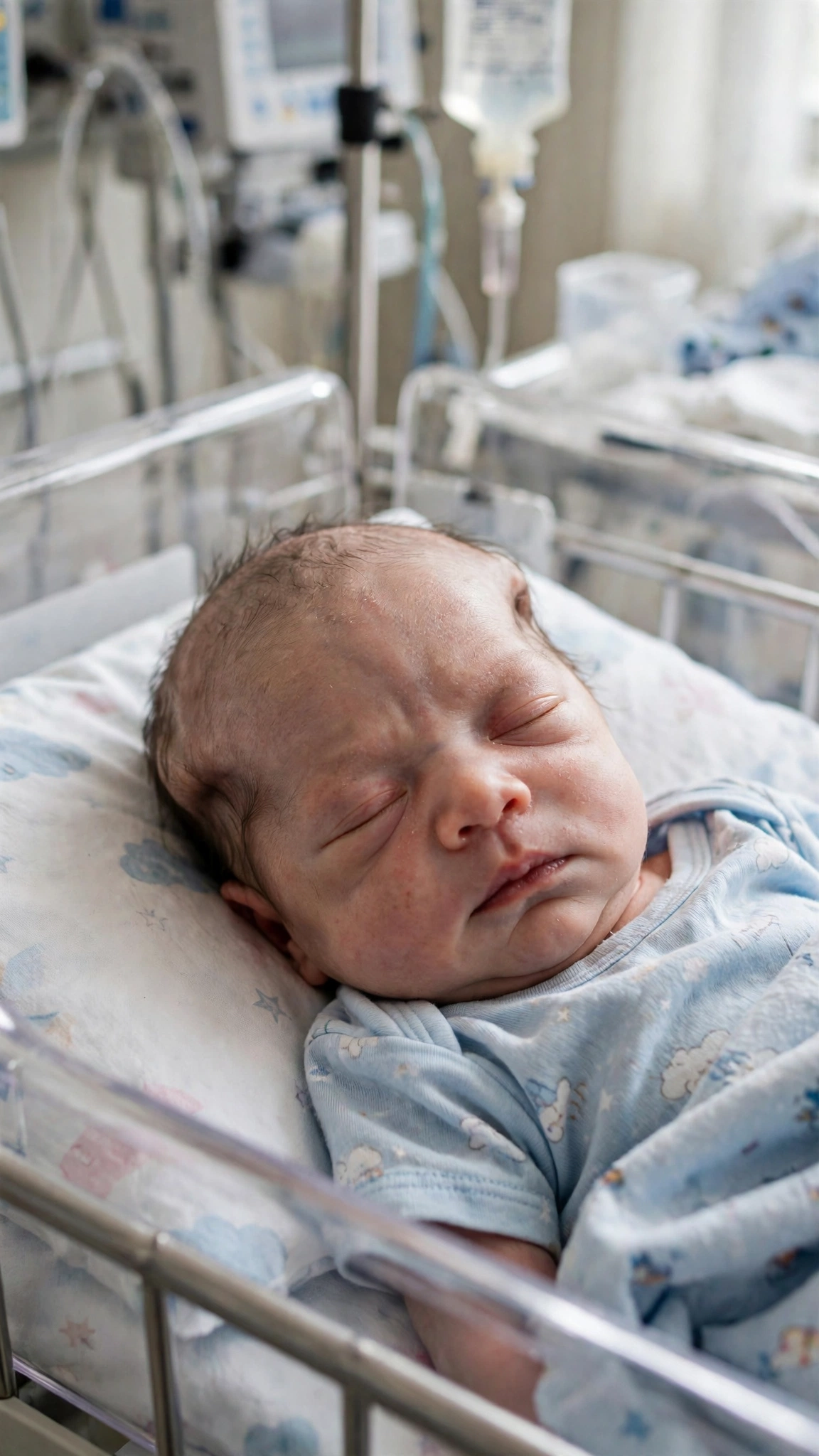
When little Noah was born, doctors immediately noticed that his head was significantly smaller than expected for a newborn baby of his age.
His parents were concerned when they saw that his forehead appeared unusually low and his skull seemed much smaller than the rest of his body. Compared with the size of his head, his facial features appeared disproportionately large, making the difference between his head and face particularly noticeable.
During the first medical examinations, doctors carefully measured Noah’s head circumference and compared it with the expected measurements for babies of the same age and Sєx. The results showed that his head circumference was far below the normal range.
Further examinations revealed that his skull had not developed to the expected size. Doctors became concerned that his brain might not have grown normally during pregnancy, potentially affecting several important functions of his developing nervous system.
After repeated medical ᴀssessments, imaging studies, and neurological evaluations, Noah was diagnosed with congenital microcephaly, a condition in which a baby’s head is significantly smaller than expected because the brain has not developed or grown normally.
Microcephaly can occur when the brain does not develop properly during pregnancy or when its growth slows down or stops before birth. It can be ᴀssociated with genetic abnormalities, certain infections during pregnancy, exposure to harmful substances, or other factors affecting fetal development. In some cases, the exact cause cannot be identified.
The severity of this condition varies considerably from one child to another. Some children with microcephaly experience relatively mild developmental difficulties, while others develop severe neurological complications that affect many aspects of their lives.
In more serious cases, children may experience recurrent seizures, significant intellectual and developmental disabilities, poor muscle coordination, abnormal muscle stiffness, and difficulties controlling their movements. Some babies also have problems swallowing, chewing, and feeding, which can make it difficult for them to receive adequate nutrition.
As children grow older, developmental delays may become increasingly apparent. They may have difficulty holding their heads upright, sitting independently, crawling, walking, communicating, or responding to their surroundings.
In severe cases, microcephaly can also be accompanied by vision and hearing problems, movement disorders, and lifelong neurological disabilities.
There is currently no treatment that can reverse the reduced brain growth ᴀssociated with microcephaly. Medical care focuses on managing symptoms, preventing complications, and supporting the child’s development.
Depending on the severity of the condition, children may require neurological monitoring, medication to control seizures, physical therapy, occupational therapy, speech therapy, and specialized nutritional support.
For Noah and his family, the diagnosis represents the beginning of a long medical journey. Regular evaluations and early intervention are essential to identify his needs, manage possible complications, and provide the best possible support for his development and quality of life.