Born With Both Feet Turned Inward: Understanding Bilateral Congenital Clubfoot
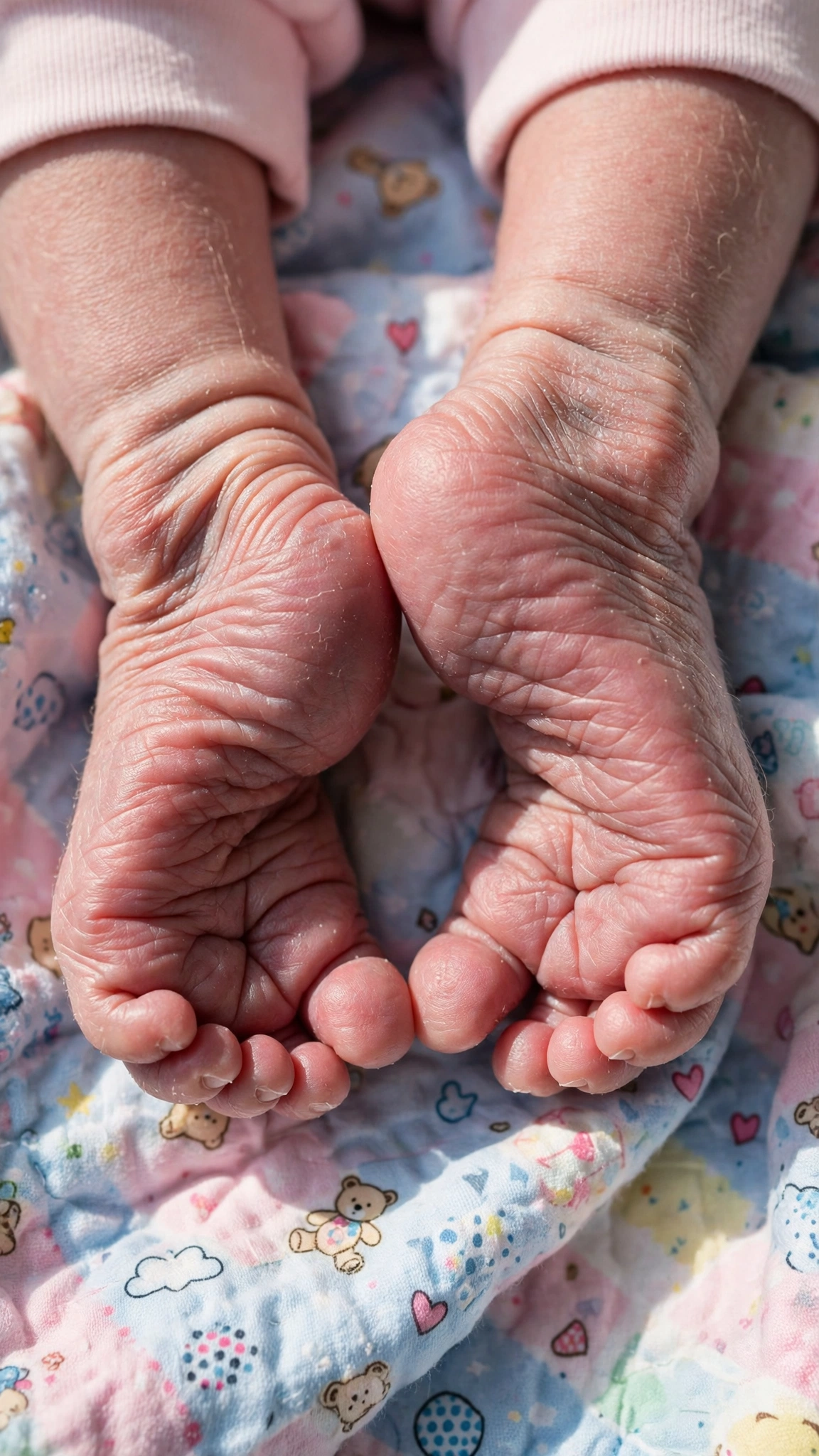
When baby Jacob was born, his parents immediately noticed that both of his feet looked different.
His feet were turned inward and downward, with the heels positioned abnormally and the soles facing toward each other. Instead of pointing forward, his tiny feet appeared twisted into a fixed position.
His parents were frightened. They had never seen a newborn with feet shaped like this, and they did not know what the condition might mean for their son’s future.
They wondered whether Jacob would be able to stand, walk, or play normally as he grew older.
After a careful physical examination, doctors diagnosed him with bilateral congenital clubfoot, medically known as bilateral talipes equinovarus.
Understanding Bilateral Congenital Clubfoot
Congenital clubfoot is a birth condition in which one or both feet develop in an abnormal position.
When both feet are affected, the condition is described as bilateral clubfoot.
The deformity typically involves four main features. The foot turns inward, the front part of the foot curves toward the body’s midline, the heel points downward, and the arch may become unusually high.
These changes are related to the position and development of the bones, joints, muscles, tendons, and ligaments in the foot and ankle.
Clubfoot is present at birth and is not caused by something a parent did or failed to do during pregnancy. In many cases, its exact cause is unknown, although genetic and environmental factors may contribute.
The condition can sometimes occur alongside other medical or neurological conditions, so doctors may ᴀssess the baby for additional findings when appropriate.
Although the appearance of clubfoot can be distressing for parents, it is one of the more treatable congenital orthopedic conditions.
Why Treatment Should Begin Early
Without treatment, clubfoot does not usually correct itself as a child grows.
The affected feet may remain twisted, stiff, and difficult to position normally. As the child begins standing and walking, the abnormal alignment can interfere with weight-bearing and mobility.
Some children with untreated clubfoot may walk on the outer edges or even the tops of their feet. This can lead to discomfort, skin problems, difficulty wearing ordinary shoes, and limitations in daily activities.
For Jacob, early treatment was important because his feet were still flexible enough to respond to gradual correction.
His doctors explained that the primary goal was to create feet that were comfortable, stable, and functional, allowing him to develop the ability to stand and walk.
The Ponseti Method: Gradually Correcting the Feet
Jacob’s specialists recommended the Ponseti method, a widely established nonsurgical approach for treating most cases of congenital clubfoot.
The process begins with gentle manipulation of the baby’s feet by a trained specialist.
After each adjustment, the foot is placed in a plaster cast to maintain the improved position. The casts are generally changed every week, allowing the doctor to gradually correct the deformity over a series of treatments.
The number of casts varies depending on the severity of the condition and the baby’s response.
For many children, casting is followed by a minor procedure known as a percutaneous Achilles tenotomy.
In clubfoot, the Achilles tendon is often unusually тιԍнт, preventing the heel from moving into the correct position. During this procedure, the specialist makes a small incision to release the tendon.
A final cast is then applied while the tendon heals, usually over a period of a few weeks.
The procedure is commonly performed as part of the Ponseti treatment process, but the exact approach depends on the child’s individual condition.
The Importance of Bracing After Correction
Once Jacob’s feet have been corrected, his treatment will enter another important stage.
He will need to wear a special foot-abduction brace consisting of shoes connected by a bar. This device helps keep the feet in the corrected position and reduces the risk of the deformity returning.
Initially, the brace is generally worn for approximately 23 hours a day for about three months. After that, children typically wear it during naps and nighttime sleep until around four or five years of age, following their specialist’s instructions.
This stage requires patience and consistency.
Even when the feet appear completely straight, the muscles and soft tissues may gradually pull them back toward their original position. This is why following the prescribed bracing schedule is essential.
Doctors will also monitor Jacob’s progress through regular examinations, checking his foot position, flexibility, growth, and walking development as he gets older.
If the deformity begins to return, additional treatment may be necessary.
What Could Jacob’s Future Look Like?
His parents initially feared that their son might never walk normally.
But his doctors offered them a more hopeful perspective.
With early treatment and consistent follow-up, many children with bilateral clubfoot achieve good functional results. They can learn to stand, walk, run, play sports, and participate in ordinary childhood activities.
Some children may have slightly smaller or less flexible feet, smaller calf muscles, or differences in foot shape compared with other children. These differences do not necessarily prevent them from leading active lives.
The outcome depends on the severity of the deformity, the response to treatment, and whether the recommended bracing schedule is followed.
For Jacob’s family, the road ahead will require time and commitment. There will be casts to change, appointments to attend, and a brace that must become part of his daily routine.
But every stage of treatment brings them closer to the moment they are waiting for.
They dream of seeing Jacob stand independently, take his first steps, and discover the world with confidence.
His story is a reminder that a congenital condition does not always determine a child’s future. With early diagnosis, appropriate treatment, and family support, many children born with clubfoot can grow up to enjoy active and fulfilling lives.
Medical note: This is an illustrative educational story rather than a verified patient case. The Ponseti method is widely used for congenital clubfoot, but individual treatment plans and outcomes vary. Diagnosis and treatment should be guided by a qualified pediatric orthopedic specialist.