The Baby Born With One Side of Her Face Underdeveloped: Understanding Goldenhar Syndrome
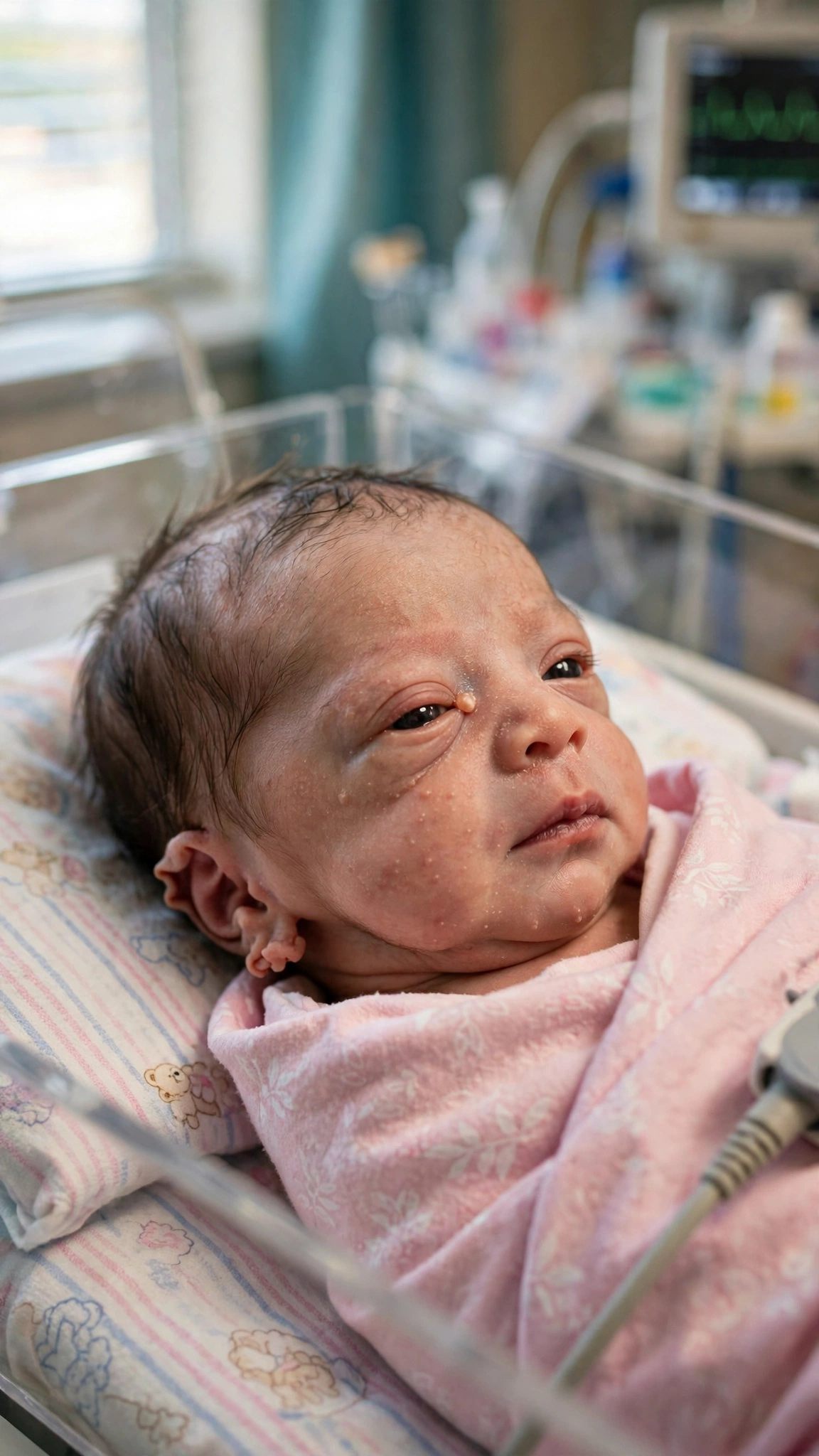
When little Sophia was born, her parents immediately noticed that the two sides of her face looked noticeably different.
One side appeared smaller and less developed than the other. Her lower jaw was unusually small, and one of her outer ears had not formed normally. These physical differences created a visible facial asymmetry that raised concerns about her development.
At first, her parents did not understand why their newborn daughter had these unusual facial features. They worried about whether she would be able to hear properly, eat comfortably, and develop normally as she grew older.
Following a series of detailed medical examinations, Sophia was diagnosed with Goldenhar syndrome, a rare congenital developmental condition that primarily affects the formation of the face, ears, and eyes. In some cases, the spine and other structures may also be involved.
The diagnosis gave her parents an explanation for her appearance, but it also introduced new questions about the medical care she would need throughout childhood.
Understanding Goldenhar Syndrome
Goldenhar syndrome is a rare congenital condition commonly considered part of the oculo-auriculo-vertebral spectrum.
It develops when certain structures involved in the formation of the face and head do not develop normally during the early stages of pregnancy.
The condition often affects one side of the face more severely than the other, resulting in a noticeable difference in facial symmetry.
Children with Goldenhar syndrome may have an underdeveloped cheekbone, a smaller lower jaw, an unusually shaped or partially formed ear, or small skin tags located near the ear.
Some children also develop abnormalities involving the eyes. One possible feature is an epibulbar dermoid, a benign growth that can appear on the surface of the eye.
In certain cases, the condition may also affect the vertebrae, causing differences in the formation or alignment of the spine.
The severity of Goldenhar syndrome varies widely. Some children experience relatively mild facial differences, while others have more extensive abnormalities that require several medical interventions.
For Sophia, the most noticeable findings involved the underdevelopment of one side of her face, her smaller lower jaw, and the abnormal formation of one outer ear.
How Facial Differences Can Affect Everyday Life
Although facial asymmetry is one of the most visible features of Goldenhar syndrome, the condition can affect more than appearance.
An underdeveloped lower jaw may influence the alignment of the teeth, the development of the bite, and sometimes the ability to chew properly.
Depending on the severity of the jaw abnormality, some children may require dental treatment, orthodontic care, or specialized feeding support.
Doctors therefore monitored Sophia’s jaw development and planned regular dental ᴀssessments to identify potential problems as early as possible.
Her medical team also evaluated whether the differences in her facial structure affected other important functions.
Hearing and Ear Abnormalities
One of the major concerns for Sophia was the development of her hearing.
Goldenhar syndrome can affect the outer and middle ear, sometimes resulting in an unusually small ear, an absent ear canal, or abnormalities in the tiny bones responsible for transmitting sound.
These structural differences can cause conductive hearing loss, making it difficult for sound to travel efficiently through the ear.
For young children, untreated hearing difficulties can interfere with speech development, language acquisition, and communication.
Sophia therefore needed regular hearing ᴀssessments to determine whether she could hear normally and whether additional support would be beneficial.
Depending on the results, treatment might include hearing devices, bone-conduction hearing systems, or other specialized interventions.
Her parents understood that monitoring her hearing would remain important throughout her childhood.
Medical Treatment and Reconstructive Surgery
Following her diagnosis, Sophia’s parents learned that her treatment would require cooperation between several medical specialists.
Her healthcare team included pediatricians, craniofacial surgeons, ear, nose, and throat specialists, audiologists, dentists, orthodontists, and eye specialists.
Each specialist focused on a different aspect of her development.
Regular examinations helped doctors monitor her facial growth, hearing, vision, dental health, and possible spinal abnormalities.
Depending on the severity of her condition, Sophia might eventually benefit from reconstructive surgery.
Some children with Goldenhar syndrome undergo procedures to improve the appearance and function of an underdeveloped jaw or to reconstruct an abnormal outer ear.
Other procedures may address eye abnormalities or additional facial differences.
The timing of surgery depends on the child’s individual needs, age, growth, and overall health. Not every child with Goldenhar syndrome requires surgery, and treatment plans must be carefully tailored to each patient.
For Sophia, the goal was not simply to improve facial symmetry. Doctors also wanted to support essential functions, reduce potential complications, and help her achieve the best possible quality of life.
Growing Up With Confidence and Support
For Sophia’s parents, the diagnosis marked the beginning of a long journey that would involve regular hospital appointments, specialist consultations, and careful monitoring of her development.
They knew that their daughter might face challenges related to her hearing, dental health, facial appearance, and emotional well-being.
They also understood that some medical decisions would need to be made gradually as she grew.
However, they refused to let her diagnosis define her future.
They wanted Sophia to grow up feeling loved and accepted, with the confidence to participate in school, build friendships, and pursue her interests.
With appropriate medical care, early intervention when necessary, and continued family support, many children with Goldenhar syndrome can develop meaningful relationships and lead fulfilling lives.
Sophia’s path might include challenges that other children never experience, but those challenges would never diminish her value or potential.
Goldenhar syndrome may change the way a child’s face develops, but it cannot determine how much that child can learn, achieve, love, or contribute to the world.