The Little Girl Who Deserved to Be Seen
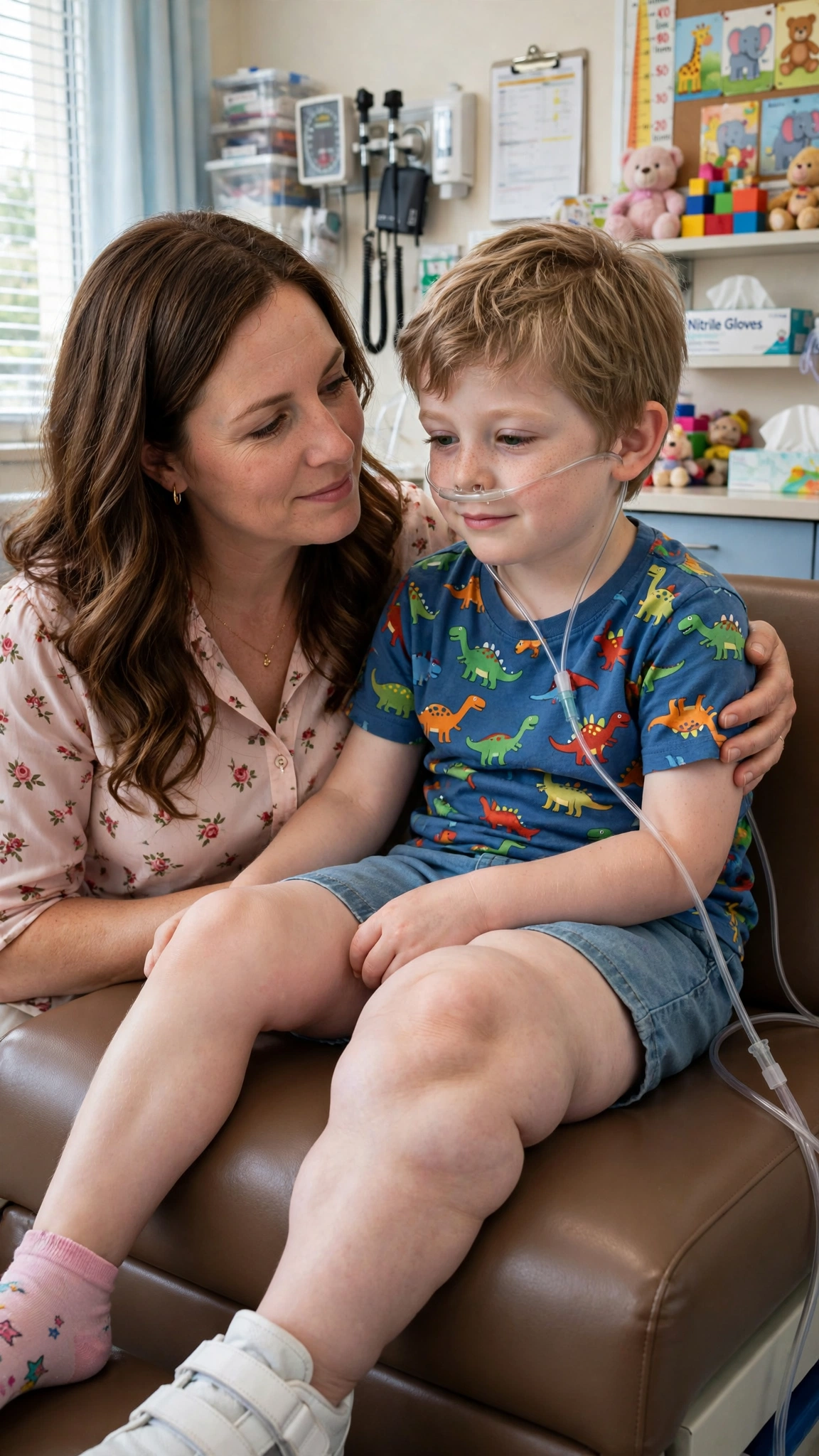
When Lily was born, her parents noticed that her facial features were different from those of most newborn babies.
Her cheekbones appeared underdeveloped, her lower jaw was unusually small, and her ears had developed differently. At first, her parents did not know what these differences meant or how they might affect their daughter’s future.
After medical examinations, doctors diagnosed Lily with Treacher Collins syndrome, a rare congenital condition that affects the development of bones and soft tissues in the face.
The diagnosis marked the beginning of a journey her family had never expected.
Her parents had so many questions. Would Lily be able to hear normally? Could her small jaw affect her breathing? Would she have difficulty feeding as she grew? Would she eventually need medical procedures to support her facial development?
Treacher Collins syndrome varies considerably from one child to another. It can affect the cheekbones, jaw, ears, and other facial structures. Some children experience hearing loss because of differences in the development of the outer or middle ear. Others may have breathing or feeding difficulties, particularly when the lower jaw and surrounding structures are significantly underdeveloped.
Not every child experiences the same challenges, which makes individualized medical ᴀssessment especially important.
Lily needed regular medical appointments so specialists could monitor her development and identify any needs that might arise. Her care could involve several medical disciplines, including hearing ᴀssessment, ear, nose and throat care, craniofacial evaluation, and feeding or speech support when necessary.
For her parents, the learning process was sometimes exhausting.
They had to understand unfamiliar medical language, consider different treatment possibilities, and prepare themselves for decisions that could shape Lily’s childhood. Each appointment brought new information, and each new piece of information reminded them how carefully they would need to support her as she grew.
Yet they never wanted Lily’s childhood to become defined by hospitals.
At home, she was not a diagnosis or a collection of medical differences. She was their daughter.
She loved the warmth of being held close. She listened to her mother’s voice with comfort and often drifted to sleep against her father’s chest. These quiet moments became precious reminders that, beyond every medical concern, Lily was a child who needed the same affection, security, and happiness as any other little girl.
Her parents hoped she would grow up surrounded by people who looked beyond her appearance. They wanted her to have friends who appreciated her personality, teachers who encouraged her abilities, and a community that treated her with kindness rather than curiosity or judgment.
They knew there might be difficult moments ahead. Children with visible facial differences can sometimes face unwanted attention or misunderstanding from others. But Lily’s parents were determined to help her build confidence and understand that there was nothing shameful about being different.
They wanted her to know that she did not have to change her appearance to earn friendship, respect, or love.
Her medical journey may continue as she grows, and her needs may change over time. But one thing will remain constant: she will never have to face those challenges without the support of the people who love her.
Lily deserves to be seen for her laughter, her curiosity, her kindness, and the person she is becoming.
She deserves to be included, celebrated, and given every opportunity to enjoy childhood.
She didn’t need a different face to deserve the same love as every other child. She deserved to be seen, accepted, and loved exactly as she was.