Little Olivia’s Story: Growing Up with Pfeiffer Syndrome
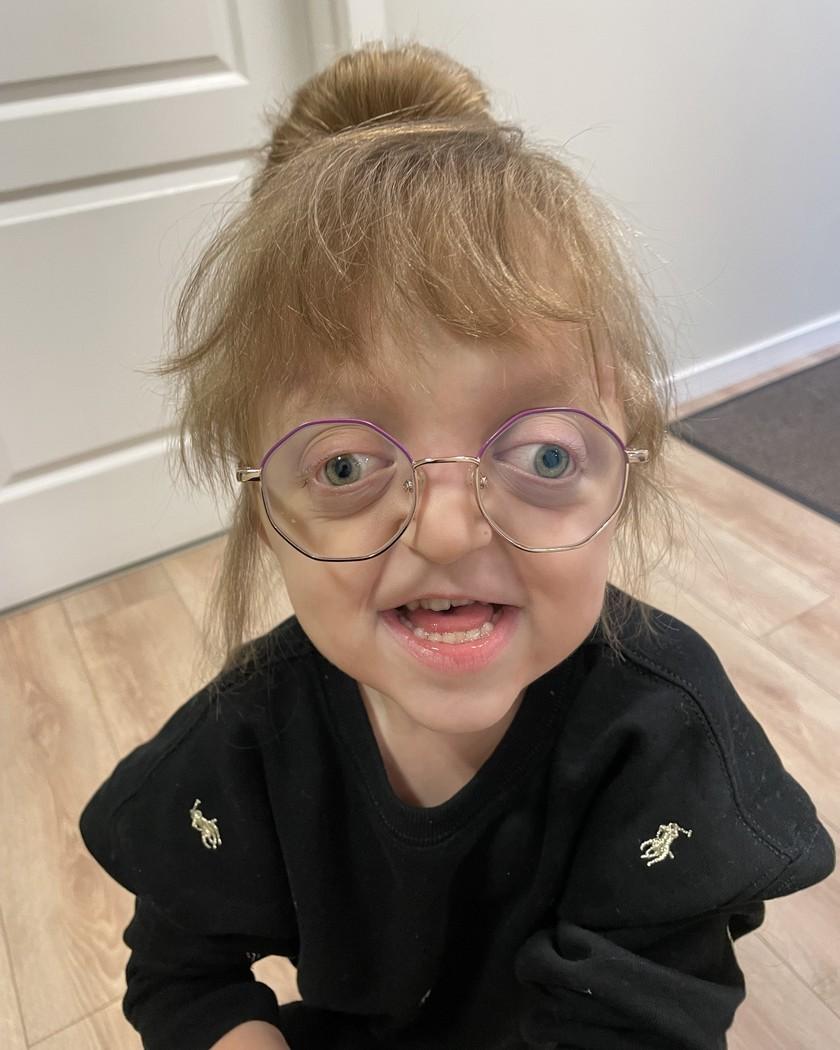
Little Olivia was born with an extremely rare genetic condition called Pfeiffer Syndrome, a disorder that affects the development of the skull, facial bones, and other structures of the head.
From the moment she entered the world, her physical development was different from that of most newborn babies.
During pregnancy, several of the natural joints connecting the bones of her skull had fused earlier than they should have. These joints, known as cranial sutures, normally remain flexible during infancy to allow the skull to expand as the baby’s brain grows.
Because some of Olivia’s cranial sutures had closed prematurely, her skull developed an unusual shape. This early fusion affected the normal growth of her head and contributed to distinctive changes in her facial structure.
Her eyes appeared unusually prominent, partly because the bones surrounding her eye sockets had developed differently. The middle portion of her face was also underdeveloped, including the cheekbones and upper jaw. These changes gave her a facial appearance ᴀssociated with certain forms of Pfeiffer Syndrome.
However, the challenges ᴀssociated with her condition extended far beyond her physical appearance.
The underdevelopment of the middle part of her face could affect the structure of her nasal pᴀssages and upper airway, potentially making breathing more difficult. The unusual development of her skull also meant that doctors needed to monitor her brain development and watch for possible increases in pressure inside her skull.
Her vision required particular attention because changes in the shape of the eye sockets could affect how her eyes were positioned and protected.
From infancy, Olivia’s life involved regular medical examinations and specialist consultations.
Her healthcare team carefully evaluated the growth of her skull, the development of her facial bones, her breathing patterns, and her visual function. Different specialists worked together to ᴀssess her needs and determine whether additional medical or surgical treatment might be necessary as she grew.
For Olivia’s parents, the experience was emotionally exhausting.
They spent countless hours traveling between hospitals and specialist clinics, waiting for appointments, listening to medical explanations, and trying to understand the complicated condition affecting their daughter.
Every examination brought new information. Every medical recommendation required careful consideration. Like any parents, they wanted to protect their child and give her the healthiest and happiest childhood possible.
There were moments when the uncertainty felt overwhelming. They worried about her breathing, her vision, and how her condition might affect her development in the years ahead.
But amid all the hospital visits and medical concerns, Olivia continued to bring happiness into their lives.
She was still a little girl who loved being held close, hearing familiar voices, and feeling the warmth of her mother’s arms.
Her mother became her greatest source of comfort. Whether they were sitting quietly at home or spending another long day at the hospital, she always tried to make Olivia feel safe and loved.
Sometimes, after an exhausting appointment, Olivia would look at her mother and offer a little smile.
It was a simple moment, but it meant everything.
For a few seconds, the worries about medical procedures, specialist appointments, and uncertain days ahead seemed less important. Her mother could simply enjoy being close to her daughter.
Olivia’s journey with Pfeiffer Syndrome would require continued medical care, patience, and support. Her development might involve challenges that other children would never have to face.
Yet she was so much more than her diagnosis.
She was a daughter, a growing child, and a precious member of a family that loved her unconditionally.
Her story reminds us that every child deserves compᴀssion, dignity, and the opportunity to experience life beyond the challenges of a medical condition.
And sometimes, the smallest smile from a little girl can give an entire family the strength to face another difficult day.