PART 2: THE FORTY-FIVE MILLION DOLLAR SECRET
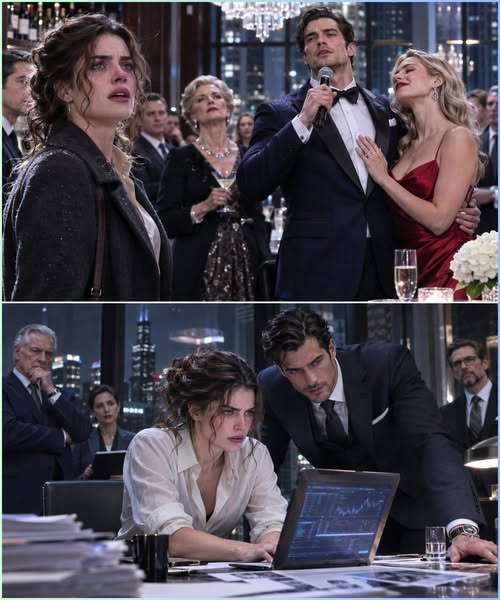
He read it once.
Then again.
“Brandon wants your master credentials?”
“Yes.”
“What is Aegis?”
I looked at Edward Prescott.
“It’s the risk architecture I designed for Fairchild Capital. Every major trading position, liquidity exposure, counterparty limit and emergency withdrawal protocol runs through it.”
Dominic leaned back.
“And Vanessa is supposed to take over?”
“Apparently.”
Edward exchanged a glance with Austin.
“Does she understand the system?”
I almost smiled.
“Vanessa understands PowerPoint presentations. She doesn’t understand the infrastructure underneath them.”
Dominic’s expression remained serious.
“Can she access it without you?”
“Not completely. The system has multiple authorization layers. My credentials are only one part.”
“Then why is Brandon asking?”
“Because he knows the company is about to pursue a major insтιтutional mandate, and he needs the system to pᴀss its final compliance review.”
Dominic picked up my phone.
“May I?”
I nodded.
He read Brandon’s message again.
Then he handed it back.
“Don’t respond yet.”
Edward opened the portfolio Austin had brought.
“Madeline, before we discuss your employment, I need to ask something. Did you personally fund Fairchild Capital?”
I looked at him.
“Yes.”
“How much?”
“One hundred and eighty thousand dollars originally. There were additional advances later, but I stopped keeping track.”
Austin began typing.
“Were those investments documented?”
“They were supposed to be.”
“Supposed to be?”
I explained the emergency financing arrangement Brandon had proposed nine years earlier.
At the time, Fairchild Capital had been on the verge of missing payroll. Brandon promised me equity in exchange for my investment.
I had signed a series of agreements.
But after the first major expansion, he convinced me that the documents needed restructuring for tax purposes.
He promised everything would be corrected.
It never was.
Dominic’s expression hardened.
“Did you receive shares?”
“No.”
“Convertible notes?”
“No.”
“Repayment?”
“Some interest payments during the first two years. Nothing since.”
Edward closed the folder.
“Then we need to examine those agreements immediately.”
I nodded.
For the first time since the previous night, I felt something resembling control returning to my hands.
But I had no idea how much of my old life was about to come apart.
At 11:35 a.m., Vanessa Holloway called.
I answered on speaker.
“Madeline?”
“Vanessa.”
“Brandon wants the Aegis credentials. We have an important meeting tomorrow, and he’s getting frustrated.”
“Then he should call me.”
“He already has.”
“Then he should listen when I don’t answer.”
Her voice became colder.
“Look, I know last night was unpleasant, but this isn’t personal. Fairchild needs to move forward.”
I looked at Dominic.
He was reading a document, but I could tell he was listening.
“Vanessa, you were introduced as my replacement less than twelve hours ago. What exactly do you expect me to do?”
“Transfer the administrative credentials. It’s company property.”
I smiled faintly.
“Is that what Brandon told you?”
“It’s what the legal department confirmed.”
“Interesting.”
“What does that mean?”
“It means I hope you read the employment agreements before you start making technical decisions.”
There was a pause.
Then she said something that made my stomach тιԍнтen.
“Brandon says you signed everything over when you accepted your severance.”
I looked at Dominic.
He stopped reading.
“What severance?” I asked.
“The fifteen thousand dollars.”
“I never accepted it.”
“You left it on the table.”
“Exactly.”
Vanessa sighed.
“Madeline, don’t turn this into a legal fight. You have no position at the company anymore.”
I kept my voice calm.
“Then you shouldn’t need my credentials.”
I ended the call.
Dominic looked up.
“She’s nervous.”
“She’s not nervous. She’s overconfident.”
“There’s a difference?”
“Usually. But both can be expensive.”
At 1:00 p.m., Prescott Meridian’s legal department began reviewing my employment history and the original Fairchild financing agreements.
By 3:30, they had identified something unexpected.
My original $180,000 investment had not simply disappeared.
It had been transferred through three corporate enтιтies.
The final enтιтy held a significant interest in Fairchild Capital’s parent company.
My name had been removed from the public ownership records during a restructuring.
But the original signed agreements remained valid.
Austin placed the documents in front of me.
“There’s a possibility you still have an ownership claim.”
I stared at the signature.
My signature.
And beside it, Brandon’s.
“What does that mean?”
“It means your former fiancé may have been operating a company partly financed by your capital without properly recognizing your ownership rights.”
I leaned back.
Nine years.
All those nights.
All those missed holidays.
All those times Brandon had told me we were building something together.
I had believed him.
Dominic entered the room carrying two coffees.
“Any progress?”
Austin nodded.
“More than expected.”
Dominic looked at the documents.
Then at me.
“Madeline, I want to make you an offer.”
I frowned.
“What kind?”
“Director of insтιтutional risk at Prescott Meridian. Full authority over the risk architecture team. Independent reporting to the board.”
I looked at him.
“That’s a significant position.”
“You’ve already demonstrated you can do the work.”
“I haven’t even completed an interview.”
He smiled slightly.
“You saved this company six hundred million dollars seven years ago. I think we can skip the preliminary questions.”
I laughed.
Then I looked at the salary proposal.
It was more than I had earned in three years at Fairchild.
But I wasn’t looking at the money.
I was looking at the final line.
Independent authority. No executive override without documented board approval.
I signed.
For the first time in nine years, I was joining a company where my judgment would not have to compete with someone else’s ego.
Meanwhile, across town, Brandon was discovering that Vanessa’s appointment had not solved the problem he thought it would.
The Aegis system had flagged several unusual liquidity movements during the previous quarter.
The reports had been generated automatically.
But the underlying analysis required an administrator with the correct authorization.
Vanessa could open the dashboard.
She couldn’t interpret the warnings.
She called Brandon into her office.
“We need Madeline.”
He looked up sharply.
“Absolutely not.”
“The system is blocking several transaction approvals.”
“Then fix it.”
“I don’t know how.”
He stared at her.
“You’re the new COO.”
“I’m not a systems engineer, Brandon.”
“You told me you understood the architecture.”
“I understand the business.”
He slammed a folder onto the desk.
“Then learn the system.”
Vanessa’s face flushed.
“You said you would handle the transition.”
“I am handling it.”
“No, you’re not. You fired the only person who knows how the system works.”
Brandon stood.
“Watch your tone.”
She went silent.
He walked toward the window.
“Tomorrow’s meeting with Prescott Meridian is too important to lose. Get Madeline on the phone.”
Vanessa looked down at her desk.
For the first time, she began wondering whether becoming Brandon’s partner had been a mistake.
At 6:45 that evening, my phone rang again.
Brandon.
This time, I answered.
“Madeline.”
“Brandon.”
“We need to talk.”
“About what?”
“Tomorrow’s meeting.”
“I don’t work for you anymore.”
He exhaled impatiently.
“Don’t be childish. We have a two-hundred-million-dollar opportunity in front of us.”
“Then congratulations.”
“Stop playing games.”
I glanced at Dominic, who was standing near the conference room window.
“I’m not playing anything.”
“You designed Aegis. You know how critical it is.”
“Yes.”
“Then you understand why I need you to cooperate.”
“Do you remember the night you fired me?”
Silence.
“You stood in front of eighty people and announced that I was no longer your chief operating officer. You replaced me with your fiancée. You threw my father’s watch into a cardboard box and told me to leave your apartment.”
“Madeline—”
“You offered me fifteen thousand dollars for nine years of work.”
“I was angry.”
“So was I.”
He lowered his voice.
“Look, we can work something out.”
I almost laughed.
“You already worked something out. You decided I wasn’t worth keeping.”
“That isn’t what happened.”
“Then what happened?”
He said nothing.
I continued.
“Brandon, you don’t get to fire me on Monday and ask me to save your company on Tuesday.”
“We’re not enemies.”
“No. We were partners. You made sure that ended.”
I disconnected the call.
Dominic looked at me.
“Was that difficult?”
I considered the question.
“Yes.”
He nodded.
“Good. It means you’re finally saying what you actually feel.”
For some reason, that made me smile.
The next morning, at 9:00 a.m., Fairchild Capital’s executives entered the conference room at Prescott Meridian.
Brandon arrived first.
He wore an expensive charcoal suit and carried a leather portfolio.
Vanessa followed him.
Beatrice Fairchild entered last, wearing pearls and an expression of practiced superiority.
They expected a routine insтιтutional review.
Instead, they found Dominic Prescott seated at the head of the table.
Edward Prescott sat beside him.
Austin Blackwell was reviewing documents.
And I was seated directly opposite Brandon.
His expression changed so dramatically that Vanessa nearly walked into his back.
“Madeline?”
I smiled.
“Good morning, Brandon.”
He stared at me.
“What are you doing here?”
Dominic answered.
“She works here.”
Brandon looked at him.
“Since when?”
“Yesterday.”
A strange silence settled over the room.
Beatrice recovered first.
“Well, this is certainly unexpected.”
Edward Prescott looked at her.
“Is it?”
Brandon pulled out his chair.
“I ᴀssume we’re here to discuss the mandate.”
“Correct,” Dominic said.
“Then perhaps we should proceed.”
Dominic nodded toward me.
“Madeline will be leading the risk review.”
Brandon’s face тιԍнтened.
“That isn’t appropriate.”
“Why not?”
“She no longer works for Fairchild Capital.”
Dominic folded his hands.
“She works for us.”
Brandon looked at me.
“This is personal.”
I opened my folder.
“No. It’s financial.”
And for the first time since the night he fired me, I felt no need to explain myself.
At 9:35, I began presenting the insтιтutional risk ᴀssessment.
The first section covered liquidity exposure.
The second covered counterparty concentration.
The third covered the integrity of Fairchild’s internal authorization structure.
I displayed a series of transactions.
Then another.
And another.
Brandon shifted in his seat.
“Where did you get those numbers?”
“From the records submitted by your company.”
“These are preliminary figures.”
“They’re reconciled figures.”
Vanessa leaned toward him.
He ignored her.
I continued.
“Over the previous eleven months, Fairchild Capital recorded a series of transfers that were categorized as strategic advisory expenses. However, the underlying invoices do not correspond to verifiable services.”
Brandon’s jaw тιԍнтened.
“Those are legitimate transactions.”
“Then the documentation should be straightforward to produce.”
He turned toward Dominic.
“Is this really necessary?”
Dominic didn’t move.
“We’re evaluating a two-hundred-million-dollar mandate. Yes.”
I displayed the next slide.
The $85,000 jewelry purchase.
Vanessa went pale.
Beatrice looked at her son.
Brandon stood.
“This is absurd. That was a personal gift.”
I looked at him.
“Then why was it paid through a corporate subsidiary?”
Nobody spoke.
I moved to the next document.
The same subsidiary had transferred additional funds to accounts ᴀssociated with several executives.
One payment had gone to an enтιтy registered under Vanessa’s name.
Another had been approved by Brandon.
The room grew silent.
Vanessa turned toward him.
“You told me those payments were bonuses.”
Brandon stared at the screen.
“Not now.”
“You said the company had approved them.”
“Vanessa.”
She looked at me.
“What is this?”
I answered calmly.
“An accounting discrepancy. Our compliance team will need to review the supporting records.”
Brandon slammed his hand on the table.
“This meeting is over.”
Dominic looked at him.
“No. We’re not finished.”
He nodded toward Austin.
“Continue.”
Austin distributed a set of documents.
They concerned the original financing agreements.
My original $180,000 investment.
The ownership provisions.
The missing repayment obligations.
And the corporate restructuring that had removed my name from the public filings.
Brandon stared at the first page.
Then he looked at me.
“You can’t be serious.”
I held his gaze.
“I am.”
He turned toward his attorney.
“Tell them this is invalid.”
The attorney began reading.
His expression changed.
“Brandon, I need to review the original execution records.”
“What?”
“I need to review them.”
Brandon looked around the room.
For the first time, the man who had once controlled every conversation had nothing useful to say.
And I hadn’t even reached the final section of my presentation.
At 11:20, Prescott Meridian formally declined to proceed with the mandate pending an independent review of Fairchild’s financial controls.
Dominic made the announcement without raising his voice.
Brandon looked as though someone had removed the floor beneath him.
“You’re going to walk away from a two-hundred-million-dollar deal because of an employment dispute?”
Edward Prescott answered.
“We’re walking away because the documentation raises material questions about the company’s financial controls.”
“This is ridiculous.”
“No,” Edward replied. “It’s due diligence.”
Brandon turned toward me.
“You planned this.”
I closed my folder.
“No, Brandon. You planned your future. I simply stopped helping you hide the risks.”
He stared at me.
Then he said the one thing I hadn’t expected.
“You owe me.”
I blinked.
“What?”
“Everything you have. Your career. Your reputation. The life you built. I gave you that opportunity.”
For a moment, I couldn’t speak.
Then I remembered the hospital.
Five days in intensive care.
The medical bills.
The months Dad spent in the hospital before he died.
The nights I had worked while Brandon slept.
I looked at him.
“You gave me a job.”
My voice was steady.
“My father gave me my work ethic. I built the system. I invested the money. I kept your company alive.”
I paused.
“You didn’t give me my life, Brandon. And you certainly don’t own it.”
Then I stood.
“Good luck with the review.”
I walked out.
This time, nobody asked me to leave.
PART 3: THE WOMAN THEY FIRED BECAME THE ONE THEY COULDN’T AFFORD TO LOSE
At 12:06 p.m., my phone started vibrating.
Brandon.
I ignored it.
Then Vanessa.
Ignored.
Then Brandon again.
By 12:30, I had received eleven calls and seventeen messages.
Dominic noticed.
“Are you going to answer?”
“No.”
“Good.”
He returned to the documents on his desk.
“Because I have a feeling this isn’t over.”
He was right.
At 1:15 p.m., Fairchild Capital’s stock dropped sharply after the company disclosed that its largest prospective insтιтutional mandate had been suspended pending a review of its financial controls.
At 1:42, two lenders requested updated liquidity statements.
At 2:10, the board called an emergency meeting.
And at 2:36, I received a message from someone I hadn’t spoken to in nearly a decade.
Richard Gallagher.
My father’s younger brother.
Madeline, call me. There’s something your father left you that you need to know.
I stared at the message.
My father had been ᴅᴇᴀᴅ for six months.
What could he possibly have left me?
At 4:00 p.m., I met Richard at a small Italian restaurant near the old steel mill where my father had worked.
He looked older than I remembered.
His hair had gone almost completely gray, and his hands shook slightly as he removed his coat.
“You look like Frank,” he said.
I smiled sadly.
“Everyone says that.”
He reached into his briefcase and removed a sealed envelope.
“Your father asked me to give you this if something happened to your position at Fairchild.”
I frowned.
“He knew Brandon would fire me?”
“Not exactly.”
Richard pushed the envelope across the table.
“Your father never trusted Brandon.”
I stared at him.
“Why didn’t he tell me?”
“Because he knew you loved that man.”
Inside the envelope was a letter written in my father’s familiar handwriting.
Madeline,
If you’re reading this, something has happened that I hoped you would never have to face.
I know how hard you’ve worked. I know how much you sacrificed to help Brandon build his company.
But I also know you have a habit of confusing loyalty with obligation.
When I was working at the mill, I watched good men spend their entire lives protecting companies that would replace them before their funeral flowers wilted.
Don’t make the same mistake.
You have never needed anyone’s permission to be successful.
And one more thing.
Remember the money I told you I had invested for your future?
It wasn’t all the money.
I stopped reading.
I looked at Richard.
“What does that mean?”
He opened another folder.
My father had owned a small industrial investment partnership with three former colleagues.
Over the years, they had invested in manufacturing technology, warehouse automation and industrial property.
The partnership had quietly grown.
Its ᴀssets had been transferred into a trust in my name.
I stared at the financial statement.
FRANK GALLAGHER FAMILY TRUST
$18,750,000
Independent valuation as of the previous quarter
I put the papers down.
“Dad had eighteen million dollars?”
Richard smiled faintly.
“Your father had more than a good retirement plan.”
I looked at the letter again.
He had known I would need it someday.
And instead of giving me another lecture about working hard, he had quietly made sure I would never have to stay somewhere simply because I couldn’t afford to leave.
I covered my mouth.
For the first time since his funeral, I cried without trying to hide it.
The following morning, Fairchild Capital’s board convened another emergency meeting.
This time, Brandon wasn’t smiling.
Vanessa sat beside him, wearing a black suit and no jewelry.
Beatrice occupied the chair nearest the chairman.
Brandon’s attorney opened the meeting.
“We need to resolve the ownership dispute before this becomes a public litigation matter.”
The chairman looked at Brandon.
“Is the $180,000 investment documented?”
“Yes.”
“Was Madeline promised equity?”
Brandon hesitated.
“It was an informal arrangement.”
The attorney turned a page.
“It’s not informal. There’s a signed agreement.”
Brandon leaned forward.
“That agreement was superseded.”
“By which document?”
He said nothing.
The attorney continued.
“The restructuring documents you referenced do not contain a release of Ms. Gallagher’s original ownership rights.”
Beatrice looked at her son.
“Brandon, you told me this was settled.”
“It was supposed to be.”
The chairman rubbed his forehead.
“Do you understand what this means?”
Brandon looked around.
“She was an employee. She was paid.”
I had been invited to attend as an interested party.
I placed my folder on the table.
“Actually, I wasn’t paid for my ownership interest.”
Brandon turned toward me.
“You again.”
I looked at the chairman.
“I’d like to make one clarification. I’m not interested in destroying Fairchild Capital. I spent nine years helping build its infrastructure. I know the employees, the systems and the obligations.”
I opened my folder.
“But I will not allow my investment to be erased simply because the person who signed the agreement with me has decided he no longer finds me useful.”
The chairman nodded.
“Understood.”
I continued.
“I also have reason to believe the company has been using my original risk architecture beyond the scope of my employment agreement.”
Brandon’s expression changed.
“What are you talking about?”
I placed a second document on the table.
The Aegis licensing schedule.
The system had been developed under a separate intellectual property agreement that I had signed before becoming COO.
Fairchild had a limited commercial license.
It did not own the underlying source architecture.
And it certainly did not have the right to transfer administrative control to an unrelated third party without authorization.
Vanessa looked at Brandon.
“You told me the system belonged to the company.”
He didn’t answer.
I turned toward the board.
“I am not disabling anything. I am not interfering with operations. But any further licensing or transfer will need to be reviewed by my attorneys.”
The chairman looked relieved.
“That’s reasonable.”
Brandon looked furious.
“You can’t take Aegis away from us!”
I met his eyes.
“I haven’t taken anything away. I’m simply asking you to respect the agreement you signed.”
At 11:50 a.m., the meeting ended.
Vanessa followed me into the corridor.
“Madeline.”
I turned.
She looked exhausted.
“Can we talk?”
I considered walking away.
Then I nodded.
She glanced toward the conference room.
“Brandon told me you had agreed to transfer the system.”
“I didn’t.”
“I know that now.”
She looked down at her hands.
“He told me the jewelry charge was approved. He said the company was compensating me for taking the COO position.”
I said nothing.
“I didn’t know he had used your investment money to cover some of the expenses.”
“Did you know he was still engaged to me when he proposed to you?”
Her eyes filled.
“Yes.”
I looked at her.
“Then you knew enough.”
She swallowed.
“I know.”
For several seconds, neither spoke.
Then she whispered:
“I’m sorry.”
I studied her face.
I had imagined this moment.
I had imagined confronting Vanessa, asking why she had smiled while Brandon humiliated me, why she had worn that ring, why she had accepted a position she knew I had built.
But standing in front of her, I felt surprisingly little.
“I hope you understand something,” I said.
“What?”
“You didn’t win anything.”
She began crying.
I continued.
“You got a тιтle, a ring and a man who thinks loyalty is something other people owe him.”
I stepped past her.
“Good luck, Vanessa.”
Three weeks later, the independent audit was completed.
The findings were worse than Brandon had expected.
Several transactions required further investigation. Expense approvals had been improperly documented, and the company had failed to maintain adequate separation between personal and corporate expenditures.
The board placed Brandon on administrative leave.
Vanessa resigned before the review concluded.
Beatrice stopped returning calls from several longtime investors.
And Fairchild Capital announced that it would undergo a restructuring under independent oversight.
The company survived.
But Brandon was no longer in control.
My ownership claim was formally acknowledged during the settlement process, and the parties agreed to resolve the remaining financial issues through independent legal review.
The Aegis licensing dispute was settled separately.
I received compensation for the outstanding license obligations and retained ownership of the underlying intellectual property.
I also recovered the principal amount of my original investment, with the additional value determined through the negotiated settlement.
I didn’t celebrate.
There were hundreds of employees at Fairchild who had mortgages, children and families.
They hadn’t betrayed me.
I wanted them to keep their jobs.
That mattered more than watching Brandon lose everything.
Six months later, Prescott Meridian announced a major expansion of its insтιтutional risk division.
I was appointed executive vice president of risk and infrastructure.
My office occupied the same floor where I had first met Dominic.
The difference was that I now had a team of twenty-three specialists, an independent budget and direct reporting authority to the board.
Dominic never treated my position as a favor.
He challenged my decisions.
He expected results.
And when I disagreed with him, he listened.
One evening, after a particularly difficult meeting, he stopped beside my desk.
“You know, Gallagher, you’re the only person in this building who has ever told me my financial projections were ridiculous.”
I looked up.
“They were ridiculous.”
He laughed.
“That’s exactly what I mean.”
He placed a folder on my desk.
“Dinner?”
I raised an eyebrow.
“Is that a business invitation?”
“Not unless you want it to be.”
I smiled.
“Then perhaps.”
He nodded and walked away.
I looked at the folder.
It contained a proposal for a new industrial technology investment fund.
My name was listed as a potential managing partner.
For the first time, someone had offered me an opportunity without asking me to make myself smaller to receive it.
A year after the night Brandon fired me, I returned to the steakhouse on LaSalle Street.
Not for a corporate event.
Not for a confrontation.
My father would have turned sixty-eight that weekend.
I had reserved the private wine room for twelve people.
Richard was there.
So were two of Dad’s old coworkers, my closest friends and several people who had supported me through the worst months of my life.
On the table sat a framed pH๏τograph of Dad in his old steel-mill uniform.
His hands were covered in grease.
His smile was enormous.
Richard raised his glᴀss.
“To Frank.”
Everyone lifted theirs.
“To Frank.”
I looked at the pH๏τograph.
For years, I had thought success meant proving I could build something as large as the world Brandon wanted.
Now I understood that success meant being able to walk away from something that was costing me my health, my dignity and my peace.
My phone vibrated.
An unknown number.
I almost ignored it.
Then I saw the message.
Madeline, it’s Brandon. I know you probably don’t want to hear from me. But I’d like to apologize. Can we meet?
I stared at the screen.
Then I typed:
I hope you’re well. I accept that our relationship is over. Please keep any further communication regarding Fairchild’s outstanding obligations with my legal representatives. Take care.
I put the phone away.
Richard noticed.
“Everything all right?”
I smiled.
“Everything is exactly where it should be.”
Two years later, I received an invitation to Fairchild Capital’s annual anniversary dinner.
The company had survived its restructuring.
A new CEO had been appointed.
Brandon had left the firm and started a smaller advisory business.
I wasn’t required to attend.
But I decided to go.
The ballroom was smaller than the one where he had fired me.
There were fewer executives and no elaborate speeches.
I arrived wearing a midnight-blue dress.
My father’s old mechanical watch rested around my wrist.
Near the entrance, I saw Brandon.
He looked older.
The confidence was still there, but it no longer seemed effortless.
He approached cautiously.
“Madeline.”
“Brandon.”
“You look well.”
“Thank you.”
He glanced at my watch.
“Your father’s?”
I nodded.
“He would have liked that you’re wearing it.”
Brandon looked down.
“I’ve wanted to apologize for a long time.”
“I know.”
“I treated you terribly.”
“Yes.”
He swallowed.
“I was selfish. I thought because you loved me, you’d always stand beside me.”
I looked at him.
“That was your biggest mistake.”
He nodded.
“I know.”
For a moment, neither spoke.
Then he asked:
“Are you happy?”
I thought about the question.
My career.
My friends.
The apartment I had purchased.
The mornings when I woke up without dread.
The fact that I no longer measured my worth by how much someone needed me.
“Yes,” I answered.
“I’m happy.”
He gave a small nod.
“I’m glad.”
I smiled politely.
Then I walked away.
Across the room, Dominic stood near the windows.
He raised his glᴀss when he saw me.
I raised mine in return.
And I realized something.
The night Brandon fired me, I had walked out carrying a cardboard box and my father’s watch.
I thought I had lost nine years of my life.
But I hadn’t lost the most important thing.
I had kept the knowledge.
The experience.
The courage to begin again.
And the one thing my father had spent his entire life trying to teach me:
Never let someone convince you that the value of your work determines the value of your life.
Brandon had fired me in front of eighty people because he wanted everyone to believe I was replaceable.
He was wrong.
Not because I became richer than he was.
Not because I found a better company.
Not because his business eventually fell apart.
He was wrong because I finally understood that I had never needed his permission to matter.
And that was the one thing he could never take away.
THE END.