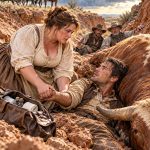
PART 6 — THE DROUGHT ENDED THE NIGHT THE VALLEY STOOD TOGETHER
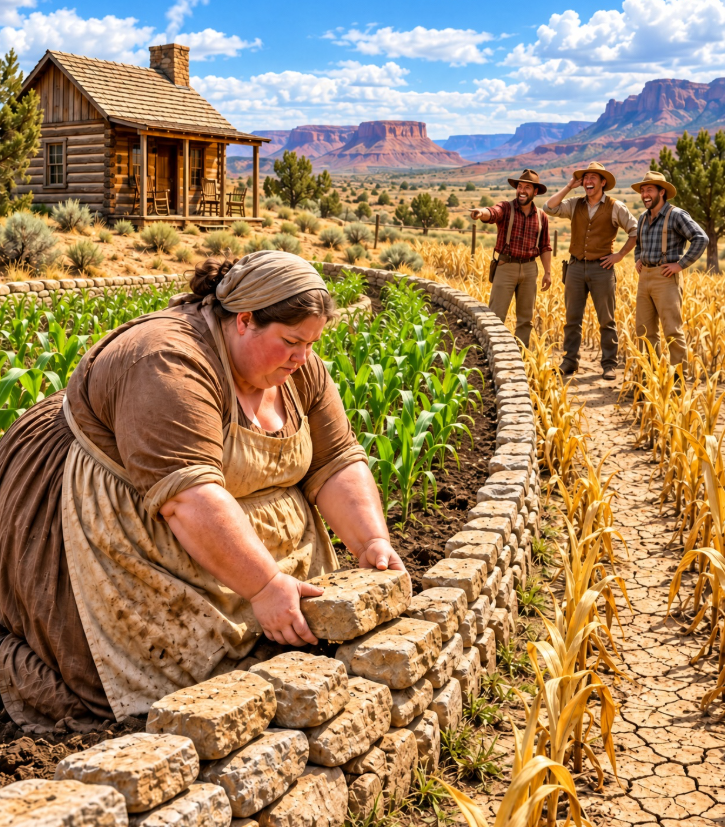
PART 6 — THE DROUGHT ENDED THE NIGHT THE VALLEY STOOD TOGETHER
The water was moving faster every minute.
Marin reached the broken berm and stared.
The dynamite had created a channel through the hillside.
Water poured through it.
Not enough to destroy the valley yet.
But enough to drain the underground reservoir.
Harland crouched beside the breach.
“We need to close it.”
“With what?”
“Stone.”
“There isn’t enough.”
Marin looked around.
Then at the old wagon tracks.
“Not stone.”
She pointed toward the abandoned grain sacks.
“Sandbags.”
The farmers understood immediately.
Within minutes, everyone was working.
Men filled sacks.
Women tied them.
Children carried smaller bags.
Harland directed the strongest workers.
Marin measured the slope.
“No!”
 She shouted.
“Not there.”
Everyone stopped.
She pointed.
“The water will go around it.”
Harland looked.
She was right.
“Move six feet east!”
They rebuilt.
The water rose.
The first barrier held.
The second held.
Then the third began to buckle.
Marin’s heart pounded.
“Tobin!”
“I’m here!”
“Bring the stakes!”
He ran.
She drove one into the mud.
Then another.
Then another.
Harland watched.
“What are you measuring?”
“Pressure.”
He understood.
“You’ve been doing this for two years.”
“Yes.”
“And you knew.”
“I suspected.”
Marin looked toward the hillside.
“The water isn’t our enemy.”
She pointed to the broken channel.
“Speed is.”
Harland smiled.
“You’re turning the flood into a reservoir.”
“Exactly.”
They widened the channel.
Built temporary berms.
Redirected the flow sideways.
Instead of allowing the water to escape into the dry riverbed, they spread it across the upper terraces.
Slowly, the water began sinking.
The ground drank.
One inch.
Then two.
Then three.
By dawn, the rushing water had become a wide sheet of dark, wet earth.
Cinderwash had never seen anything like it.
The valley was alive.
And then the rain came.
Not a storm.
Not a flood.
A steady rain.
Soft.
Persistent.
Perfect.
Marin stood in it.
She lifted her face.
Tobin laughed beside her.
Harland removed his hat.
Nobody spoke.
The drought had not ended because the heavens had suddenly become generous.
It ended because the land had finally been given a chance to keep what the rain gave it.
By morning, every farm in Cinderwash had water.
Not an overflowing river.
Not a miracle.
Something better.
A system.
Marin’s trenches were full.
Harland’s fields were wet.
Vivien’s garden had survived.
And the farmers who had once laughed at the “pointless” ditches were now digging them on their own land.
But Gideon Rusk was not finished.
He arrived at Marin’s property with six armed men.
“You’ve caused enough trouble.”
Marin stood on the porch.
Harland beside her.
Behind them were forty farmers.
Gideon looked around.
“What is this?”
Vivien stepped forward.
“A valley.”
Gideon laughed.
“You think numbers scare me?”
“No,” Marin said.
She held up Daniel’s survey.
“But evidence might.”
Gideon’s expression changed.
Marin continued.
“This map proves Calder Mining knew about the aquifer.”
Harland held up another document.
“And this proves they bought forged water claims.”
Vivien lifted a third.
“And this proves they bribed the territorial office.”
Gideon stared.
The farmers had collected everything.
For weeks, they had searched old records.
Copied documents.
Found witnesses.
And now they had enough evidence to destroy Calder Mining’s plan.
Gideon reached for his gun.
Harland raised his rifle.
“Don’t.”
Gideon stopped.
Then came the sound of horses.
A territorial marshal rode into the valley.
Behind him were four deputies.
He dismounted.
“Gideon Rusk.”
Gideon’s face fell.
“You’re under arrest.”
He looked toward Marin.
“How?”
She smiled faintly.
“You weren’t the only one who could send letters.”
The marshal took the documents.
Then looked toward the farmers.
“You all prepared these?”
Vivien nodded.
The marshal smiled.
“Then Calder Mining has a serious problem.”
Gideon was taken away.
The valley finally exhaled.
Tobin turned toward his mother.
“Did we win?”
Marin looked at the green hills.
“Yes.”
Harland shook his head.
“Not yet.”
Marin looked at him.
He held out a small wooden stake.
The same kind she had used for years.
“You were right.”
She smiled.
“That must hurt.”
“Terribly.”
She laughed.
Harland stepped closer.
“I’ve been meaning to ask you something.”
“What?”
“Would you consider letting me help with the next terrace?”
Marin raised an eyebrow.
“Only if you promise not to call it pointless.”
“I won’t.”
“And?”
“And I won’t tell you how to run your land.”
“Good.”
He looked at her.
“Because I was hoping you might let me stay.”
Marin’s expression softened.
“For the farm?”
Harland shook his head.
“For you.”
She stared at him.
After everything that had happened, she had forgotten what it felt like to imagine a future.
Not a future built around survival.
A future built around choice.
She looked at Tobin.
He was smiling.
Far too knowingly.
Marin laughed.
“You’ve been waiting for this.”
Tobin shrugged.
“Mr. Voss is better than most.”
Harland laughed.
Marin shook her head.
“You’re both impossible.”
Then she looked toward the hillside.
The trenches curved across the land like long, quiet scars.
For two years, everyone had called them useless.
Now they were full of water.
Full of life.
Full of proof.
Marin placed her hand in Harland’s.
“We’ll need more trenches.”
He squeezed her hand.
“Then we’ll dig.”
And years later, people would still tell the story of the Cinderwash drought.
They would talk about the spring.
The aquifer.
The men who tried to steal it.
But the oldest farmers always remembered something else.
They remembered a widowed woman standing alone on a dry Arizona hillside while everyone laughed.
She had no money.
No powerful friends.
No certainty that her plan would work.
Only observation.
Patience.
And the stubborn belief that water did not have to be wasted simply because everyone else had always wasted it.
The woman they called Ditch Woman eventually became the person who taught the entire valley how to survive drought.
And every spring, when the first rain fell across Cinderwash, the farmers still walked their fields.
They checked their berms.
They checked their soil.
And they remembered the lesson Marin Quill had learned before anyone else:
You don’t have to control the rain.
You only have to stop letting it run away.