PART 2 – THE WOMAN WHO COULD NO LONGER STAY SILENT
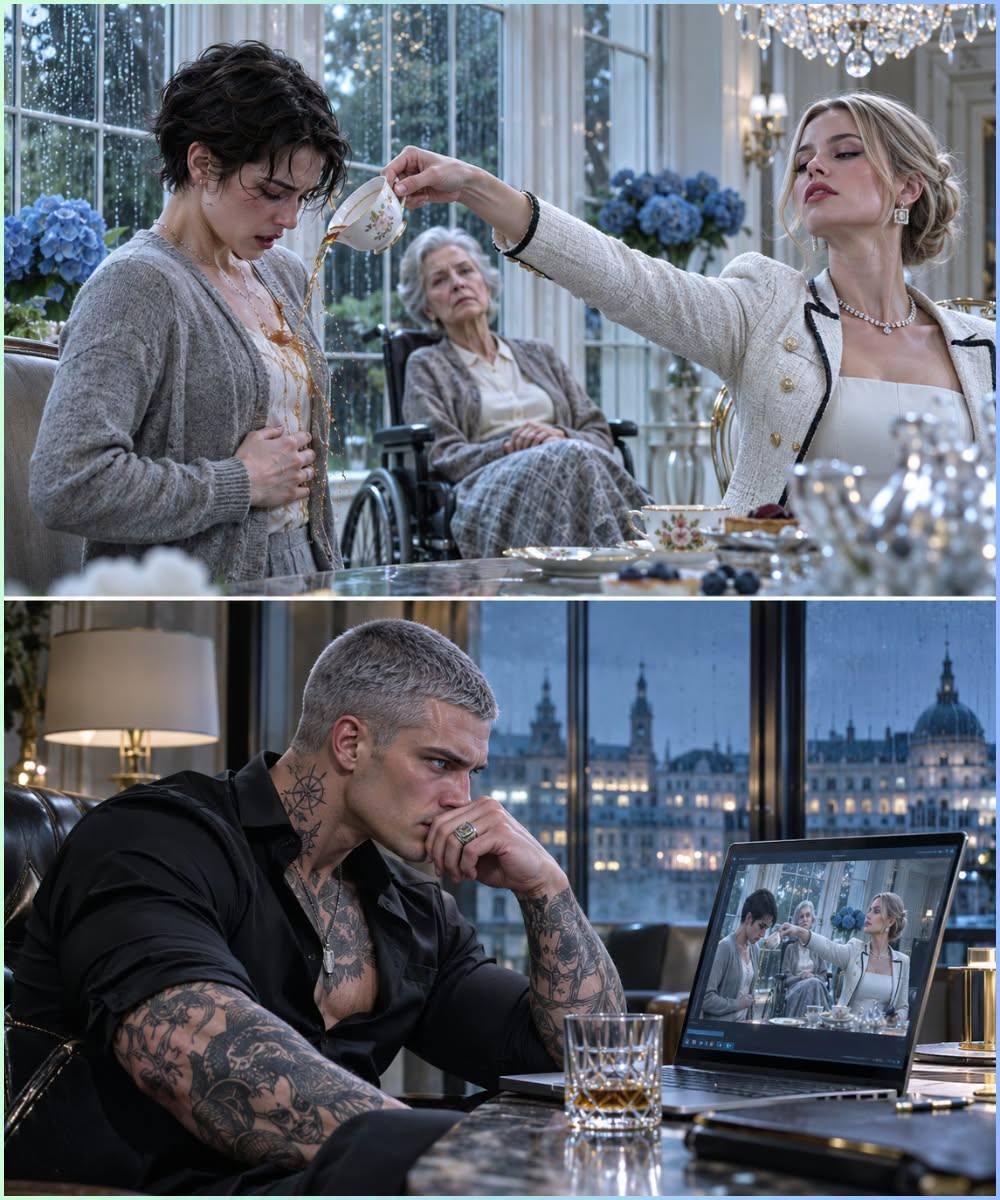
“You need this job, don’t you?”
Tessa slowly closed her lunch container.
“Yes.”
Sloane smiled.
“Then perhaps you should remember that.”
She walked to the refrigerator, removed a bottle of sparkling water, and examined the label.
“You’re paid to care for Miles’s mother. Not to turn this house into your personal dining room.”
“I understand.”
“Do you?”
Sloane turned.
“Because lately, I’ve noticed you seem very comfortable here. You speak to Mrs. Hartwell as though she’s your friend. You sit with her for hours. You even bring her little homemade gifts.”
Tessa looked toward the hallway.
“Mrs. Hartwell responds well to familiar objects and routines. It’s part of her rehabilitation.”
“She’s not your rehabilitation project.”
“No. She’s a person.”
Sloane’s smile disappeared.
For several seconds, neither woman moved.
Then Sloane stepped closer.
“Let me make something clear. When I marry Miles, this house will be mine. You’ll be working for me, not the other way around.”
Tessa picked up her lunch.
“I work for Mrs. Hartwell.”
“Your contract is with the Hartwell family.”
“Then perhaps you should read it.”
Sloane’s expression hardened.
“You’re becoming very difficult.”
Tessa walked past her.
Behind her, Sloane muttered something under her breath.
But Tessa heard it.
And so did someone watching from four thousand miles away.
In Copenhagen, Miles had replayed the kitchen footage three times.
He had also reviewed the previous forty-eight hours.
The recordings showed Sloane repeatedly ordering Tessa around, interrupting Lenora’s therapy sessions, and refusing to let the caregiver eat in the dining room.
But something else bothered him.
At 9:15 the previous evening, Sloane had entered his mother’s bedroom carrying a folder.
She remained inside for eleven minutes.
When she emerged, she was holding a small silver key.
Miles immediately called Graham.
“What’s in the folder?”
Graham answered quietly.
“Your mother’s estate documents.”
Miles stood.
“Why does Sloane have those?”
“She told me she was organizing paperwork for the wedding.”
“Did you give them to her?”
“No.”
“Then how did she get them?”
“I don’t know.”
Miles looked at the footage again.
Sloane was walking toward Lenora’s bedroom.
Her posture was relaxed.
She seemed entirely comfortable entering a room that wasn’t hers.
“Graham, I need you to do something.”
“Anything.”
“Find out whether my mother has signed anything recently. Anything at all.”
Graham hesitated.
“There’s something you should know.”
“What?”
“Your mother has been trying to tell us something.”
Miles went silent.
“Since when?”
“About three weeks.”
“What exactly?”
“She keeps pointing toward the old library. Sometimes she points at the clock. Sometimes she tries to write something.”
Miles rubbed his forehead.
“Why wasn’t I told?”
“I tried calling you. You were in Singapore.”
“Graham—”
“Your mother doesn’t need another doctor telling her to rest. She needs someone who will listen.”
Miles looked at the screen.
On it, Tessa was carefully adjusting Lenora’s blanket.
For the first time, he realized that he had been watching the wrong person.
At 10:30 that night, Tessa finished helping Lenora prepare for bed.
She checked the medication chart, recorded her blood pressure, and placed a glᴀss of water within reach.
“Good night, Mrs. Hartwell.”
Lenora caught her wrist.
Tessa turned.
“What is it?”
Lenora’s fingers trembled.
Tessa brought the communication board closer.
“Do you want water?”
One blink.
“No?”
Lenora moved her finger toward the board.
Tessa waited.
The first letter was S.
Then L.
Then O.
Tessa leaned closer.
“Slowly. Take your time.”
Lenora’s finger moved again.
A.
N.
E.
Tessa frowned.
“Sloane?”
Lenora blinked repeatedly.
“Yes.”
Tessa felt a chill.
“Did Sloane do something?”
Lenora’s finger moved toward the word NO.
Then she pointed toward the bedroom door.
Tessa understood.
“Do you want me to get Graham?”
Lenora blinked.
“Yes.
Tessa stood.
But Lenora grabbed her hand again.
This time, her finger moved across the letters.
D.
R.
A.
W.
E.
R.
Tessa looked toward the antique dresser.
“Something in the drawer?”
One blink.
“Yes.”
Tessa opened the top drawer.
Inside were folded handkerchiefs, an old pH๏τograph, and a small velvet box.
Beneath the lining was a sealed envelope.
Written across the front in Lenora’s handwriting were six words.
FOR MILES. ONLY WHEN HE IS READY.
Tessa’s hands trembled.
She looked at Lenora.
“Should I give this to Graham?”
Lenora blinked once.
Yes.
The following morning, Miles received a pH๏τograph of the envelope.
His mother’s handwriting was unmistakable.
He immediately called Graham.
“What’s inside?”
“We haven’t opened it.”
“Why not?”
“Because it says it’s for you.”
Miles stared at the image.
“Put it somewhere safe. I’m coming home.”
“Your negotiations?”
“Cancel them.”
“Mr. Hartwell, the European contract—”
“Graham, I said I’m coming home.”
He ended the call.
Then he opened the airline application and booked the earliest available flight.
At Hartwell House, Sloane was preparing for a private luncheon.
She had invited three friends, a wedding planner, and a pH๏τographer.
The event was supposed to be a preview of the wedding arrangements.
Tessa was instructed to arrange flowers, serve drinks, and remain out of sight whenever guests arrived.
At noon, Sloane entered the breakfast room wearing an ivory dress.
“Where’s the tea?”
“On the table.”
“Not that tea. The special one.”
Tessa looked at the tray.
“Which one?”
Sloane sighed.
“Honestly, do I have to explain everything?”
She picked up the teapot.
Then she deliberately tipped it.
H๏τ tea spilled across the white tablecloth and onto the floor.
“Oh, Tessa.”
Tessa stared at the mess.
Sloane folded her arms.
“Clean it.”
“I’ll get the cloth.”
“And hurry. My guests are arriving.”
Tessa turned toward the kitchen.
Then Sloane called after her.
“One more thing.”
Tessa stopped.
“If you mention anything about yesterday to Miles, I’ll make sure you never work in this city again.”
Tessa turned slowly.
“I haven’t mentioned anything.”
“Good. Keep it that way.”
From the upstairs landing, Graham had heard every word.
He quietly took out his phone.
And pressed record.
At 3:18 p.m., the front doors opened.
Sloane was in the living room discussing wedding flowers when a familiar voice came from behind her.
“Hello, Sloane.”
She turned.
The glᴀss in her hand nearly slipped.
“Miles?”
He stood in the doorway with his suitcase beside him.
His expression was unreadable.
She rushed toward him.
“Darling! You’re home early!”
She wrapped her arms around his neck.
Miles did not return the embrace.
“Where’s my mother?”
“Upstairs. She’s resting.”
“Where’s Tessa?”
Sloane stepped back.
“Why?”
“Because I asked.”
“She was cleaning the breakfast room.”
Miles looked at the guests.
“I’m sorry, ladies. I need to speak with my fiancée.”
Sloane laughed nervously.
“Of course.”
He walked past her.
But before reaching the staircase, he heard something.
A sharp crash.
Then Tessa’s voice.
“Please don’t touch her!”
Miles ran.
In the breakfast room, Lenora’s wheelchair was tilted slightly toward the table.
A glᴀss of water lay broken on the floor.
Tessa was kneeling beside her, trying to steady the wheelchair.
Sloane stood over them.
“I told you not to move her without asking me!”
“She was choking. I was trying to help.”
“You’re making a scene!”
“She couldn’t breathe!”
Sloane raised her hand.
And Miles saw everything.
He caught her wrist before it could come down.
“Don’t.”
The room fell silent.
Sloane stared at him.
“Miles?”
He released her hand.
Then he looked at Tessa.
“Are you hurt?”
Tessa shook her head.
“I’m okay.”
His eyes moved to the wet stain on her cardigan.
“Was this tea?”
She looked down.
Sloane answered quickly.
“It was an accident.”
Miles turned.
“An accident?”
“She dropped the tray.”
Tessa said nothing.
Miles looked at the broken glᴀss.
Then at his mother.
Lenora was staring directly at him.
Her eyes filled with tears.
“Mom?”
He dropped to his knees beside her.
“I’m home.”
Lenora’s hand moved.
She touched his cheek.
Then she began making a sound.
A broken, unfamiliar sound.
Miles felt his throat тιԍнтen.
“It’s okay, Mom. I’m here.”
Tessa brought the communication board.
“She’s been trying to tell you something.”
Miles looked at the board.
Then at Tessa.
“What?”
“She found something in her dresser. She wanted Graham to keep it safe for you.”
Sloane’s face changed.
Only for a second.
But Miles saw it.
“What did you find?” he asked.
Sloane stepped forward.
“Darling, your mother gets confused. You shouldn’t encourage these episodes.”
Miles slowly stood.
“Don’t tell me what my mother understands.”
PART 3 – THE SECRET THAT DESTROYED THE WEDDING
That evening, Miles sat in his father’s old library.
Graham placed the sealed envelope on the desk.
Tessa stood beside Lenora, who had been brought into the room in her wheelchair.
Sloane had been asked to wait in the living room.
Miles opened the envelope.
Inside were three documents and a handwritten letter.
He read the first document.
It was a copy of the original Hartwell family trust.
The second was a legal notice establishing Lenora as the sole authorized trustee during her lifetime.
The third was a proposed amendment to the trust.
Miles frowned.
“What’s this?”
Graham answered.
“Your mother discovered it several weeks ago.”
The amendment would have transferred significant control over the family’s investment holdings to a newly established trust.
The proposed beneficiary was a company called Mercer Strategic Holdings.
Miles read the name twice.
“Mercer?”
Graham nodded.
“Sloane’s family company.”
Miles felt his stomach drop.
“Who prepared this?”
“An attorney named Victor Lang. He was introduced to your mother by Miss Mercer.”
Miles looked at the document.
There was a signature at the bottom.
Lenora Hartwell.
But the date was wrong.
The signature was dated eleven days after Lenora had been admitted to the hospital following a medical emergency.
Miles looked at Graham.
“Was she even capable of signing this?”
“No. She was unconscious for most of that period.”
Tessa stepped forward.
“Mrs. Hartwell tried to show me this before.”
Miles turned.
“When?”
“Three weeks ago. She was pointing toward the library, but I couldn’t understand what she wanted. Then she began trying to write the letter S.”
He looked at his mother.
Lenora blinked repeatedly.
Miles moved closer.
“Mom, did Sloane bring these papers to you?”
One blink.
Yes.
“Did she ask you to sign them?”
One blink.
Yes.
“Did you refuse?”
Lenora’s finger moved toward the board.
N.
O.
Tessa leaned closer.
“She says she didn’t sign them.”
Miles felt cold.
Then he looked at the final page.
There was another signature.
His.
A supposed authorization allowing the trust amendment to proceed if Lenora became medically incapacitated.
Miles stared.
He had never signed it.
Sloane entered the library twenty minutes later.
“What is all this?”
Miles stood behind the desk.
“Sit down.”
She laughed nervously.
“Darling, you’re frightening me.”
“Did you prepare these documents?”
She glanced at the papers.
Then back at him.
“Your mother wanted to make sure everything was organized before the wedding.”
“My mother was unconscious when this was signed.”
“She was confused.”
“That’s not an answer.”
Sloane’s expression hardened.
“Why are you suddenly interrogating me?”
“Because someone forged my signature.”
She looked at the documents again.
“I don’t know anything about that.”
Miles pressed a ʙuттon on his phone.
The screen displayed security footage.
Sloane entering Lenora’s bedroom.
Sloane removing the silver key.
Sloane opening the dresser.
And Sloane taking the envelope’s original paperwork.
Her face drained of color.
“You’ve been recording me?”
“The cameras are installed for my mother’s safety.”
“You had no right!”
Miles stared at her.
“You poured tea on a woman who works in my home. You threatened her. You tried to isolate my mother. And now you’re telling me I have no right to know what’s happening under my own roof?”
Sloane stepped forward.
“Miles, listen to me.”
“No. You listen.”
He placed the trust amendment on the desk.
“Why does your family’s company appear as the beneficiary?”
She said nothing.
“Why did you bring legal documents into my mother’s bedroom?”
Silence.
“Why did you threaten Tessa when she tried to help her?”
Sloane’s eyes filled.
Then her expression changed.
The tears disappeared.
“You want the truth?”
Miles didn’t move.
“Fine. Your mother has been holding on to everything for years. The house, the company, the money. You spend your life traveling, and I was supposed to marry into this family without having any real authority?”
“You were going to marry me.”
“Exactly!”
Her voice rose.
“I was going to become your wife. I would have had to spend the rest of my life waiting for permission to make decisions in a house where nobody respects me!”
Miles looked at her.
“So you decided to take control of my mother’s estate?”
“I was protecting our future.”
“By forging signatures?”
Sloane’s jaw тιԍнтened.
“Your mother doesn’t even know what’s happening half the time!”
The words hung in the room.
Lenora began to cry.
Miles looked toward his mother.
Then back at Sloane.
“Get out.”
Sloane stared.
“What?”
“Leave this house.”
“You can’t be serious.”
“The wedding is canceled.”
She laughed.
“You’re throwing away everything because of a caregiver?”
Miles shook his head.
“No. I’m ending this because of the person standing in front of me.”
Sloane grabbed her handbag.
“You’ll regret this.”
“Perhaps.”
He opened the door.
“But I would regret marrying you much more.”
The legal consequences came quickly.
Miles’s attorneys contacted the authorities and provided the security recordings, financial documents, and the original trust records.
A forensic examination revealed that several signatures had been digitally reproduced.
Victor Lang, the attorney who prepared the amendment, initially claimed he had received instructions from Sloane.
But when investigators examined his correspondence, they discovered something worse.
Sloane had been working with her brother, Adrian Mercer, for almost a year.
Their plan was simple.
Marry Miles.
Obtain access to the Hartwell family trust.
Use Lenora’s medical condition to justify transferring control of the estate.
Then gradually move significant ᴀssets into companies controlled by the Mercer family.
The wedding had never been just about love.
It had been about money.
The investigation led to formal legal proceedings against those involved.
The disputed trust amendment was invalidated, and Lenora’s estate remained protected.
Sloane and Adrian faced serious legal consequences for their roles in the scheme.
Miles never attended the wedding that had been planned for them.
Instead, he spent the money reserved for the ceremony establishing a rehabilitation center for stroke survivors.
He named it the Lenora Hartwell Communication Center.
Three months later, the house felt different.
The curtains were open.
Fresh flowers stood in the breakfast room.
And Lenora was sitting in her favorite chair beside the garden window.
Tessa entered carrying a small wooden box.
“Good morning, Mrs. Hartwell.”
Lenora smiled.
It was a small movement, but it was unmistakable.
Miles stood near the fireplace.
He had canceled two international trips and delegated several major business responsibilities.
For the first time in years, he was home for breakfast.
“How’s she doing today?” he asked.
“Very well. She completed her hand exercises this morning.”
Tessa placed the communication board on the table.
Lenora reached for it.
Her finger moved slowly.
M.
I.
L.
E.
S.
Miles approached.
“I’m here, Mom.”
Lenora tried to speak.
A faint sound escaped her throat.
He knelt.
“Take your time.”
She tried again.
“M…”
Miles held his breath.
“Mom?”
“Love.”
One word.
Broken.
Barely audible.
But unmistakable.
Miles covered his mouth.
His eyes filled.
“Love you too, Mom.”
Lenora smiled.
Tessa quietly stepped away to give them privacy.
But Miles looked up.
“Tessa?”
She stopped.
“Thank you.”
She shook her head.
“You don’t have to thank me.”
“Yes, I do.”
He stood.
“For months, I thought I was doing everything necessary for my mother. I paid the best doctors. I arranged the best facilities. I installed security systems. I thought that was enough.”
He glanced toward Lenora.
“But I wasn’t listening.”
Tessa looked down.
“Sometimes people need more than medical care. They need someone who stays long enough to understand them.”
Miles nodded.
“That’s something I should have learned a long time ago.”
Two weeks later, Miles asked Tessa to meet him in the garden.
She arrived carrying a notebook.
“Is everything okay?”
“Everything is fine.”
He gestured toward the bench.
“Please sit.”
Tessa sat.
Miles handed her a folder.
She opened it.
Inside was a formal employment offer.
But it wasn’t for the position she currently held.
It was an offer to become the director of the Lenora Hartwell Communication Center’s patient-care and rehabilitation program, working alongside a team of licensed clinicians.
Tessa stared at the document.
“I don’t understand.”
“You’ve been studying occupational therapy while caring for my mother. I spoke with the center’s clinical director. They believe your experience and dedication would make you a valuable part of the team.”
Her eyes widened.
“I haven’t finished my degree.”
“The position includes support for completing your education. You’ll work under the supervision of qualified professionals.”
Tessa looked at him.
“Why me?”
“Because you saw something everyone else missed.”
He paused.
“You understood that my mother was still there, even when she couldn’t tell us what she needed.”
Tessa’s eyes filled.
“I was just doing my job.”
“No,” Miles said softly. “You were doing much more than that.”
She closed the folder.
“Thank you.”
Miles smiled.
“There’s one more thing.”
“What?”
“Your mother owns a small alterations shop on Fulton Avenue, doesn’t she?”
Tessa looked surprised.
“Yes.”
“I understand the building’s landlord has been planning to sell.”
Her expression became cautious.
“How do you know that?”
“Graham mentioned it. My company owns several commercial properties in that area. I’ve arranged an offer for your mother to purchase the building at a fair valuation, with financing options through an independent lender.”
Tessa shook her head.
“I can’t accept charity.”
“It’s not charity. It’s an opportunity. Your mother can decide whether she wants it.”
Tessa looked away, fighting tears.
For years, she had worked two jobs, attended classes, and worried about her mother’s little shop.
She had never expected someone to notice.
“Thank you,” she whispered.
Miles nodded.
“You earned the opportunity yourself.”
One year later, the Lenora Hartwell Communication Center officially opened.
The building was bright, welcoming, and filled with patients and families.
There were therapy rooms, communication laboratories, rehabilitation equipment, and a garden designed for patients recovering from neurological injuries.
Tessa stood on the stage wearing a simple blue dress.
Her mother sat in the front row.
Graham was beside her.
And Lenora was seated next to Miles.
When Tessa began speaking, the room became quiet.
“I want to tell you about someone who taught me that silence doesn’t mean someone has nothing to say.”
She looked toward Lenora.
“When my father became ill, I learned that the people we love can sometimes lose their words. But they don’t lose their thoughts, their memories, or their need to be heard.”
Her voice trembled.
“Every patient deserves patience. Every family deserves hope. And nobody should ever be treated as though their voice no longer matters.”
The audience rose in applause.
Lenora clapped slowly.
Miles wiped his eyes.
And when Tessa stepped down from the stage, Lenora reached for her hand.
She squeezed it.
Then, with great effort, she spoke.
“Thank… you.”
Tessa knelt beside her.
“Oh, Mrs. Hartwell.”
Lenora smiled.
“Friend.”
Tessa began crying.
Miles looked away for a moment.
He had spent years building a business that reached thousands of people.
But the greatest thing he had ever witnessed was his mother recovering a small piece of her voice.
That evening, after the celebration, Miles stood with Tessa beside the garden.
“Can I ask you something?” he said.
“Of course.”
“Why didn’t you quit?”
Tessa looked at him.
“When Sloane treated you that way?”
She thought for a moment.
“Because your mother needed someone.”
“You could have found another job.”
“Yes.”
“You could have reported her.”
“I should have.”
“Then why stay?”
Tessa smiled faintly.
“Because every morning, when I walked into her room, she looked at me like I was someone she could trust.”
Miles lowered his eyes.
“I wish I’d been there.”
Tessa looked toward the building.
“You’re here now.”
He nodded.
Then he said something he had been thinking about for months.
“I used to believe that taking care of my family meant providing money, security, and everything they could possibly need.”
“And now?”
“Now I think it means showing up.”
Tessa smiled.
“That’s a good place to start.”
Later that night, Miles sat beside his mother in the breakfast room.
The same room where Sloane had once poured tea over Tessa.
The same table where Lenora had sat silently, unable to defend herself.
Now there were three cups of tea.
One for Miles.
One for Lenora.
And one for Tessa, who had stopped by to say goodnight.
Miles lifted his cup.
“To new beginnings.”
Lenora smiled.
Tessa raised hers.
“To being heard.”
They touched their cups gently.
And for the first time in a very long time, the Hartwell house was filled with laughter.
Miles looked at his mother.
Then at Tessa.
He finally understood what Graham had tried to tell him from the beginning.
The cameras had shown him what was happening.
But they could never replace being there.
He had watched a woman pour tea on his mother’s caregiver from four thousand miles away.
He had watched the humiliation, the cruelty, and the silence.
But the woman who changed his life wasn’t the one wearing the engagement ring.
It was the caregiver who stayed when nobody else was listening.
Because sometimes the people who have the least power in a room are the ones who show the greatest strength.
And sometimes, the most important thing a person can do is simply refuse to look away.
THE END.