PART 3 — “THE WOMAN WHO KNEW TOO MUCH”
PART 3 — “THE WOMAN WHO KNEW TOO MUCH”
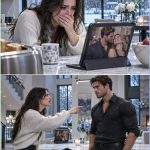
Clara read the note again.
SHE WASN’T ALONE WHEN SHE DIED.
The words seemed to burn into the paper.
“Everett.”
He didn’t respond.
“Who wrote this?”
“I don’t know.”
“You recognize the handwriting?”
“No.”
“Then how do you know someone is telling the truth?”
Everett took the paper from her.
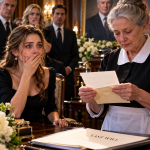
“Because of the cemetery.”
“What happened there?”
“Nothing.”
“Everett.”
His eyes met hers.
“I buried Eleanor there myself.”
Clara waited.
“Then why would someone leave this note?”
“Because someone wants me to remember.”
“Remember what?”
Everett folded the paper.
“I don’t know.”
Clara studied him.
He was lying.
Not well.
She could see it now.
“You know more than you’re telling me.”
“I know enough to keep you safe.”
“I didn’t ask you to keep me safe.”
“I know.”
“Then tell me the truth.”
Everett looked away.
“No.”
Clara’s chest тιԍнтened.
“You hired me to care for you.”
“Yes.”
“You asked me to stay.”
“Yes.”
“You took my hand when you were feverish.”
His expression softened.
“Yes.”
“And now you’re shutting me out.”
“I have to.”
“Why?”
Everett’s voice dropped.
“Because I don’t want what happened to Eleanor to happen to you.”
Clara went still.
“What happened to her?”
“I don’t know.”
“That’s not an answer.”
“It is the only one I have.”
That evening, Everett barely ate.
He kept looking toward the windows.
The ranch hands noticed.
By sunset, Silas had loaded rifles into the wagon.
Clara watched him.
“Are we expecting trouble?”
Silas hesitated.
“Maybe.”
“What kind?”
“The kind that comes quietly.”
Clara turned toward Everett.
He was standing beside the fireplace.
“What’s going on?”
He didn’t answer.
Then a knock came at the door.
Three slow knocks.
Everett’s entire body stiffened.
Silas reached for his rifle.
“Who is it?”
A woman’s voice answered.
“Clara.”
Clara froze.
She didn’t recognize the voice.
Everett did.
His face went white.
“Don’t open that door.”
The woman knocked again.
“Clara Whitmore.”
Clara’s heart stopped.
She had never told Everett her maiden name.
The woman outside continued.
“You don’t belong here.”
Everett stepped between Clara and the door.
“Who are you?”
A pause.
Then:
“My name is Margaret Bell.”
Everett closed his eyes.
Clara whispered:
“Who is she?”
He answered without looking back.
“The woman who was with Eleanor the night she died.”
The door opened suddenly.
A woman in a black traveling dress stood outside.
She was perhaps forty.
Her face was pale.
Her eyes were exhausted.
And in her hands was a small leather diary.
She looked directly at Clara.
“You need to leave this ranch.”
Clara frowned.
“Why?”
Margaret looked at Everett.
“Because he is not the man you think he is.”
Everett stepped forward.
“Margaret.”
“You promised.”
“I never promised you anything.”
“You promised Eleanor.”
Silence.
Clara’s heart began pounding.
“What did Eleanor ask him to do?”
Margaret’s eyes filled with tears.
“She asked him to protect her child.”
Clara stopped breathing.
“What child?”
Everett turned toward Margaret.
“Enough.”
“No.”
Margaret shook her head.
“Seven years is long enough.”
Clara looked at Everett.
“Did you and Eleanor have a child?”
“No.”
Margaret whispered:
“She did.”
Everett’s face collapsed.
Clara stared at him.
“You told me she lost the baby.”
“She did.”
“Then what is she talking about?”
Margaret opened the diary.
“The baby didn’t die.”
Clara’s mouth fell open.
Everett’s voice was barely audible.
“Margaret…”
“She was born alive.”
Clara looked between them.
“Where is she?”
Margaret’s eyes filled with tears.
“That’s the problem.”
A horse screamed outside.
Then came the sound of gunfire.
Everyone ducked.
The window shattered.
Everett grabbed Clara and pulled her to the floor.
“Stay down!”
Another sH๏τ.
Silas fired toward the darkness.
Margaret screamed.
Everett crawled toward the diary.
“Where is the child?”
Margaret clutched it against her chest.
“I don’t know.”
“You said you knew.”
“I knew where she was seven years ago.”
“Where?”
Margaret looked at Clara.
Then whispered:
“St. Joseph’s orphanage.”
Clara’s heart stopped.
“St. Joseph’s?”
“Yes.”
“That’s in Helena.”
Margaret nodded.
“But she isn’t there anymore.”
“Where is she?”
Margaret opened the diary to the final page.
A name had been written there.
Clara stared.
It was her own name.
CLARA WHITMORE.
She stepped backward.
“No.”
Everett looked at her.
Margaret whispered:
“Eleanor’s child was given another name.”
Clara’s hands began to shake.
“What name?”
Margaret closed the diary.
“Clara.”
Silence.
The gunfire outside stopped.
Clara looked at Everett.
His eyes were full of something she’d never seen before.
Fear.
Love.
And grief.
“You knew?”
Everett’s lips parted.
“I suspected.”
“You knew who I was before you hired me.”
“I didn’t know.”
“You’re lying.”
“I swear.”
Clara stepped back.
“You didn’t choose me because I could nurse you.”
Everett moved toward her.
“Clara—”
“You chose me because of Eleanor.”
“No.”
“Then why?”
His voice broke.
“Because seven years ago, I was told my daughter died.”
Clara froze.
Everett continued.
“Then last month, I received a letter.”
“What letter?”
“A letter saying she was alive.”
He reached inside his coat.
Pulled out a folded piece of paper.
And handed it to her.
Clara opened it.
Only one sentence had been written.
IF YOU WANT TO FIND YOUR DAUGHTER, BRING HER TO CALDWELL RANCH.
Clara looked up.
Her entire world had changed.
“You think I’m Eleanor’s daughter?”
Everett stared at her.
“I don’t know.”
Then Margaret spoke from behind them.
“I do.”
Clara turned.
Margaret was crying.
She pointed at the birthmark just below Clara’s collarbone.
“The same mark Eleanor’s baby had.”
Everett looked at Clara.
His face crumpled.
And then, for the first time since Clara had known him, the giant rancher dropped to his knees.
Not from weakness.
Not from pain.
But because the woman he’d hired for one night might be the daughter he had mourned for seven years.
And outside the ranch house, hidden beyond the fence line, a rider watched the scene through a spyglᴀss.
He lowered it slowly.
Then smiled.
“Good.”
He turned his horse toward town.
“Now that Caldwell has found his daughter…”
He touched the revolver at his waist.
“…we can finally make him pay.”