PART 3 — THE BOX THAT COULD BRING DOWN A POWERFUL MAN
PART 3 — THE BOX THAT COULD BRING DOWN A POWERFUL MAN
“Don’t open that door,” Clara whispered.
Reeve examined the warrant through the window.
It was signed by a deputy marshal and accused him of stealing government property six years earlier.
“They’ve been waiting for an excuse to arrest me,” he said.
Nia looked at him.
“Because of me?”
“Because of what you carry.”
Clara shook her head.
“There’s a back staircase. Take it. I’ll handle the men outside.”
Reeve turned to Nia.
“Stay with Clara.”
She immediately shook her head.
“No.”
“Nia, listen—”
“I came here because of my father. I will not hide while you decide everything.”
Reeve paused.
Then he nodded.
“Then we go together.”
They slipped through the back of the bookshop and crossed the narrow alley behind the buildings.
By the time the men reached Clara’s front door, Reeve and Nia were already on the road north.
The eastern depot stood near a dry creek, several miles beyond the old military trail. Its wooden walls had weathered badly, and weeds grew through the cracks in the loading platform.
Reeve dismounted.
“This is where the supply wagons were stored.”
Nia looked toward the building.
“Box seventeen?”
“Inside.”
The depot door was locked, but Clara had given them an old key.
It turned with a reluctant click.
Inside, dust covered the floor. Broken shelves leaned against the walls, and several empty crates lay scattered beneath a collapsed roof beam.
Reeve found the storage register beside an old desk.
He opened it.
Most of the entries were faded, but one page remained clear.
BOX 17 — ORIGINAL SUPPLY INVENTORY — RED WILLOW OPERATION.
“Here,” he whispered.
They searched the back of the depot.
Finally, Nia noticed a wooden crate hidden beneath a canvas sheet.
A number had been painted on its side.
Reeve removed the lid.
Inside lay several bundles of paper wrapped in oilcloth.
The first contained supply orders.
The second held correspondence.
The third was a leather-bound ledger.
Nia recognized the handwriting on its first page.
“My father’s.”
She sat down on the floor and opened it.
The entries described land boundaries, water access, family agreements, and property records. Her father had carefully documented every household in Red Willow.
Then she found a page dated three days before the fire.
Captain Vane has requested that the eastern families sign new agreements. They refuse because the land was never abandoned. He claims the government has already approved the transfer.
Another entry followed.
I have discovered that the original survey maps have been altered. The new maps remove the families’ water rights and place the entire valley under a private company.
Nia’s hands trembled.
“My father knew.”
Reeve turned the page.
There was a list of names.
At the top stood Silas Vane.
Below it were the names of three civilian contractors and a government official.
The final entry was written in hurried strokes.
If anything happens to us, the original orders will prove that the fire was planned. The barrels delivered under the medical supply designation were not medical supplies.
Reeve looked up.
“What were they?”
Nia read the next line.
“Oil.”
The room seemed to grow colder.
Before either could speak, a sound came from outside.
Hooves.
Several horses.
Reeve closed the ledger.
“They found us.”
He moved toward the doorway, then stopped.
There was another envelope beneath the ledger.
It was addressed to Nia.
She opened it.
Inside was a letter from her father.
My beloved daughter,
If you are reading this, then your mother succeeded in getting you away from the men who came to our home.
I want you to know that I did not abandon you.
I stayed because the families trusted me to protect the records. I believed I could stop Vane from taking the valley. I was wrong about how far he would go.
The land is not only ours. It belongs to every family whose names appear in this book. If you ever have the chance, return the records to the people. Do not let anyone use them to claim power over others.
And remember this: you are not responsible for what happened to us. You were a child. You deserved a safe home.
Nia pressed the letter to her face.
For six years, she had wondered whether her father had survived somewhere, whether he had looked for her, whether he had forgotten her.
Now she knew.
He had not abandoned her.
He had been trying to protect the people he loved.
Reeve stood nearby, silent.
Then Nia looked up.
“My father knew you were there.”
Reeve nodded.
“I believe he did.”
“Did he know you helped the soldiers?”
“I don’t know.”
She looked at the letter again.
“He wrote about a scout who refused to leave the eastern ridge.”
Reeve stared at her.
Nia pointed to the next line.
There was one man who questioned the orders. I never learned his name, but I hope he finds the courage to tell the truth.
Reeve slowly sat down.
He had spent six years believing that his presence at Red Willow made him nothing more than a guilty witness.
Now he understood that someone had noticed his refusal.
But that did not erase what he had done.
“I should have gone to the authorities,” he said. “I should have told someone what I saw.”
Nia folded the letter.
“Yes.”
“I should have searched for survivors.”
“Yes.”
He lowered his head.
“I can’t ask you to forgive me.”
“I know.”
Outside, a voice called.
“Reeve Kincaid! Come out!”
Reeve looked through a gap in the wall.
 Vernon Hayes stood beside the depot with four armed men.
But it was not Hayes who frightened him.
Behind the group stood a tall man in a dark coat.
His hair was silver at the temples, and his expression was calm.
Silas Vane.
The man who had commanded the operation six years earlier.
Vane stepped forward.
“Mr. Kincaid. I see you’ve been collecting old government property.”
Reeve stepped into the doorway.
“It’s not government property. It belongs to the families whose land you stole.”
Vane smiled.
“Those families abandoned the valley.”
Nia emerged beside Reeve, holding her father’s ledger.
“My father never abandoned anything.”
Vane’s expression changed when he saw the book.
For the first time, his confidence faltered.
“Give me that.”
“No.”
“You don’t understand what you’re holding.”
“I understand that my father wrote every name in this book. I understand that you changed the maps and sent men to take our homes.”
Vane looked at Reeve.
“You should have stayed out of this.”
Reeve stepped forward.
“I did stay out of it once. That was the mistake.”
Vane gestured toward his men.
“Take the ledger.”
Before anyone moved, another voice rang out from the road.
“Not another step.”
Clara Bell had arrived with Deputy Marshal Elias Ward and two men from the territorial office.
She dismounted, carrying a document case.
“I sent a telegram to Santa Fe the moment you came looking for Reeve,” she announced. “The original records have been missing for six years. We now have the inventory proving where they were kept.”
Vane’s face hardened.
“Mrs. Bell, you have no authority here.”
“Perhaps not,” Clara replied. “But the deputy marshal does.”
Ward stepped forward.
“Captain Vane, we need you to answer questions concerning the Red Willow operation, the altered land surveys, and the destruction of government records.”
Vane laughed.
“You have no proof.”
Nia lifted her father’s ledger.
“We have this.”
Clara opened her document case.
“And these are the original supply orders.”
She placed several papers on the crate.
One bore Vane’s signature.
Another showed the barrels marked as medical supplies had been delivered to the eastern ridge under his direct instructions.
A third document contained the name of the private land company that had received the valley after the fire.
Vane stared at the papers.
His confidence finally disappeared.
“This is a misunderstanding.”
“No,” Reeve said quietly. “It was a choice.”
The deputy marshal ordered Vane’s men to step away from their horses. The confrontation ended without anyone firing a sH๏τ.
As Vane was escorted toward the road, he turned once more.
“You think this changes anything? Those families are scattered. Their homes are gone.”
Nia stepped forward.
“The homes can be rebuilt. The truth cannot be buried anymore.”
For the first time, Vane had no answer.
Three weeks later, the territorial investigation began.
Clara helped organize the records, while Whitcomb traveled from Blackthorn Ridge to verify the original land agreements. Families who had been driven away began returning to give testimony.
Reeve also testified.
He did not hide his role. He admitted that he had carried supplies, followed orders, and failed to report what he had witnessed.
Some people condemned him.
Others recognized that he had finally chosen to tell the truth.
He accepted both.
Nia returned to the valley where Red Willow had once stood.
The remains of the old settlement were still there, but the land no longer seemed entirely haunted by what had happened.
She found the place where her family home had stood.
Then she took her father’s ledger from her bag and placed it on a flat stone.
“I came back,” she whispered.
Reeve waited several steps behind her.
He had not asked her to stay at his cabin. He had not asked her to forgive him. He had simply helped her reach the place she had spent six years trying to find.
When she returned, she handed him a folded paper.
“What is this?”
“A list.”
He opened it.
It contained the names of families whose property had been taken.
At the bottom, Nia had written a final line:
The valley belongs to the people who call it home.
“We need to find them,” she said. “Every family. Every survivor. We need to make sure they know what happened to their land.”
Reeve nodded.
“I’ll help.”
Nia looked toward the distant mountains.
“And after that, I want to build something here.”
“What?”
“A school. A place where children can learn without being afraid someone will take their home away.”
Reeve looked at her for a long moment.
“That sounds like a good reason to stay.”
She smiled faintly.
“Maybe. But this time, I decide where I stay.”
He nodded.
“Exactly.”
Months later, the first families began rebuilding near the creek. A small schoolhouse rose beside a new community hall, and the old valley slowly found its voice again.
Reeve returned to his cabin, but he no longer lived as though the past had to remain locked behind him. He visited the settlement often, helping repair roofs, build fences, and carry supplies.
Nia came and went as she pleased.
She was no one’s possession.
And when the first winter snow covered the valley, she stood beside the schoolhouse and watched the children laughing beneath the new roof.
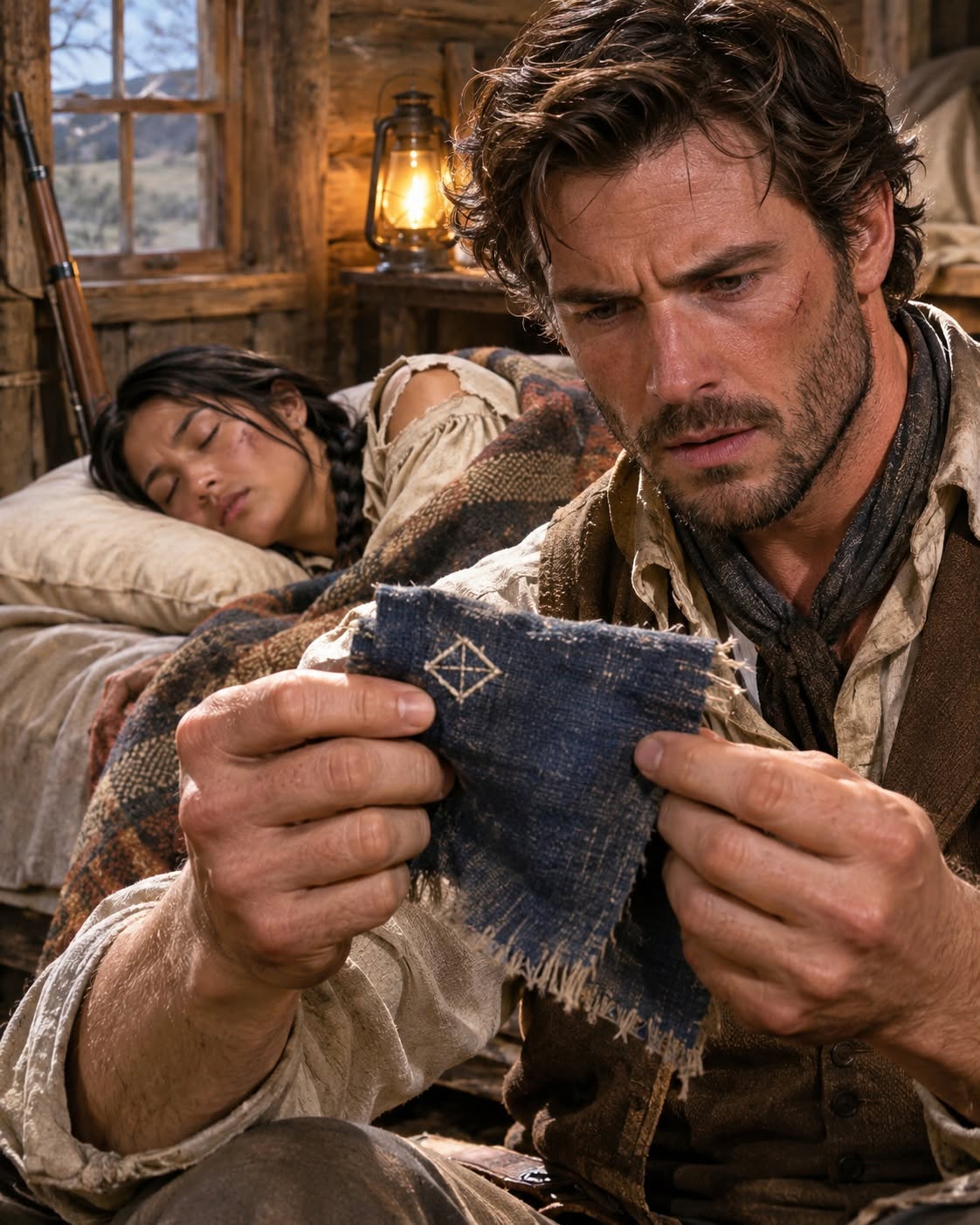
For six years, she had carried a piece of blue wool as the only surviving evidence of what happened to her family.
Now she carried something else.
Her father’s name.
His truth.
And the freedom to decide what came next.
But the greatest surprise was still waiting: among the families returning to Red Willow was a woman who claimed she had seen Nia’s father alive after the night of the fire.