PART 2 — THE WOMAN HE THOUGHT HE COULD REPLACE
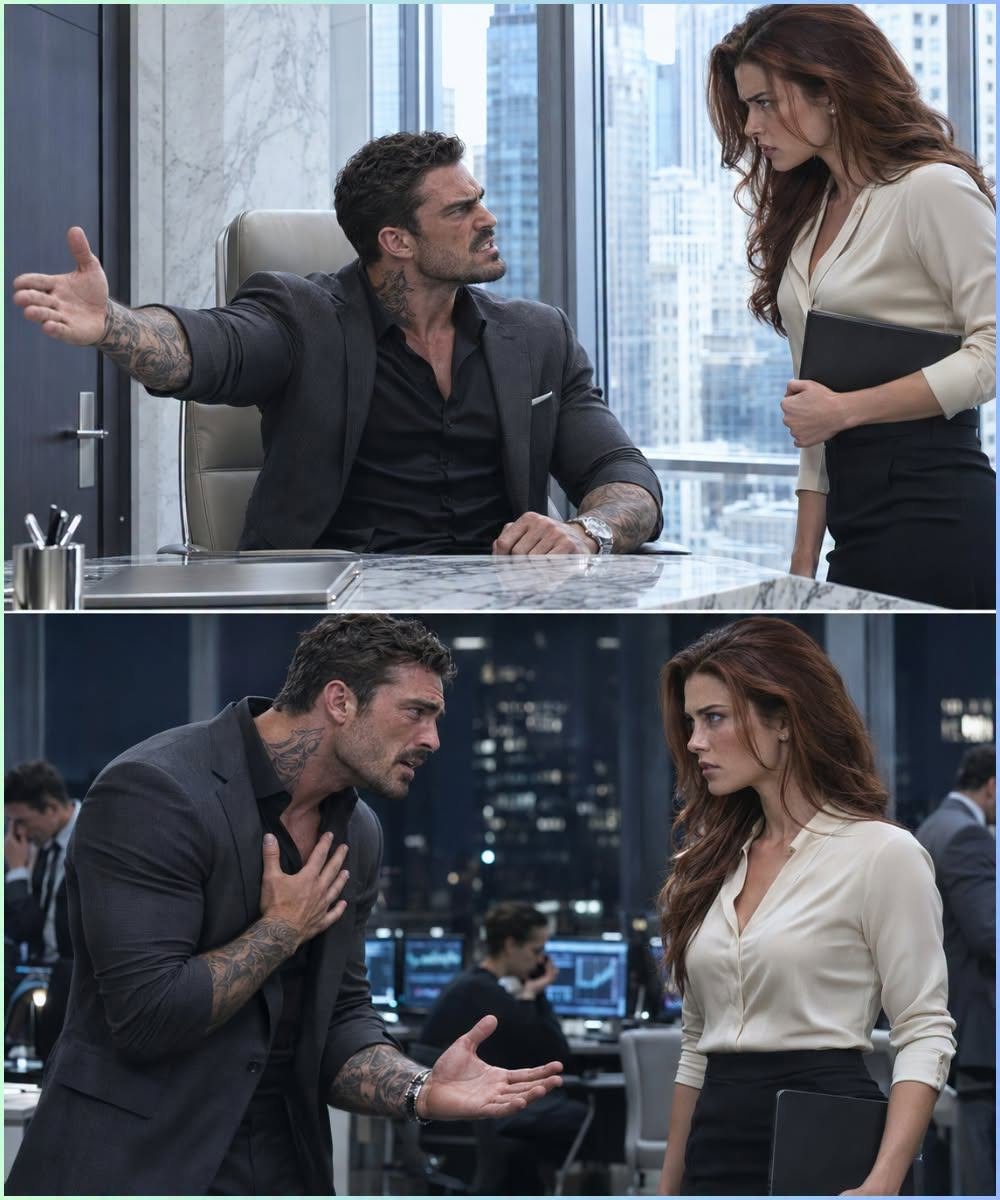
“What is this?” he had asked, lifting it from her desk.
Claire had looked up from her computer.
“My backup.”
“Your backup?”
“Some information is easier to find on paper.”
He had laughed.
Actually laughed.
“It’s 2026, Claire. We have a multimillion-dollar technology infrastructure.”
“I know, sir.”
“Then trust it.”
She had smiled politely and taken the notebook back.
Now, standing in the middle of a corporate disaster, Adrian finally understood what those notebooks represented.
He looked at her.
“Tell me you still have them.”
Claire glanced toward Daniel.
“I have twelve.”
Adrian exhaled.
For the first time that night, his shoulders relaxed.
“Then we can rebuild everything.”
“No,” Claire replied.
His expression changed.
“We can reconstruct the operational references. We can identify which shipments are affected, contact the terminal supervisors, verify carrier receipts, and rebuild the priority manifests.”
“That’s what I need.”
“But I need something from you first.”
Adrian stared.
“What?”
“Stop treating this like a problem you can solve by shouting orders.”
The room went silent.
Nobody had ever spoken to Adrian Mercer like that.
Not in the boardroom.
Not in front of his executives.
Not even his father.
Adrian’s jaw тιԍнтened.
Then, surprisingly, he nodded.
“Tell me what you need.”
Claire turned toward Daniel.
“I need an isolated workstation. No connection to the compromised network. I want paper copies of the last verified dispatch reports, terminal receipt logs, and the external carrier confirmations.”
Daniel immediately moved.
“Anything else?”
“Two people from operations who know the terminals personally. Not executives. People who actually speak to the night supervisors.”
“I’ll get them.”
Claire placed her handbag on a nearby desk.
Then she looked at Adrian.
“And I need you to understand something.”
“Claire—”
“I am not your employee anymore.”
His face hardened.
“I know.”
“No. I don’t think you do.”
She opened her handbag and removed a small black notebook.
“You called me here because your company lost its memory. But you cannot expect me to become its memory again simply because you are frightened.”
Adrian said nothing.
For once, he had no immediate answer.
At 4:12 a.m., the operation began.
Claire opened her first notebook.
The handwriting was neat, organized into columns, with dates, reference numbers, contact names, and small handwritten notes.
She turned to a page marked:
PORT PRIORITY — MEDICAL / PERISHABLE CARGO
“Daniel, read these container references aloud.”
He leaned over her shoulder.
Claire began writing.
“Container 7814. Medical refrigeration units. Vessel Meridian Star. Newark terminal.”
She flipped another page.
“Container 9021. Temperature-sensitive pharmaceutical packaging. Vessel Atlantic Crown. Bayonne.”
A young operations supervisor named Marcus approached.
“Miss Bennett, how do you know which containers need immediate release?”
“Because three months ago, the terminal changed its overnight handling procedure. The new system records the general arrival time, but not the actual refrigeration transfer window.”
Marcus blinked.
“You remember that?”
“I remember everything that affects a shipment.”
She picked up her phone.
“Call Mr. Alvarez at Newark. He’ll have the physical receipt copies.”
“It’s four in the morning.”
“He starts at three thirty.”
Marcus made the call.
Two minutes later, he was speaking to someone who apparently knew Claire very well.
“Mr. Alvarez says hello,” he reported.
“Tell him I said good morning.”
For the next hour, Claire moved through the chaos like someone navigating a familiar house in the dark.
She didn’t raise her voice.
She didn’t demand attention.
She simply knew where to look.
A shipment that had appeared missing was actually sitting in a secondary customs queue.
A refrigerated container had been ᴀssigned the wrong transfer window.
Three manufacturing shipments had valid carrier confirmations stored outside Mercer Atlantic’s internal system.
At 5:03, Daniel looked at the reconstructed list.
“Seventy-one percent.”
Adrian stood behind him.
“Seventy-one percent of what?”
“The priority cargo references. Claire has reconstructed seventy-one percent of the affected manifests.”
Adrian looked at her.
“How?”
She didn’t look up.
“By asking the people who actually handled the shipments.”
Something about that answer struck him.
For years, he had measured the company through quarterly reports, acquisition numbers, and executive presentations.
Claire had measured it through people.
The people who worked at the terminals.
The dispatchers who stayed late.
The warehouse supervisors who remembered a driver by his first name.
The employees who knew which shipments could not wait.
And he had dismissed her as replaceable.
At 5:26 a.m., Henry Cole entered the conference room holding a tablet.
“We have another problem.”
Adrian turned.
“What now?”
Henry placed the tablet on the table.
“The fabricated manifests weren’t simply uploaded. Someone used an authorized executive access credential to approve them.”
Daniel went pale.
“That’s impossible. The approval trail was encrypted.”
“Apparently, not sufficiently.”
Claire stopped writing.
“Whose credential?”
Henry hesitated.
“Victor Shaw.”
Adrian’s expression went completely still.
Victor Shaw was Mercer Atlantic’s chief financial officer.
He had worked with Adrian for eleven years.
He had attended family dinners.
He had stood beside Adrian when the company acquired its largest shipping contracts.
And he had been the first executive to suggest replacing Claire.
“Where is he?” Adrian asked.
“Not answering his phone,” Henry replied.
Daniel checked the system logs.
“There’s more.”
He turned the monitor toward them.
“The intrusion originated through a vendor access account. The account was reactivated three days ago.”
“Who authorized it?” Adrian asked.
Daniel swallowed.
“Victor Shaw.”
The silence was immediate.
Claire leaned closer.
“Show me the timestamps.”
Daniel enlarged the log.
She studied it carefully.
Then she pointed to a line.
“Wait.”
“What?”
“The vendor account was reactivated at 11:42 on Tuesday. But the supposed approval from Victor was entered at 11:39.”
Henry frowned.
“Three minutes earlier?”
“Exactly.”
Daniel looked confused.
“Could be a system clock discrepancy.”
“Maybe. But look at the authorization sequence.”
Claire traced another entry.
“This approval was generated through the old executive portal. That portal was decommissioned eight months ago.”
Daniel leaned forward.
“That shouldn’t be possible.”
“Unless someone restored an old access token.”
Adrian looked at her.
“Can you prove it?”
“I can identify the discrepancy. Your cybersecurity team needs to verify the source.”
Daniel immediately began investigating.
At 5:41, he found something.
“Adrian.”
His voice was different now.
“I found a hidden transfer.”
“Where?”
“An external server. The deleted manifests were copied before the destruction began.”
Henry stepped forward.
“So the information isn’t gone?”
“Not entirely. But the archive is encrypted.”
Claire looked at the screen.
“Who owns the destination server?”
Daniel typed.
Then stopped.
His face drained of color.
“Victor Shaw.”
Adrian slowly removed his watch and placed it on the table.
Nobody spoke.
He looked toward Henry.
“Call the authorities. Preserve every log. Freeze Victor’s corporate access. I want independent forensic investigators here immediately.”
Henry nodded.
“And Adrian?”
“What?”
“Don’t contact him directly. Not until we have secured the evidence.”
Adrian looked at the screen again.
Eleven years.
Eleven years of trust.
And all the while, someone had been building a second business using the infrastructure he had spent his life protecting.
At 6:02 a.m., the first vessel was cleared for unloading.
At 6:07, the medical shipment was verified.
At 6:11, the second terminal confirmed its release references.
Then the phone rang.
Daniel answered.
“Yes?”
His face brightened.
“Really?”
He turned toward Claire.
“They found the original physical manifests.”
“Where?”
“An off-site document archive. The terminal retained signed copies for regulatory compliance.”
Claire closed her eyes for one brief second.
“Good.”
“It’s enough to challenge the fabricated records.”
Henry immediately began contacting the company’s external counsel.
But there was still one problem.
The first contractual ᴅᴇᴀᴅline was four minutes away.
The system still showed several shipments as unverified.
Adrian looked at the clock.
“Can we get them released?”
Daniel shook his head.
“Not through the automated process.”
Claire reached for her phone.
“Give me the terminal director’s number.”
Adrian frowned.
“You can’t call him and simply ask him to ignore the system.”
“I don’t intend to.”
She dialed.
The phone rang twice.
“Alvarez? It’s Claire Bennett.”
She listened.
“Yes, I know it’s early. I need you to check the signed receipts from the Meridian Star and compare them against the physical arrival records.”
A pause.
“No, don’t release anything without your normal verification. I want you to follow your own procedure. I’m sending the reference numbers through counsel.”
Another pause.
Then she smiled faintly.
“Thank you. I owe you coffee.”
She ended the call.
Adrian stared.
“What did he say?”
“He’ll verify the documents independently.”
“Will he release the shipments?”
“If everything matches, yes.”
At 6:14, the room fell silent.
One minute.
Then the phone rang again.
Claire answered.
Listened.
And said two words.
“Confirmed. Thank you.”
She hung up.
“Released.”
Daniel looked at the screen.
The status changed.
Then another.
And another.
The first vessel received its unloading authorization.
Then the second.
Then the third.
At 6:19, the automated penalty alerts stopped.
At 6:24, Henry confirmed that the fabricated compliance documents had been formally challenged with independently verified evidence.
At 6:31, the company’s external counsel received confirmation that no blanket terminal suspension would be imposed while the investigation proceeded.
The company wasn’t safe yet.
But it was no longer falling off a cliff.
And the person who had helped stop it was the woman Adrian had told everyone was replaceable.
At 6:48 a.m., Adrian found Claire standing alone beside the windows.
The sun was beginning to rise over the Hudson.
Her coat was folded over one arm.
Her handbag was on her shoulder.
She looked exhausted.
Not defeated.
Just exhausted.
Adrian approached slowly.
“Claire.”
She turned.
“Is there anything else you need?”
He looked at her for a long moment.
Then he said something she had waited five years to hear.
“I was wrong.”
Claire didn’t respond.
He continued.
“I was wrong about your value. I was wrong about your loyalty. And I was wrong about what made this company function.”
“You were wrong about more than that.”
“I know.”
“No, Adrian. You don’t.”
Her voice remained calm.
“Yesterday, I asked for one day. One day to watch my brother graduate. I didn’t ask you for a promotion. I didn’t ask for a raise. I didn’t ask you to rearrange the company around me.”
He lowered his eyes.
“You made me feel as though five years of my life meant nothing because I wanted to keep one promise to my family.”
Adrian swallowed.
“I remember.”
“Do you?”
She gave a small, humorless laugh.
“You didn’t even remember it was my brother’s graduation.”
He had no defense.
Claire looked out at the river.
“My mother worked two jobs to keep us together. When she died, Michael was still in school. I promised her I would help him finish. I kept that promise while working for you.”
She turned back.
“And you made me feel guilty for wanting to stand beside him for one afternoon.”
Adrian’s voice dropped.
“I can’t undo what I said.”
“No. You can’t.”
“Then let me make it right.”
Claire studied him.
“What does that mean?”
“Come back.”
There it was.
The request he had been preparing since the first shipment was released.
“I’ll restore your position. Chief of Staff. Whatever тιтle you want. Double your salary. Full authority over operations.”
Claire stared at him.
For five years, she had dreamed of being recognized.
She had imagined the day Adrian would finally understand how much she contributed.
But standing there, hearing him offer everything she had once wanted, she felt something unexpected.
Nothing.
Because recognition that arrived only when a company was about to collapse wasn’t the same as respect.
“I don’t want my old job back.”
Adrian looked almost startled.
“What?”
“I don’t want to return to the desk outside your office. I don’t want to spend another five years anticipating your moods, fixing your mistakes, and apologizing to people you offend.”
“Claire—”
“And I certainly don’t want to train another replacement while you remind me how lucky I am to work here.”
He looked down.
Then, very quietly, he asked:
“What would it take?”
Claire took a breath.
“I want an independent consulting agreement. Six months initially. I will help reconstruct the operational knowledge, establish a proper continuity system, and train a permanent team.”
“Done.”
“I will report to the board’s independent risk committee, not directly to you.”
“Agreed.”
“My compensation will be negotiated in writing.”
“Agreed.”
“And I will never again be expected to sacrifice my family for this company.”
Adrian nodded.
“Agreed.”
She studied his face.
“One more thing.”
“Anything.”
“Vanessa Hale stays.”
He blinked.
“Vanessa?”
“She didn’t do anything wrong. You hired her because you wanted someone new. She deserves the opportunity you promised her.”
Adrian looked away.
“Very well.”
“And she gets proper training. Not five years of my personal time compressed into three afternoons.”
For the first time that morning, the corner of Adrian’s mouth moved.
Not quite a smile.
“Understood.”
Claire adjusted her handbag.
“Good. Now I have somewhere to be.”
“Where?”
“My brother’s graduation.”
Adrian glanced at the clock.
“You’ll make it.”
“I know.”
She walked toward the elevators.
Then he called after her.
“Claire.”
She stopped but didn’t turn around.
“Thank you.”
She remained still for a moment.
Then she replied:
“You’re welcome.”
And walked away.
By noon, the story had spread throughout Mercer Atlantic.
The system breach was under investigation.
Victor Shaw had been suspended, and authorities were examining the unauthorized data transfers, fabricated compliance records, and attempted corporate sabotage.
The company had survived its worst night in decades.
But the biggest change wasn’t happening in the server room.
It was happening in the boardroom.
At 1:30 p.m., Adrian called an emergency executive meeting.
Every senior director attended.
So did Vanessa Hale.
Adrian stood at the head of the table.
For several seconds, he looked at the empty chair that had once belonged to Claire.
Then he began.
“Yesterday, I made a statement in this room. I said everyone was replaceable, especially Claire Bennett.”
Nobody moved.
“That statement was arrogant, inaccurate, and damaging.”
He placed a document on the table.
“Today, Mercer Atlantic is alive because of the operational knowledge, professional relationships, and preparation of the woman I publicly humiliated.”
He looked around.
“I want every person in this room to understand something. Claire did not return because she needed this company. She returned because hundreds of employees and their families depended on it.”
His voice became colder.
“And when this crisis began, she could have walked away.”
He paused.
“She had every right to.”
Vanessa looked down at her hands.
Adrian continued.
“Effective immediately, the company will establish an independent operational continuity division. Claire Bennett will lead its development as an external consultant, with authority to report directly to the board’s risk committee.”
One of the directors raised his hand.
“Isn’t that an unusual arrangement?”
Adrian looked directly at him.
“So was losing the only person who understood how our operation actually worked.”
Nobody argued.
Then Vanessa spoke.
“Mr. Mercer?”
“Yes?”
“I’d like to ask something.”
“Go ahead.”
“Will Miss Bennett be training me?”
Adrian paused.
“If she agrees.”
Vanessa nodded.
“Then I hope she does. I think I have a lot to learn.”
For the first time that day, Adrian had no reason to disagree.
At 3:15 p.m., Claire sat in the front row of a university auditorium.
Her younger brother stood on the stage wearing a black graduation gown.
When his name was announced, he looked into the crowd.
Then he saw her.
His entire face lit up.
“Michael Bennett!”
The auditorium erupted in applause.
Michael crossed the stage, accepted his diploma, and raised it slightly toward his sister.
Claire stood.
She clapped harder than anyone around her.
And when he finally reached her after the ceremony, he wrapped his arms around her.
“You came!”
She laughed.
“I promised you.”
“I thought your boss wouldn’t let you.”
Claire looked at him.
“I’m not working for him anymore.”
Michael pulled back.
“What?”
She smiled.
“Long story.”
He examined her face.
“Are you okay?”
For a moment, she remembered the boardroom.
The humiliation.
The phone call at 3:17 a.m.
The fear in Adrian’s voice.
Then she looked at the diploma in her brother’s hand.
And smiled.
“I’m better than okay.”
At 8:42 p.m., Adrian Mercer sat alone in his office.
The city glittered beyond the glᴀss.
On his desk lay the original employment records for Claire Bennett.
Five years.
One thousand eight hundred and twenty-six days.
Hundreds of flights.
Thousands of appointments.
Countless emergencies solved before anyone knew they existed.
He opened an old email from six months earlier.
The subject line read:
RECOMMENDATION: OPERATIONAL CONTINUITY AND SUCCESSION PLANNING
It was from Claire.
She had warned him that the company depended too heavily on undocumented relationships and individual knowledge.
She had recommended creating backup systems, training additional personnel, and distributing critical responsibilities.
His response was three words.
We’ll discuss later.
He had never discussed it.
Adrian closed the email.
His phone vibrated.
A message from Henry.
The board approved the emergency continuity agreement. Claire has signed the initial consulting terms. She also requested that her first working day be next Monday.
Adrian stared at the screen.
Then another message arrived.
She says she will not be available on Friday. Her brother is taking her to dinner to celebrate his graduation.
Adrian read it twice.
Friday.
He looked at the calendar.
There were three major meetings scheduled.
He opened the scheduling system and moved them.
For the first time in five years, he rearranged his own calendar around Claire Bennett’s life.
Then he sent one message.
Enjoy your evening. Congratulations to Michael.
He waited.
Ten minutes pᴀssed.
Then his phone lit up.
Thank you, Mr. Mercer. See you Monday.
No smiley face.
No extra explanation.
No familiar warmth.
Just professionalism.
Adrian placed the phone down.
He had spent years believing that power meant being the person everyone needed.
That night had taught him something different.
The most valuable person in his empire had never needed his permission to be extraordinary.
He had simply been too arrogant to notice.
Six months later, Mercer Atlantic completed its restructuring.
The company had a new continuity infrastructure, independent operational oversight, and trained personnel across all three major terminals.
Vanessa became a respected executive ᴀssistant.
Daniel rebuilt the technology department.
The investigation into Victor Shaw uncovered evidence of a deliberate scheme to transfer valuable logistics data to a competing private shipping network. His access was permanently revoked, and the company pursued legal action.
And Claire?
She never returned to the desk outside Adrian’s office.
Her consulting business grew.
She eventually hired three employees of her own, including a young operations analyst who reminded her of herself five years earlier.
Adrian still worked with her.
Their meetings were professional.
Sometimes difficult.
Occasionally, they even laughed.
But something had changed permanently.
He no longer called at midnight expecting her to answer.
He no longer ᴀssumed her time belonged to him.
And whenever someone suggested that a particular employee was easily replaceable, Adrian had a habit of becoming very quiet.
One afternoon, Claire entered his office to deliver the final continuity report.
He read the last page.
Then looked up.
“Excellent work.”
“Thank you.”
“There’s something I’ve wanted to ask you.”
She waited.
“Do you regret coming back that night?”
Claire considered the question.
“No.”
“Why?”
“Because the employees didn’t deserve to lose their livelihoods because of your mistakes.”
Adrian nodded slowly.
“And me?”
She looked at him.
“You were a mistake I wasn’t responsible for fixing.”
For a second, he almost smiled.
“Fair enough.”
Claire collected her documents and headed toward the door.
“Claire?”
She turned.
“I’m glad you’re here.”
She gave him a polite smile.
“I’m glad I’m here too.”
And this time, she meant it.
Because she wasn’t there for him.
She was there because she had built something of her own.
And she would never again confuse being needed with being valued.
The man who once told her she was replaceable had spent an entire night begging for her return.
But the greatest consequence wasn’t that his empire nearly collapsed without her.
It was that when he finally understood her worth, she no longer needed him to define it.
THE END.