PART 2 — THE BIGGEST COWBOY IN THE BUNKHOUSE DID SOMETHING NO ONE EXPECTED
PART 2 — THE BIGGEST COWBOY IN THE BUNKHOUSE DID SOMETHING NO ONE EXPECTED
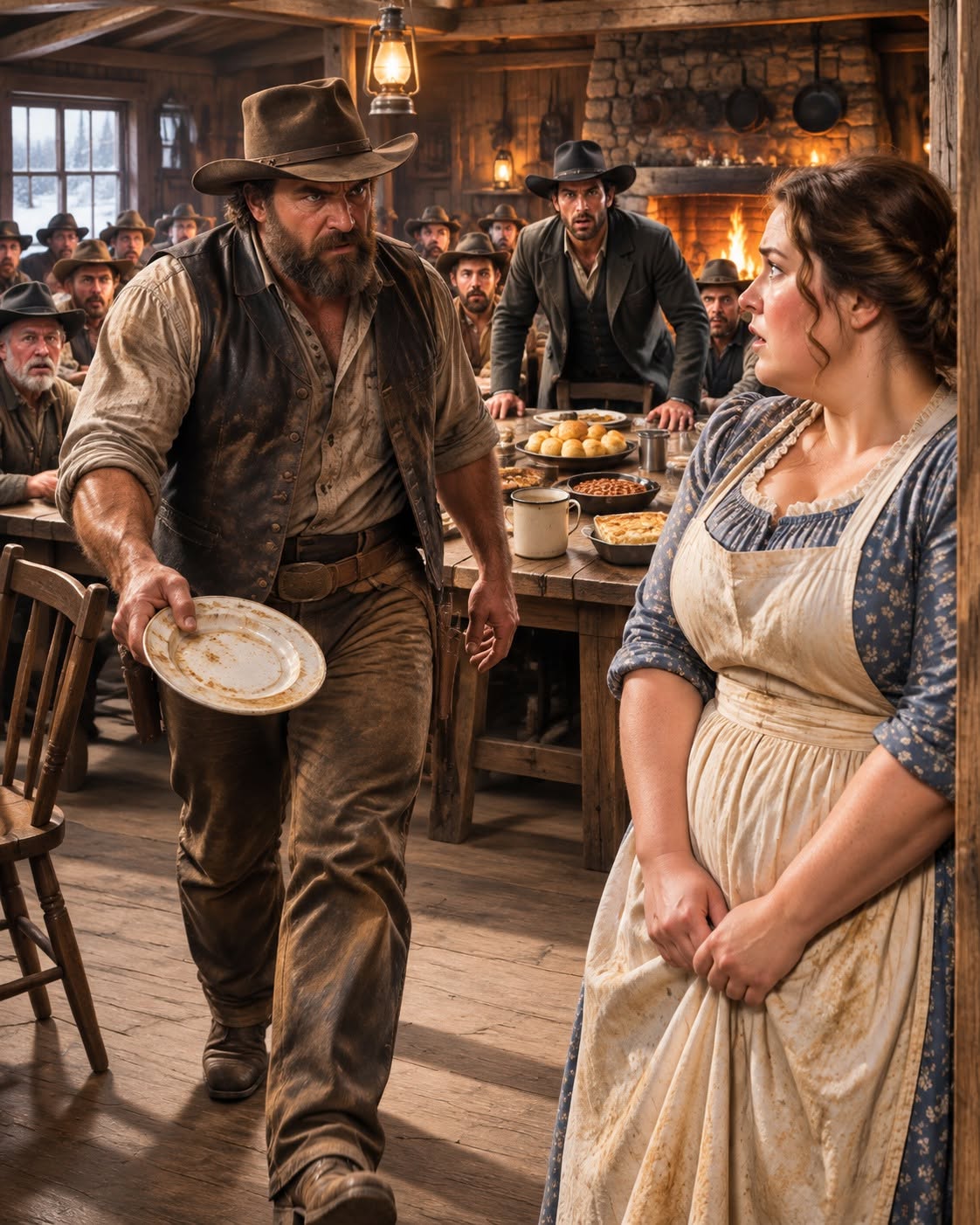
The enormous cowboy stopped directly in front of Edith.
She could barely breathe.
His name was Harlan Briggs, and he was widely considered the most difficult man at Grady Ranch. At forty-two, he was built like a mountain, spoke only when necessary, and had a temper that had sent more than one ranch hand packing.
He had worked for Coulter Grady for nearly nine years.
In all that time, nobody had ever seen him compliment a cook.
He looked down at the empty plate in his hand.
Then he looked at Edith.
“Miss Mayburn?”
Edith swallowed.
“Yes, sir?”
Harlan placed the plate carefully on the counter.
“Can I have another serving?”
For one second, nobody moved.
Then someone at the table burst out laughing.
But Harlan didn’t smile.
“I’m serious.”
Edith blinked.
“Of course. There’s plenty left.”
 She reached for the serving spoon, but Harlan raised one enormous hand.
“Not for me.”
He turned toward the table.
“These boys haven’t had a decent meal in three years. Give them another helping before you feed me.”
The room fell silent.
Edith looked around.
Several cowboys were already holding out their plates.
One young ranch hand named Toby raised his hand like a schoolboy.
“Miss Mayburn, could I have another biscuit?”
Another man pushed his empty bowl forward.
“That gravy, too, if you don’t mind.”
Within seconds, Edith was surrounded by hungry men asking politely for more.
She couldn’t help smiling.
“There’s enough for everyone.”
Harlan stepped aside.
Then, unexpectedly, he removed his hat.
“Ma’am, I owe you an apology.”
Edith looked up.
“For what?”
“For what I said outside this morning.”
His voice was rough, but sincere.
“I’ve spent too many years thinking a person’s worth could be judged by looking at them. Seems I was wrong.”
A few cowboys lowered their eyes.
The man who had joked about Edith eating half the pantry suddenly became very interested in his coffee cup.
Coulter Grady watched from the end of the table.
He had hired Edith because he needed a cook.
But now he was beginning to understand that he might have brought something much more valuable to his ranch.
Someone who could remind twenty lonely men what kindness felt like.
That evening, Edith stayed in the kitchen long after supper.
She washed the dishes, cleaned the stove, and carefully wrapped the remaining bread pudding.
She had just finished when Coulter appeared in the doorway.
“Miss Mayburn.”
She turned quickly.
“Yes, Mr. Grady?”
“Would you come into my office for a moment?”
Her stomach тιԍнтened.
Had she done something wrong?
Perhaps the men had complained about the food after all.
She wiped her hands on her apron and followed him.
Coulter’s office was small but orderly. A map of the ranch hung behind his desk, beside several framed pH๏τographs of cattle and horses.
He motioned toward a chair.
“Please sit.”
Edith remained standing.
“I’d rather not trouble you.”
“You’re not troubling me.”
He waited until she finally sat.
“I want to discuss your wages.”
Edith immediately became nervous.
“Is something wrong?”
“Quite the opposite.”
Coulter opened a drawer and removed a small envelope.
“Your agreed salary was twenty dollars a month, with room and meals. I’m raising it to thirty.”
Edith stared at him.
“Thirty?”
“And you’ll have Sundays free unless you choose to work.”
She couldn’t find the words.
Nobody had ever offered her a raise after a single day.
“Why?” she finally asked.
Coulter leaned back.
“Because the men haven’t stopped talking about your cooking. And because I’ve noticed something else.”
“What is that?”
“For the first time in months, they’re sitting together instead of eating separately.”
Edith looked down.
“I only made supper.”
“No, Miss Mayburn. You made them feel welcome.”
He paused.
“That’s not a small thing.”
She accepted the envelope with trembling fingers.
“Thank you, sir.”
Coulter nodded.
Then his expression became more serious.
“There’s something else I should tell you.”
Edith looked up.
“The ranch hasn’t been doing well.”
He explained that a severe winter had damaged several fences, two cattle shipments had been delayed, and the bank had given him until spring to settle a substantial debt.
“If I can’t pay, they’ll take a portion of the northern pasture.”
Edith listened quietly.
She knew little about cattle or banking, but she understood what losing land meant to a man who had spent his life building something.
“How much do you owe?”
Coulter named the amount.
Edith’s eyes widened.
“That’s a terrible lot of money.”
“It is.”
She thought for a moment.
“Then perhaps you should stop feeding the men so much coffee.”
Coulter stared at her.
Then, for the first time that day, he laughed.
“That’s one expense I might actually be able to afford.”
The following week, something remarkable happened.
The cowboys began changing their habits.
They started arriving for breakfast on time. They stopped leaving dirty dishes everywhere. Two men who had barely spoken to each other in months began volunteering to repair the kitchen shelves.
Harlan even fixed the loose back step without being asked.
Edith noticed everything.
She never demanded anything.
She simply thanked them.
And somehow, those small words seemed to matter.
One afternoon, while she was kneading dough, Toby entered the kitchen carrying a little wooden box.
“Miss Mayburn?”
“Yes, Toby?”
He placed the box on the table.
“I made something for you.”
Inside was a small carved wooden bird.
It was slightly uneven, with one wing larger than the other.
Edith picked it up carefully.
“It’s beautiful.”
Toby’s ears turned red.
“My mother used to make things like that. I thought you might like one.”
Edith smiled.
“I’ll treasure it.”
Toby hesitated.
“Can I ask you something?”
“Certainly.”
“Why do you let people say such awful things about you without fighting back?”
Her hands slowed.
For a moment, she didn’t answer.
Then she placed the wooden bird on the shelf.
“Because I spent too many years believing them, Toby. I thought if I worked hard enough, cooked well enough, and caused nobody any trouble, perhaps one day someone would see something worth loving.”
Toby looked uncomfortable.
“That’s foolish.”
Edith gave a small laugh.
“Perhaps.”
“No, ma’am. I mean what those people say. That’s foolish.”
He looked toward the dining room.
“You’re the first person here who has treated us like we matter.”
Edith’s eyes softened.
Before she could answer, a loud crash came from the hallway.
A cowboy shouted.
“Boss! Get out here!”
Coulter hurried past the kitchen.
Edith followed.
Outside, a rider had just arrived.
His horse was exhausted, and his coat was covered in road dust.
He handed Coulter a folded telegram.
Coulter read it once.
Then again.
His face turned pale.
“What is it?” Harlan asked.
Coulter slowly lowered the paper.
“The bank has sent someone to inspect the ranch tomorrow.”
The cowboys exchanged worried looks.
“That’s not all,” Coulter continued.
“They’re bringing a buyer.”
Harlan frowned.
“What buyer?”
Coulter looked toward the northern hills.
“Silas Crowley.”
A murmur moved through the men.
Everyone in Powder Creek knew Crowley.
He was a wealthy cattle investor who had spent years buying struggling ranches and forcing their owners off the land.
And Grady Ranch was the biggest property he had been trying to acquire.
Edith stood quietly behind the men.
She noticed something else.
The rider who had delivered the telegram was looking at her.
Not at Coulter.
Not at Harlan.
At her.
When she caught his eye, he quickly looked away.
Later that evening, Edith found a folded piece of paper tucked beneath her kitchen door.
There were only two sentences.
Leave Grady Ranch before tomorrow’s inspection.
Ask Coulter Grady what happened to the last woman who cooked here.
Edith read the words twice.
Then she heard footsteps behind her.
Harlan stood in the doorway.
His face had become unusually serious.
“Miss Mayburn,” he whispered.
“There’s something about the old cook you need to know.”
And before he could continue, a gunsH๏τ echoed from the northern pasture.