PART 2 — THE NAME ON THE DEED
PART 2 — THE NAME ON THE DEED
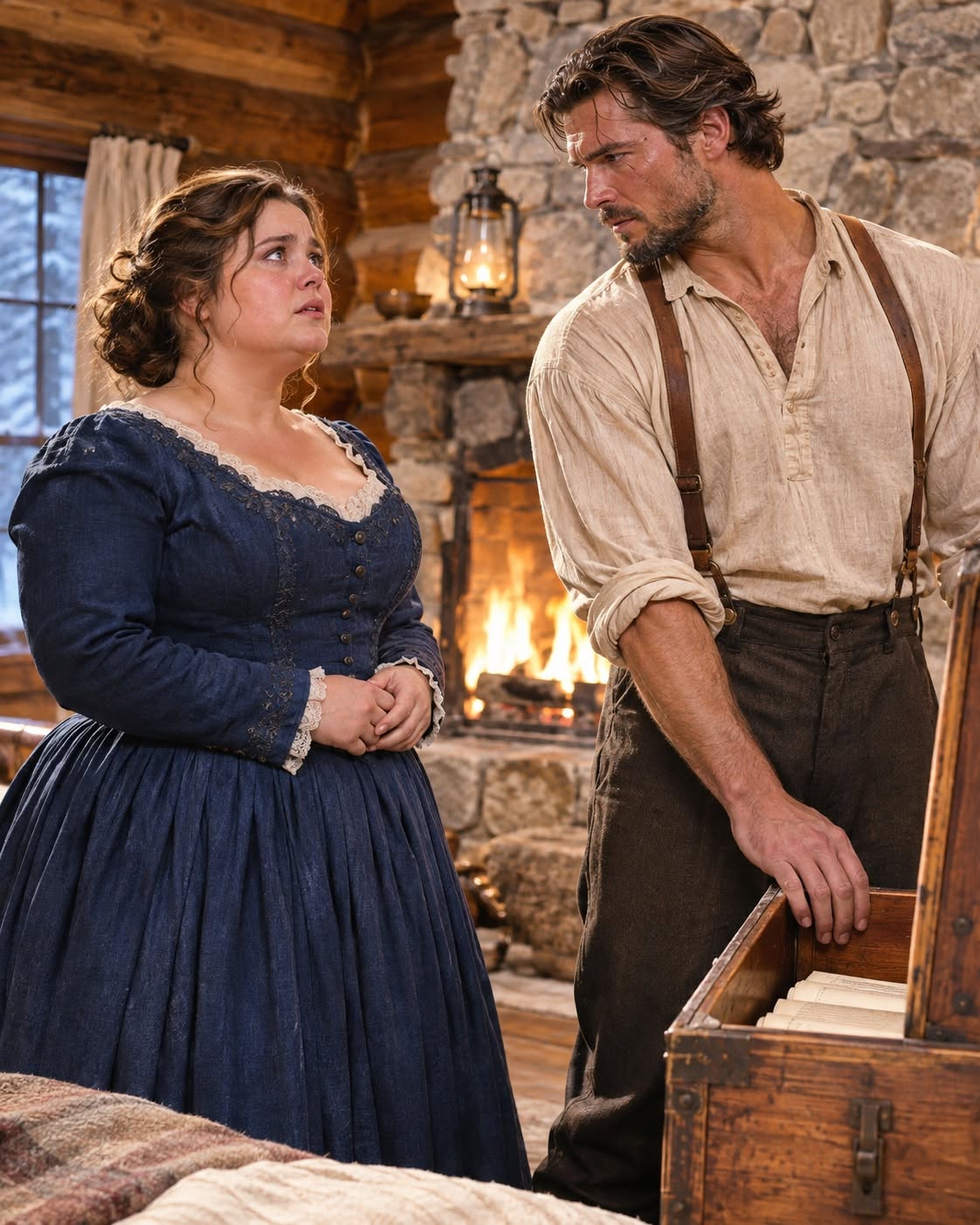
Clara stared at the document in Elijah’s hand.
Her own name was written beside his.
Clara Whitmore Boone.
But it wasn’t the name that frightened her.
It was the paragraph beneath it.
The deed stated that Elijah’s mountain property, including the cabin, the surrounding timberland, and the valuable water rights, would remain protected under a joint claim. Neither party could sell or transfer the property without the other’s written consent.
“Why is my name on this?” she asked.
“Because I need you to understand something. This isn’t simply a marriage certificate.”
Elijah placed the document on the table.
“Three months ago, a land company began claiming the northern valley. Their leader, a man named Silas Crowe, believes there’s enough silver beneath these mountains to make him wealthy beyond imagination. He has been buying property from struggling families, sometimes offering fair prices, sometimes using threats.”
Clara studied the paper.
“And you believe he wants your land?”
“I know he does.”
“Then why marry me?”
Elijah looked toward the window, where the last light was disappearing behind the pines.
“Because the original land agreement was signed by my mother and father. When they died, the territorial office questioned whether I could retain the full property rights alone. I needed a second legal claimant before Crowe could challenge the deed.”
Clara slowly lowered the paper.
“So I am here because you needed my signature.”
“Yes.”
The answer hurt more than she expected.
Elijah noticed.
“But that’s not the whole truth.”
He reached into the chest and removed a small leather-bound journal.
“This belonged to my mother. She kept records of everything connected to the property. There is something in it that I haven’t been able to explain.”
He opened the journal to a page marked with a faded ribbon.
Clara leaned closer.
The handwriting was delicate, written in dark brown ink.
If the day comes when the Boone property must be defended, remember that a person’s worth is never measured by what the world sees. Choose someone who understands the difference between owning land and protecting a home.
Clara read the sentence twice.
“What does that have to do with me?”
Elijah closed the journal.
“Your father told me about your sewing work. He said you could repair almost anything, that you had kept his household running after your mother died, and that you had never complained even when the family had little to eat.”
Clara looked down.
“He told you all that?”
“He also told me you were the only person in Harrow’s Creek who refused to laugh when the land company cheated an old widow out of her property.”
Clara remembered the incident.
 Mrs. Bell had been an elderly woman who lived near the creek. A clerk from Crowe’s company had convinced her to sign a document she couldn’t read. Clara had discovered the trick and helped her recover the papers.
It had cost her father’s shop a valuable contract.
“You knew about that?”
“I heard.”
Elijah’s voice softened.
“I didn’t choose you because I thought you were helpless, Clara. I chose you because I thought you were stronger than most people in this valley.”
She didn’t know what to say.
For years, people had looked at her and seen only the body they believed gave them permission to judge her. Nobody had ever described her courage as the reason they wanted her beside them.
Still, she couldn’t forget how the marriage had begun.
“My father accepted your money without asking me.”
Elijah nodded.
“I know.”
“And I had no real choice.”
“I know that too.”
He moved toward the fireplace.
“I cannot change what your father did. But I can make certain you never have to live under another man’s decision again.”
Clara watched him place another log on the fire.
“What happens now?”
“You decide what kind of life you want here.”
“And if I want to leave?”
Elijah turned.
“Then I’ll arrange for you to have money, a horse, and safe pᴀssage back to town. Your father’s debts will remain paid. You will owe me nothing.”
Clara searched his face for deception.
She found none.
That night, she took the bed while Elijah settled beside the fireplace.
She barely slept.
Every time the wind struck the cabin, she thought about the strange man who had become her husband. His scar made him appear severe, but his actions were unlike the stories people told.
At sunrise, she found him outside splitting wood.
He had already prepared breakfast.
“There’s coffee,” he said when she stepped onto the porch. “And eggs. I wasn’t certain what you preferred.”
“Thank you.”
He nodded and returned to his work.
Clara noticed the way he favored his right shoulder.
“Are you injured?”
“Old wound.”
“From the war?”
Elijah stopped swinging the axe.
“Yes.”
“Does it still hurt?”
“Only when the weather changes.”
Clara watched him attempt another swing. His shoulder stiffened, and he briefly closed his eyes.
“You shouldn’t be lifting that much.”
He looked at her.
“I’m accustomed to it.”
“Being accustomed to something doesn’t make it sensible.”
For the first time, she saw the corner of his mouth lift.
“You sound like my mother.”
Clara smiled faintly.
“Then your mother must have been a sensible woman.”
“She was.”
He returned to the cabin, leaving Clara with a thought she couldn’t quite explain.
Perhaps this marriage could become something other than an arrangement.
Over the following days, Clara discovered that Elijah’s cabin was not nearly as lonely as she had expected.
There was a small vegetable garden behind it, a workshop filled with tools, and shelves of books that had belonged to his mother.
She began organizing the kitchen, mending his torn shirts, and repairing the curtains.
Elijah never demanded these things.
Instead, he began asking her opinion.
One evening, she found him struggling with a broken saddle strap.
“Give it to me,” she said.
He raised an eyebrow.
“You know how to repair saddles?”
“I know how to repair leather. My father once employed a saddler who taught me.”
Within twenty minutes, the strap was stronger than before.
Elijah examined her work.
“That’s impressive.”
“It’s only a strap.”
“No,” he said. “It’s the reason I won’t be walking twenty miles tomorrow.”
She laughed.
It was the first time she had laughed freely since leaving Harrow’s Creek.
But the peaceful days did not last.
On the sixth morning, three riders appeared along the narrow trail.
The man in front wore a fine black coat and a silver watch chain.
Elijah stepped onto the porch.
“Crowe.”
The stranger removed his gloves.
“Boone. I see you’ve finally found yourself a wife.”
His eyes shifted toward Clara.
“Though I must admit, I expected someone rather different.”
Clara felt her cheeks grow warm.
Elijah moved half a step in front of her.
“Say what you came to say.”
Crowe smiled.
“I’ve come to make one final offer for the northern valley. Double the amount I offered last month.”
“Not interested.”
“Think carefully. Your new wife may not enjoy spending winter in a cabin with no neighbors.”
Elijah’s expression hardened.
“My wife isn’t part of this negotiation.”
Crowe’s smile disappeared.
“Everything on this mountain is part of the negotiation.”
Then he mounted his horse.
Before leaving, he looked directly at Clara.
“Enjoy your little home, Mrs. Boone. You may not have it for long.”
When the riders vanished down the trail, Clara turned to Elijah.
“What does he know about the deed?”
Elijah didn’t answer immediately.
Instead, he went inside and opened his mother’s journal.
He turned to a page near the back.
There, written in faded ink, was a name Clara had never expected to see.
Edmund Whitmore.
Her father.
And beneath it, a sentence that made her blood run cold.
Edmund knows where the original deed is hidden. If Crowe finds out, the Boone family will lose everything.