PART 5 — THE LETTER HER MOTHER NEVER SENT
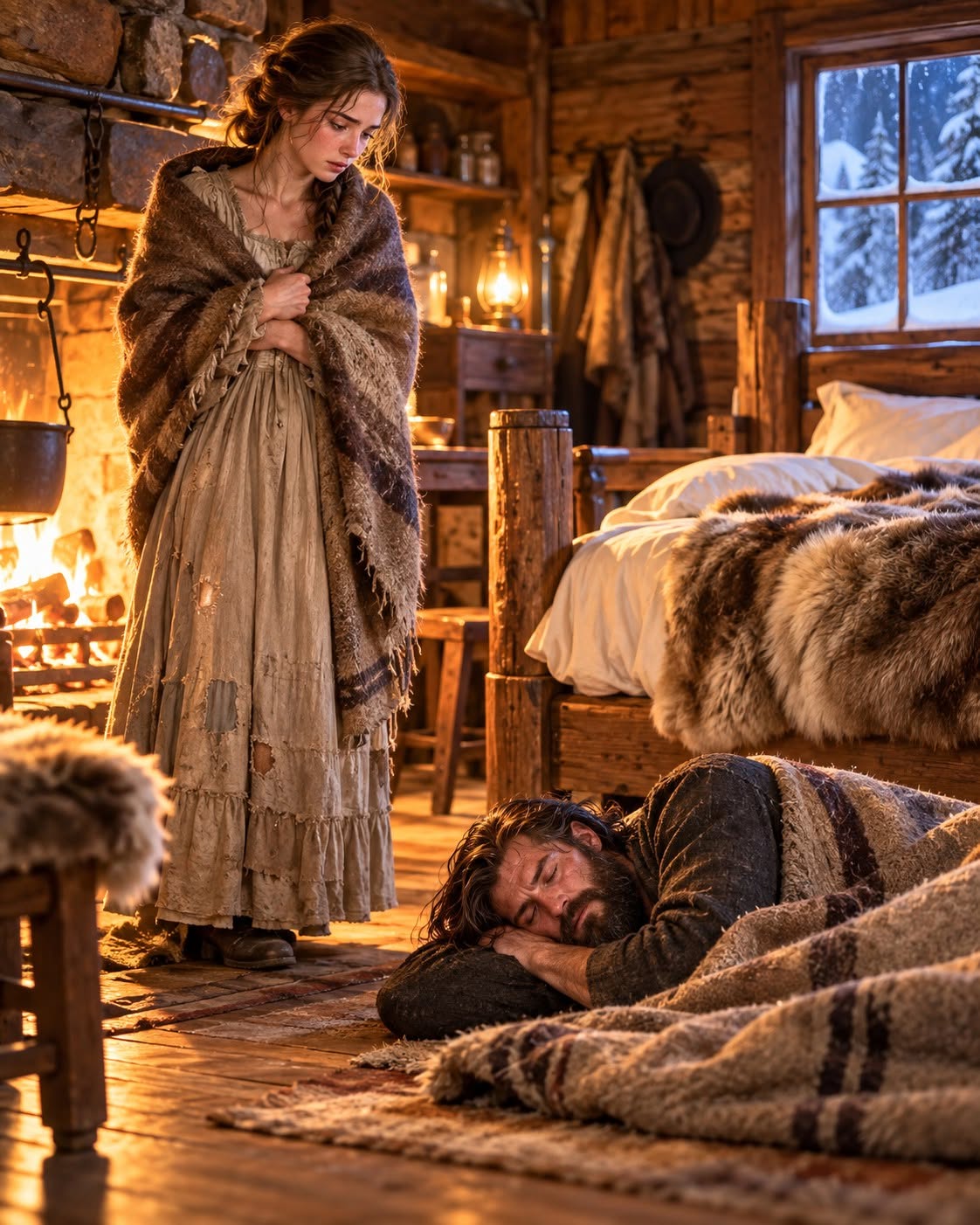
PART 5 — THE LETTER HER MOTHER NEVER SENT
Josie did not open the remaining letters that evening.
She sat beside the fire with the silver locket resting in her palm. Judson had left the bundle on the table and gone outside to check the horses.
The cabin felt different now.
It was no longer merely the home of a frightening mountain man. It was a place her mother had known. A place connected to a past Josie had never been allowed to ask about.
When Judson returned, she was still staring at the locket.
“May I read them?” she asked.
“They’re yours.”
Josie opened the first letter.
It was dated nearly twenty years earlier.
Her mother wrote about a winter journey, a difficult marriage, and a brother who had left the valley after a disagreement with their father. She wrote about missing him.
The second letter was shorter.
It spoke of Amos.
At first, the words were tender. Her mother had believed he was a good man, wounded by a hard life but capable of kindness. She had written about his laughter and the way he used to sing while repairing the roof.
Josie swallowed.
She remembered her father before the cholera. She remembered his rough hands lifting her onto a wagon, his voice reading a story, the way he had carried her little brother on his shoulders.
That man had existed.
The next letter was dated after the deaths of her brothers.
Her mother’s handwriting was uneven.
Amos has changed. He drinks more than he sleeps. He says the land is cursed. I fear what grief is doing to him.
Josie stopped reading.
She could barely breathe.
Judson sat across from her, his hands folded on the table.
“Your mother wrote to me whenever she could,” he said. “She didn’t want to frighten you.”
 Josie continued.
The last letter had been written only weeks before her mother died.
I have found the papers Father left behind. The eastern parcel belongs to Josie if she survives me. Amos knows nothing of it. I am afraid he will destroy the papers if he discovers what they mean.
Josie looked up.
“What papers?”
Judson’s face became very still.
“A land claim.”
Her mother’s family had owned a small parcel near a river crossing. It was not a grand estate, but the land had become valuable after a new trading route was established. Her mother had inherited it from her father and placed it in Josie’s name.
Amos had never been the legal owner.
Josie stared at the letter.
“Why didn’t my mother tell me?”
“She planned to. But she became ill.”
“Was it cholera?”
Judson looked down.
“That’s what Amos told everyone.”
Josie felt the room grow cold.
“What are you saying?”
“I’m saying I don’t know everything that happened during those last days. I was not there.”
“Then why did you say he lied?”
“Because your mother’s final letter said she feared him. And because Amos came to me afterward asking whether I knew where the claim papers were.”
Josie’s fingers тιԍнтened around the paper.
Her father had hidden the truth.
For years, she had believed he was merely broken by grief. Perhaps he was. But he had also kept her hungry, moved her from place to place, and never mentioned the land her mother had left her.
Now she understood why.
He had needed her close.
Not because he loved her.
Because the claim belonged to her.
Josie stood abruptly.
“I have to go back.”
Judson rose, but did not block her.
“To the trading post?”
“To ask him.”
“The storm is getting worse.”
“I don’t care.”
“You should care whether you arrive alive.”
Josie looked at him, furious.
“Everyone keeps telling me what I should do. My father did it. You did it. I want to decide for myself.”
Judson’s expression softened.
“You’re right.”
She had expected an argument.
Instead, he continued, “We’ll wait until the storm pᴀsses. Then I’ll take you wherever you choose.”
Josie’s anger faltered.
“You would really let me go?”
“I told you that already.”
“Even if I never come back?”
Judson looked toward the window.
“Especially then.”
That night, Josie slept badly.
She dreamed of her mother standing beside a river, holding the silver locket. In the dream, her mother called her name, but the wind swallowed every word.
Josie woke before dawn.
A sound had come from the front door.
Not a knock.
A scrape.
She sat up, listening.
Another scrape followed.
Then a voice whispered from outside.
“Josie?”
Her blood turned cold.
It was Amos.
She slipped from the bed and crossed the cabin. Judson was already awake, standing beside the window.
He raised one hand, signaling her to remain behind him.
Outside, Amos stood in the snow, his coat torn and his face pale. Beside him was a second man Josie had never seen before.
The stranger held a lantern.
Amos knocked again.
“Josie, open the door. We need to talk.”
Judson did not move.
“What do you want, Amos?” he called.
“I want my daughter.”
Josie stepped forward.
“She’s not yours to sell,” Judson said.
Amos’s face twisted.
“You took my supplies. You agreed to the arrangement.”
“I agreed to feed you.”
“You took her!”
“I brought her somewhere she could survive.”
Amos glanced past Judson and saw Josie.
His expression changed instantly.
For a moment, she saw the father she remembered.
“Josie,” he said softly. “Come home.”
Her chest ached.
She wanted to believe that voice. She wanted to believe that the man who had once held her in his arms had returned.
Then Amos looked at the table.
At the letters.
At the silver locket.
His face went white.
“You found them,” he whispered.
Josie stepped into the light.
“What did you do with my mother’s claim papers?”
Amos’s eyes moved to Judson.
The stranger beside him shifted.
And suddenly, Josie understood that her father had not come to bring her home.
He had come because he knew she had discovered the truth.