PART 3 — THE SECRET BENEATH THE SPRING
PART 3 — THE SECRET BENEATH THE SPRING
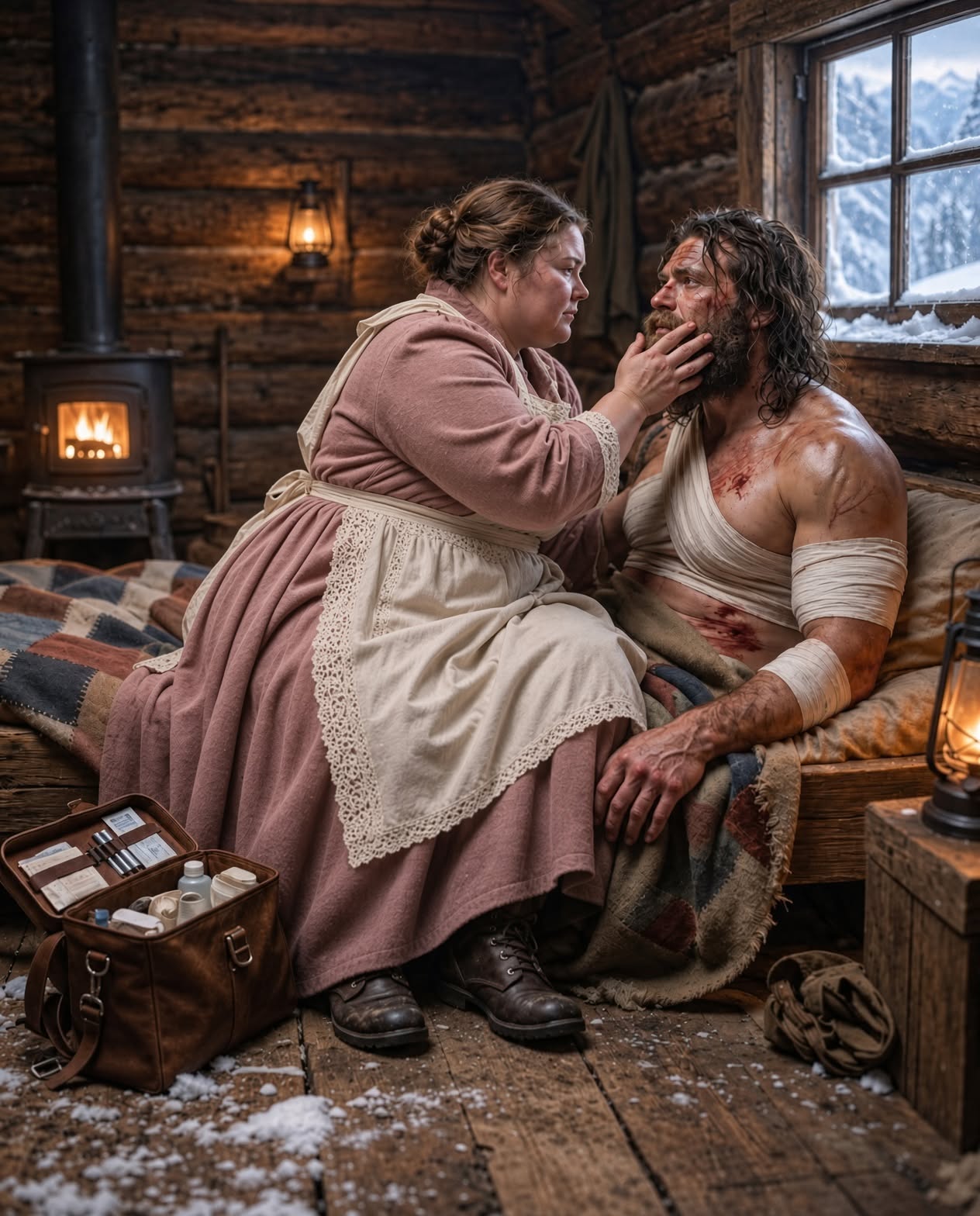
Elena had not slept when Luka finally woke properly.
His fever had eased slightly, but he remained weak. She gave him water in small amounts and waited until he could hold a conversation without becoming exhausted.
Matei had gone to fetch supplies from a neighboring hunting cabin.
For the first time, Elena and Luka were alone.
“Tell me about the spring,” she said.
Luka stared at the ceiling.
“You should go back to Dorna Vale.”
“That’s not an answer.”
“It’s the safest answer.”
“For whom?”
He turned his head toward her.
“You don’t understand what you’re walking into.”
“Then explain it.”
He was silent for a long time.
Finally, he spoke.
“Three months ago, a little girl named Anca fell ill. She was seven. Her mother brought her to me because the doctor was away.”
“You treated her?”
“I brought her down to the clinic. Dr. Petrescu examined her. He said it might be a fever from the winter.”
“And?”
“She recovered for a few days. Then she became ill again.”
Elena listened carefully.
“Did other children have the same symptoms?”
“Several. They lived near the lower spring.”
“Were they drinking from it?”
“All of them.”
Luka paused.
“Then the animals began getting sick. First the goats. Then the dogs. A few cattle became weak. People blamed the weather.”
“And you suspected the water.”
“I found ᴅᴇᴀᴅ fish in the stream below the spring. I took a sample to a man in the next valley who knew how to test water.”
“What did he discover?”
“He said there was something wrong with it. Something that did not belong there.”
“Did he identify it?”
“Not completely. He told me to stop people drinking from the spring until a proper examination could be made.”
Elena sat very still.
“Why wasn’t the spring closed?”
Luka’s expression hardened.
“Because Captain Vlas ordered everyone to keep using it.”
“Why?”
“He said the village could not afford to lose its only reliable source of water.”
“That doesn’t make sense. There are other wells.”
“Not ones he controls.”
Elena remembered the captain’s expensive coat, his polished boots, and the confidence with which he had spoken in the clinic.
“Does he own the spring?”
“He owns the land around it. But the spring itself has always been used by the village.”
“Who gave him the right?”
Luka looked at her.
“That’s what I’ve been trying to discover.”
He reached beneath the pillow and drew out a small leather pouch.
Inside was a folded piece of paper, damp at the edges.
Elena opened it.
It was a rough drawing of the village, showing the spring, the stream, the old mill, and several buildings near the northern slope.
A red mark had been drawn beside the mill.
“What is this?”
“The water runs beneath the old mill before it reaches the village.”
Elena studied the drawing.
“Why did you mark the mill?”
“Because the sickness began after Vlas repaired it.”
A cold feeling settled in her stomach.
“Are you saying the mill contaminated the water?”
“I don’t know. But I found something buried near the stream.”
“What?”
“A broken pipe. Newer than the rest of the water system. It led from the mill toward the spring.”
Elena looked up.
“Did you tell anyone?”
“I tried.”
“And?”
“Vlas said I was spreading lies. Then two men followed me into the forest.”
Luka’s voice became quieter.
“They attacked me near the ridge. I escaped, but not before one of them injured me.”
Elena lowered the paper.
“So the bear story wasn’t true.”
“No.”
“Why did Matei tell me it was?”
“Because I asked him to.”
“Why?”
Luka looked away.
“Because if people knew I had been attacked, they would know I had found something.”
Elena considered him.
“You let everyone believe you were injured by an animal so you could protect your evidence?”
“I thought I could bring it to the doctor myself.”
“And instead you nearly died.”
His mouth тιԍнтened.
“I didn’t expect to be found.”
Elena’s voice softened.
“You don’t have to do everything alone, Luka.”
He looked at her.
“You don’t know what happens to people who stand against Vlas.”
“I know what happens to people who remain silent when others are suffering.”
For the first time, Luka had no answer.
Later that morning, Matei returned with clean cloth, food, and a small bottle of medicine.
Elena explained what Luka had told her.
Matei listened, his face growing darker with every sentence.
“I knew Vlas was hiding something,” he said. “But I didn’t think he would poison his own people.”
“We don’t know exactly what has happened yet,” Elena replied. “We need proof.”
Matei pointed to the map.
“Then we go to the spring.”
Luka immediately tried to sit up.
“No.”
Elena turned toward him.
“You are not going anywhere.”
“I know the place.”
“And you can barely stand.”
“I can tell you what to look for.”
“That is what you’ll do.”
Luka looked as though he wanted to argue, but Elena’s expression stopped him.
For the next hour, he explained the route, the location of the broken pipe, and the position of the old mill.
He also told them about a woman named Anca’s mother, Maria, who had been keeping records of the families who became ill.
“She has a small house near the church,” Luka said. “She knows more than anyone.”
“Then we should speak to her.”
Matei nodded.
“I’ll go.”
“No,” Luka said. “Vlas will be watching you.”
Elena folded the map.
“Then I’ll go.”
Both men stared at her.
“Absolutely not,” Matei said.
“Why?”
“Because Vlas already wants you gone.”
“And that is exactly why he won’t expect me to return.”
Luka’s voice was low.
“Elena, listen to me.”
She turned.
“I have spent my entire life being told where I should and shouldn’t go because of what people see when they look at me. I will not let another man decide where I can work.”
“That isn’t what I meant.”
“I know. But I’m going.”
Luka studied her face.
Then, slowly, he nodded.
“Take the map. And don’t trust anyone who says the spring is safe.”
Before leaving, Elena prepared fresh supplies and gave Luka clear instructions. She made him promise to rest and told Matei to stay with him.
Then she mounted her mare and began the descent.
The journey took longer than expected.
By the time she reached Dorna Vale, the village square was crowded.
People stood outside the church, speaking in anxious whispers.
Captain Vlas was on the steps, addressing them.
“Friends, we have suffered enough,” he announced. “Now an outsider has arrived, spreading frightening stories about our water. She has no proof, no authority, and no understanding of our traditions.”
Elena dismounted.
The crowd turned.
Vlas stopped speaking.
“Ah,” he said. “The missing nurse has returned.”
“I was never missing.”
“You have been in the mountains with a dangerous criminal.”
A murmur pᴀssed through the crowd.
Elena held up the map.
“I have been caring for an injured man who discovered a possible source of contamination in your water system.”
Vlas laughed.
“An injured man who attacked you with a ridiculous story?”
“No. An injured man who has been trying to protect this village.”
Maria, the mother of the sick little girl, stepped forward.
“Is it true?” she asked. “Could the water be making our children ill?”
Elena looked at her.
“I cannot tell you the cause until the water has been examined. But I can tell you this: if several families are becoming sick and they all use the same spring, we must stop using it until we know it is safe.”
Vlas raised his voice.
“Do not frighten these people!”
“I am not frightening them. I am warning them.”
He stepped down from the church platform.
“You have no right to interfere with village affairs.”
Elena met his gaze.
“I have every right to care for sick people.”
A sudden commotion rose from the far end of the square.
A young boy came running, his face pale.
“Captain! Captain Vlas!”
“What is it?”
“The mill!”
The boy struggled to catch his breath.
“There are men at the mill. They’re taking things away.”
Vlas went white.
For a moment, nobody moved.
Then he turned toward two men standing beside the church.
“Stop them!”
But Elena had already seen something in his expression.
Fear.
Not anger.
Not surprise.
Fear.
She followed the boy toward the mill, with Maria and several villagers behind her.
Inside the building, the workers were hauling wooden crates toward a wagon. One crate had broken open, spilling metal fittings and lengths of pipe across the floor.
Elena recognized the shape immediately.
The same kind of pipe Luka had drawn on his map.
She crouched to examine a fitting without touching it.
“This is part of the water system.”
A worker stepped forward.
“You shouldn’t be here.”
“Why are you removing it?”
“Orders.”
“Whose orders?”
The man glanced toward the doorway.
Captain Vlas had arrived.
“Enough,” he said. “This property belongs to me.”
Elena stood.
“Then explain why your workers are dismantling a pipe that leads toward the village spring.”
Vlas’s expression hardened.
“You are making accusations without understanding what you see.”
“Then let the authorities examine it.”
He stepped closer.
“There will be no examination.”
Maria moved beside Elena.
“My daughter has been sick for months. If that spring is dangerous, we deserve to know.”
Other villagers began speaking.
“My son has been ill, too.”
“So has my wife.”
“My cattle won’t drink from the stream.”
The crowd grew louder.
Vlas raised his hand.
“Silence!”
But nobody obeyed.
Then a voice came from the doorway.
“Let them examine it, Captain.”
Everyone turned.
Luka Dragomir stood leaning against a wooden walking stick.
He had come down the mountain with Matei supporting one arm. His face was still pale, and every step seemed to cost him, but his eyes were clear.
Elena rushed toward him.
“You shouldn’t be here!”
He gave her a faint smile.
“I know.”
“You could have collapsed on the road.”
“I didn’t.”
“That’s not the point.”
“I wanted to be here.”
Then he turned toward the crowd.
“I found the pipe. I saw where it led. And I was attacked because I tried to tell the truth.”
The village fell silent.
Vlas’s face lost its color.
Luka pointed toward the crates.
“Those are the pieces they buried near the stream. If the water is clean, why are they removing the evidence?”
No one answered.
Then Maria stepped forward.
“Where is my daughter’s name on your list, Captain?”
Vlas stared at her.
“What list?”
“The list of families who complained about the water. My husband said you paid him to keep quiet.”
The crowd erupted.
Vlas turned toward his men.
“Get them out of here!”
But this time, the men did not move.
One of them lowered his eyes.
Then he spoke.
“I won’t do it, Captain.”
Vlas stared at him.
The worker reached into his coat and removed a folded ledger.
“I’ve kept the records of every delivery to the mill. I know what came through here.”
Elena looked at the ledger.
“What is it?”
The man swallowed.
“Orders for chemicals. Some were supposed to be used for cleaning machinery. But the Captain told us to send the waste through the old drainage pipe.”
The villagers went silent.
Vlas lunged toward the ledger.
Luka stepped between them.
Though he was still weak, he stood firm.
“Don’t.”
The worker handed the ledger to Elena.
She opened it.
There were dates, quanтιтies, payments, and a series of entries marked with the same destination.
The village spring.
Elena felt the room tilt.
They finally had evidence.
But as she turned the last page, she noticed a signature.
It was not Captain Vlas’s.
It belonged to Dr. Iosif Petrescu.
The very doctor who had hired her.
The very man who had left the clinic in Dorna Vale.
And beneath his signature were three words that made her blood run cold:
Keep Elena silent.
She slowly looked up.
Luka saw her expression.
“What is it?”
Elena handed him the ledger.
He read the words.
Then he looked toward the doorway, where Captain Vlas was standing with a strange, satisfied smile.
“You see, Nurse Marin,” Vlas said quietly. “You were never investigating the wrong man.”
He stepped aside.
Behind him stood a familiar figure, dressed in a doctor’s coat.
Dr. Petrescu had returned.
And he was holding a letter addressed to Elena.
It was signed by her own father.