PART 2 — THE MAN WHO NEVER ASKED FOR PAYMENT
PART 2 — THE MAN WHO NEVER ASKED FOR PAYMENT
Josie did not sleep much that night.
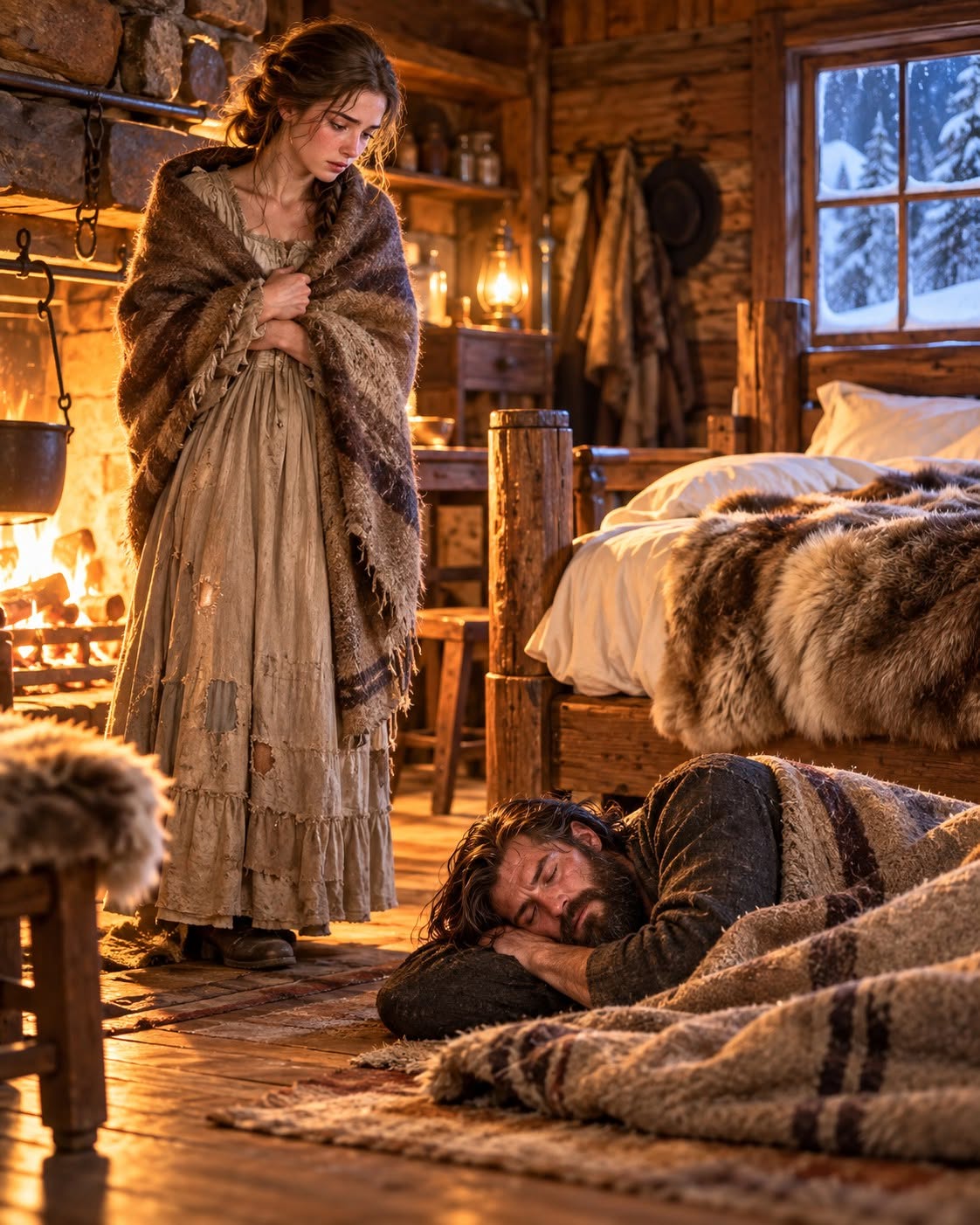
The bed was warm, the sheets were clean, and the fire crackled softly in the stone hearth. Yet every time the cabin settled with a creak, she opened her eyes.
Judson lay on the floor with his back against the wall, one arm beneath his head. His enormous frame seemed strangely out of place beneath the single wool blanket.
She watched him for a long time.
“Mister?”
His eyes opened immediately.
“What is it?”
“Did I do something wrong?”
Judson sat up.
“No.”
“Then why are you sleeping there?”
“Because I chose to.”
Josie hesitated.
“But my father said—”
“I don’t care what your father said.”
His voice was firm, but not angry.
“Listen carefully, Josie. You are not required to share my bed, cook my meals, or do anything to repay me. You can stay here while you decide what you want to do next.”
She stared at him.
“What if I have nowhere else to go?”
“Then you can stay until you find somewhere.”
“And if I never find somewhere?”
Judson looked toward the fire.
“Then we’ll discuss it when the time comes.”
Josie pulled the blankets closer.
Nobody had ever offered her a future without attaching a price to it.
“Thank you,” she whispered.
Judson nodded and lay back down.
“Get some sleep. Tomorrow will be cold.”
Morning arrived beneath a pale winter sky.
Josie woke to the smell of coffee and something sizzling in a skillet.
For a moment, she forgot where she was.
Then she saw the enormous cabin, the stone fireplace, and the unfamiliar coat hanging beside the door.
Fear returned.
She sat up quickly.
Judson was outside, splitting wood.
 He had left a plate of biscuits and eggs on the table.
Beside it was a folded piece of paper.
Josie approached cautiously.
The note contained only a few words:
Eat first. There’s more in the pantry.
She sat down and ate.
The food was simple, but it tasted better than anything she remembered. When she finished, she washed the plate and looked around the cabin.
There was dust on the shelves, a pile of unwashed clothes beside the stove, and a broken chair leaning against the wall.
She picked up a cloth.
Cleaning was familiar. It was something she could do without being asked.
By noon, the cabin looked different.
The dishes were stacked neatly. The table had been wiped clean. The blankets had been folded, and the firewood was arranged beside the hearth.
Judson returned carrying a bundle of logs.
He stopped in the doorway.
“What happened in here?”
Josie immediately dropped the cloth.
“I’m sorry. I thought you might like it clean.”
He looked around.
“You did all this?”
She nodded.
“Was I not supposed to?”
Judson placed the logs beside the fireplace.
“You can do whatever you like in this cabin. But you don’t have to work for your supper.”
“I know.”
“Do you?”
Josie lowered her eyes.
“I’m trying to.”
He studied her for a moment, then nodded.
“That’s enough for today.”
Three days pᴀssed.
Judson kept his word.
He never demanded that Josie cook, clean, or mend anything. He showed her where the food was stored and explained how to use the stove safely. He also left a small lantern beside her bed so she would not have to cross the dark cabin alone.
Little by little, Josie began asking questions.
Why did he live so far from town?
Why did he never visit anyone?
Why did he have so many books?
Judson answered some questions and avoided others.
But one afternoon, while she was sorting through a box of old tools, she discovered a small wooden horse.
Its paint had faded, and one leg was missing.
“Did you make this?” she asked.
Judson looked up from his rifle cleaning cloth.
“No.”
“Who did?”
He was silent for a moment.
“My boy.”
Josie turned the little horse over in her hands.
“You have a son?”
“I had a son.”
The words settled heavily between them.
Josie placed the toy carefully back in the box.
“I’m sorry.”
Judson looked toward the window.
“He would have been eight this winter.”
She did not ask what had happened.
Something in his expression told her that the memory was still too painful.
Instead, she said quietly, “My little brother was eight when he died.”
Judson looked at her.
“Cholera?”
She nodded.
“He used to hide bread in his pockets. Even when he wasn’t hungry, he’d save it for me.”
For the first time, Judson’s stern expression softened.
“Sounds like a good boy.”
“He was.”
Neither spoke for a while.
Outside, the wind moved through the pine trees.
Then Josie carefully placed the wooden horse back where she had found it.
On the fifth morning, a rider appeared near the cabin.
Judson saw him first.
He stepped onto the porch, his expression changing as the horse approached.
The rider was a young ranch hand named Eli Turner.
“Judson!” he called. “You need to come down to town.”
“What happened?”
“Amos is telling everyone you’ve stolen his daughter.”
Judson’s jaw тιԍнтened.
“She’s not his property.”
“Tell that to the sheriff. Amos has filed a complaint.”
Josie appeared in the doorway.
Her face went pale.
“What does he want?”
Eli glanced at her.
“He says Judson took you without his permission.”
Josie looked down at the porch boards.
“My father gave permission when he traded me.”
Judson turned toward her.
“He had no right to trade you.”
“But the sheriff might believe him.”
Judson looked at Eli.
“When is the hearing?”
“Tomorrow morning.”
Judson nodded.
“Then we’ll be there.”
Josie gripped the doorframe.
“Will they make me go back?”
“No,” Judson said.
His voice was calm, but there was steel beneath it.
“Not unless you choose to.”
Josie stared at him.
For the first time, she understood that the coming fight was not about whether Judson could keep her.
It was about whether anyone would finally listen to what she wanted.