PART 3 — THE LAND THAT COULD DESTROY THEIR MARRIAGE
PART 3 — THE LAND THAT COULD DESTROY THEIR MARRIAGE
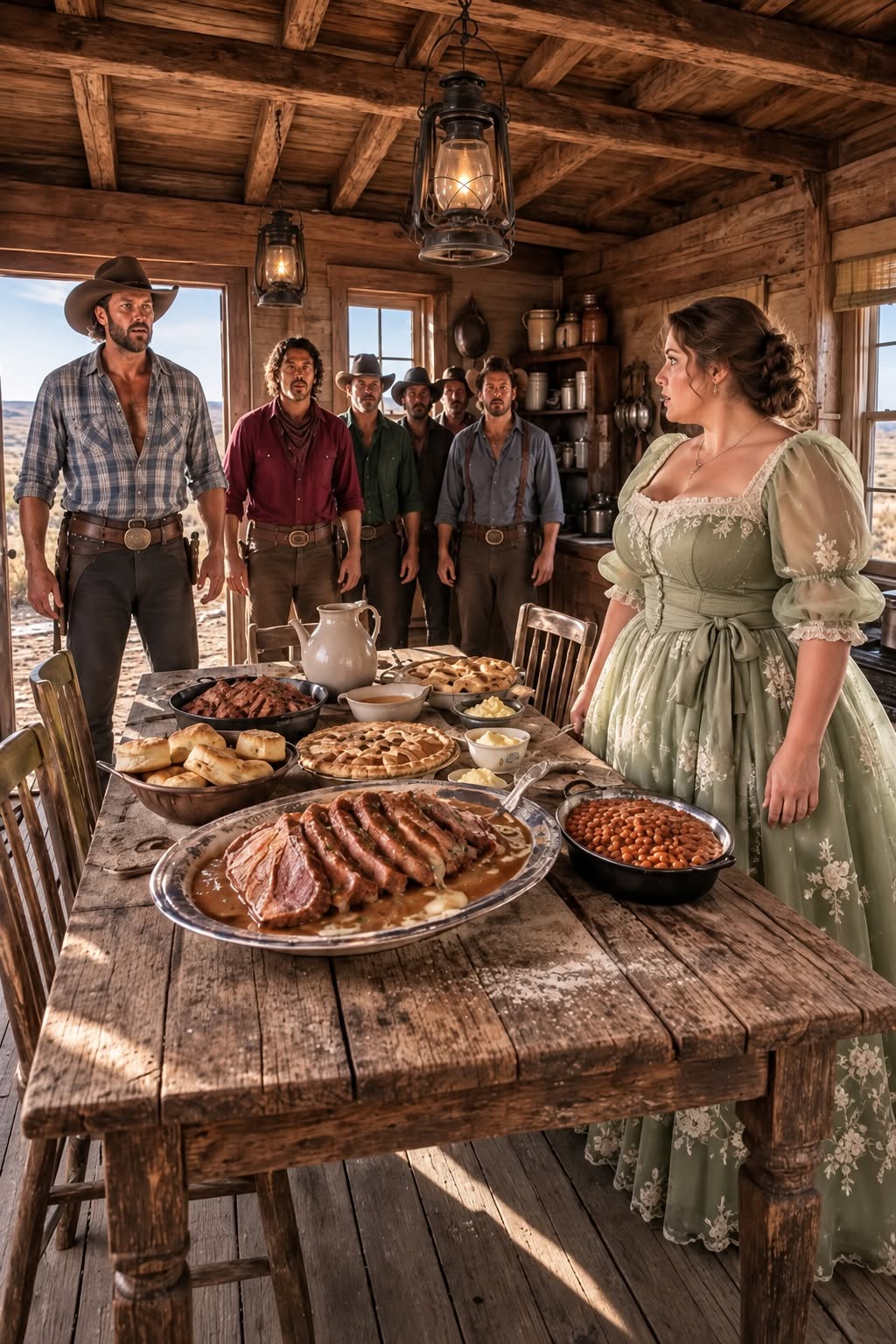
Wyatt took the document from my hand.
He read the added paragraph once.
Then again.
His expression hardened.
“Where did you get this?”
The stranger removed his hat.
“From Mr. Caleb Voss. He instructed me to deliver it personally.”
Wyatt looked toward the wagon.
“Caleb Voss?”
“The land agent.”
I recognized the name.
Caleb Voss had visited my father’s house several times during the final year of his life. He had always worn expensive boots and carried a silver-handled walking stick.
Father disliked him.
I remembered that clearly.
“Tell Voss I want to see him,” Wyatt said.
The messenger hesitated.
“He expected you to sign the document today.”
Wyatt gave a humorless laugh.
“He can expect whatever he likes.”
The man climbed back onto his wagon and left.
I stood on the porch, staring at the paper.
“Wyatt, did you know about this agreement?”
“No.”
“Did you know my father had agreed to give you the valley permanently?”
“No.”
I studied his face.
He looked angry, but not at me.
“Then why did you marry me?”
The question seemed to strike him harder than the accusation.
He walked toward the railing.
“Because your father approached me six months before he died.”
I waited.
“He knew his health was failing. He wanted someone to help protect the valley. The county had been trying to divide the water rights, and several cattle companies were interested in buying the land.”
“Why didn’t he tell me?”
“He intended to. But he died before he could finish the arrangements.”
I folded my arms.
“And you decided marrying me was the solution?”
Wyatt turned.
“I thought it would be.”
“Did you think about asking what I wanted?”
He didn’t answer.
That silence told me enough.
I took the document from him.
“I want to see the original agreement.”
 Wyatt nodded.
“Your father’s papers are in the office. I’ll get them.”
“No. I will.”
I walked inside.
His office was a small room behind the main hall. The desk was covered in ranch accounts, invoices, and old maps.
I opened the bottom drawer.
There were several envelopes bearing my father’s handwriting.
I recognized the first immediately.
It was dated two months before his death.
Inside was a letter addressed to Wyatt.
I read it slowly.
Mr. Mercer,
I have considered your offer regarding the protection of Willow Creek. I understand the benefits of joining our properties, but I will not surrender ownership of the valley.
My daughter is capable of managing the land. She knows its water sources, its boundaries, and the agreements I have made with neighboring families.
If you marry her, you must understand that she remains the sole owner of her inheritance. My permission does not grant you control over her property.
I stopped reading.
My father had known.
He had specifically protected my rights.
The letter continued.
I trust your judgment as a rancher, but I do not yet know whether you understand the difference between protecting a woman and controlling her.
I slowly lowered the page.
Those words sounded exactly like something Father would have said.
I found another envelope.
This one contained the original agreement.
It was written in my father’s careful hand and signed by both men.
The terms were simple.
Wyatt could water his cattle at Willow Creek in exchange for maintaining the surrounding fence and protecting the spring from contamination.
Nothing about marriage.
Nothing about permanent ownership.
Nothing about divorce.
I carried the documents back into the kitchen.
Wyatt was waiting.
“Your father was a wise man,” he said after reading the letter.
“He was.”
“I should have shown you this before we married.”
“Yes.”
“I thought I could keep the ranch running and leave you comfortable here.”
I looked at him.
“Comfortable?”
He nodded.
“I thought you wouldn’t want the work.”
A bitter laugh escaped me.
“You thought I was too large to work?”
Wyatt looked uncomfortable.
“I thought the summer heat would be hard on you.”
“And that meant I couldn’t manage anything?”
“No.”
“Then why did you tell your men I wouldn’t survive a Texas summer?”
He looked up sharply.
I had heard the words from Hollis the previous evening.
Wyatt rubbed his forehead.
“I said you would find the heat difficult. I didn’t mean—”
“You said I would never last.”
He was silent.
I placed the original agreement on the table.
“My father trusted me with Willow Creek. I know every spring, every fence line, and every neighboring family that depends on that water. You married me because you wanted the valley, but you never bothered to learn what I could bring to the ranch.”
Wyatt looked at the papers.
“I was wrong.”
It was the second apology he had offered.
But before I could respond, Hollis entered the kitchen.
“Mr. Mercer, there’s a problem at the western pasture.”
Wyatt straightened.
“What now?”
“Three of the water troughs are empty. The cattle have started moving toward the creek.”
“That can’t be right. The line was repaired last month.”
Hollis shook his head.
“Someone’s cut the connecting pipe.”
Wyatt grabbed his hat.
“Get the men.”
I followed him toward the door.
“I’m coming.”
He turned.
“You need to stay here.”
I looked at him.
“Do you remember what we discussed?”
His jaw тιԍнтened.
Then he handed me the reins to the second horse.
“Stay behind me. The ground is soft from yesterday’s rain.”
We rode toward the western pasture.
The damage was worse than Hollis had described.
A section of the water line had been deliberately broken. Several cattle had wandered toward the valley, and the smaller animals were becoming restless in the heat.
I dismounted and examined the pipe.
The break was clean.
Too clean to have happened naturally.
“Someone used a saw,” I said.
Wyatt crouched beside me.
“How can you tell?”
“Look at the edges. A storm would have cracked the wood differently.”
I followed the line toward the fence.
There, beneath a mesquite tree, I found a piece of dark blue fabric caught on a broken branch.
I picked it up.
Wyatt examined it.
“Looks like a coat sleeve.”
I nodded.
Then I noticed something else.
A small metal ʙuттon had fallen into the dirt.
It bore a symbol I recognized from Caleb Voss’s business papers.
A silver eagle.
Wyatt’s expression darkened.
“Voss.”
We returned to the ranch immediately.
But when we arrived, the main house was not as we had left it.
The office door stood open.
Several drawers had been pulled out.
My father’s letters were scattered across the floor.
And the original agreement was gone.
Wyatt rushed inside.
“Who was here?”
Hollis appeared from the bunkhouse.
“I saw a rider leave about twenty minutes ago.”
“Which direction?”
“South road.”
Wyatt looked at me.
“Did you leave any other copies?”
I thought carefully.
Then I remembered.
My father had once shown me a small iron box hidden beneath the floorboards of his old bedroom.
He had told me never to open it unless someone tried to take Willow Creek.
I had almost forgotten.
“There’s something I need to check.”
I hurried to the bedroom and knelt beside the old wooden trunk.
The floorboard beneath it lifted easily.
The iron box was still there.
I opened it with the small key I had carried since my father’s death.
Inside were several deeds, letters, and a folded map.
But there was something else.
A second document.
This one bore the official seal of the county land office.
It established that Willow Creek had been placed in a protected water trust.
The property could never be transferred through marriage, debt, or private agreement.
I read the final paragraph.
Then my breath caught.
My father had not simply left me the valley.
He had appointed me as the trustee responsible for protecting the water rights of seven neighboring families.
Wyatt stood behind me.
“What does it say?”
I handed him the document.
He read it slowly.
“Seven families depend on that spring?”
I nodded.
“Your cattle aren’t the only ones that need it.”
He looked at me differently.
Not as the woman he had married for an inheritance.
But as someone holding the responsibility for an entire community.
Then I found the final letter.
It was addressed to me.
My dear daughter,
If you have opened this box, then someone has attempted to take Willow Creek from you.
Remember that the valley is not valuable because of the land or the cattle. It is valuable because people depend on it.
There is one person who knows how the original trust was created. Find Mrs. Eleanor Hayes in Amarillo. She witnessed the signing and has the missing page.
I looked at Wyatt.
“Who is Eleanor Hayes?”
He thought for a moment.
“An old schoolteacher. She lives near Amarillo. I haven’t seen her in years.”
“Then we’re going to find her.”
Wyatt nodded.
But before we could leave, a rider galloped into the yard.
It was Eli.
His face was pale.
“Mr. Mercer! Mrs. Mercer! You need to come quickly!”
“What happened?” Wyatt asked.
“Caleb Voss is at the western spring. He’s brought men with tools and says the valley belongs to him now.”
I looked toward the horizon.
Dust was rising beyond the pasture.
Several wagons were moving toward Willow Creek.
And at the front rode a man holding a document with my father’s signature.
Wyatt reached for his rifle.
I placed a hand on his arm.
“Not yet.”
He turned.
I held up the protected water trust.
“We have something stronger than a gun.”
Then I climbed into the wagon and took the reins.
For eight days, Wyatt had believed he had married a helpless woman who would never survive the Texas summer.
Now he was about to discover that the woman he underestimated had inherited something far more powerful than a valley.
She had inherited the right to decide who could drink from it.
And I intended to defend every drop.
But as we approached the western spring, I recognized the man standing beside Caleb Voss.
He was wearing my father’s old brown coat.
The coat Ruth had claimed was destroyed after the funeral.
And when he turned toward me, I realized I knew his face.
It was the lawyer who had witnessed my father’s will.
The same man who had declared my inheritance legally secure.
He had been helping us all along.
Or so I had believed.
End of Part 3.