PART 3 — THE WOMAN WHO CAME TO TAKE THE TWINS
PART 3 — THE WOMAN WHO CAME TO TAKE THE TWINS
Three mornings later, the woman arrived.
She came in a polished black carriage, wearing a dark green traveling coat and a hat decorated with a small feather.
She looked entirely out of place against the rough mountain landscape.
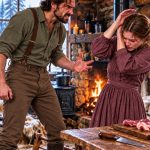
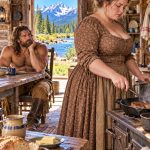
Maeve was kneading bread when she heard the wheels stop outside.
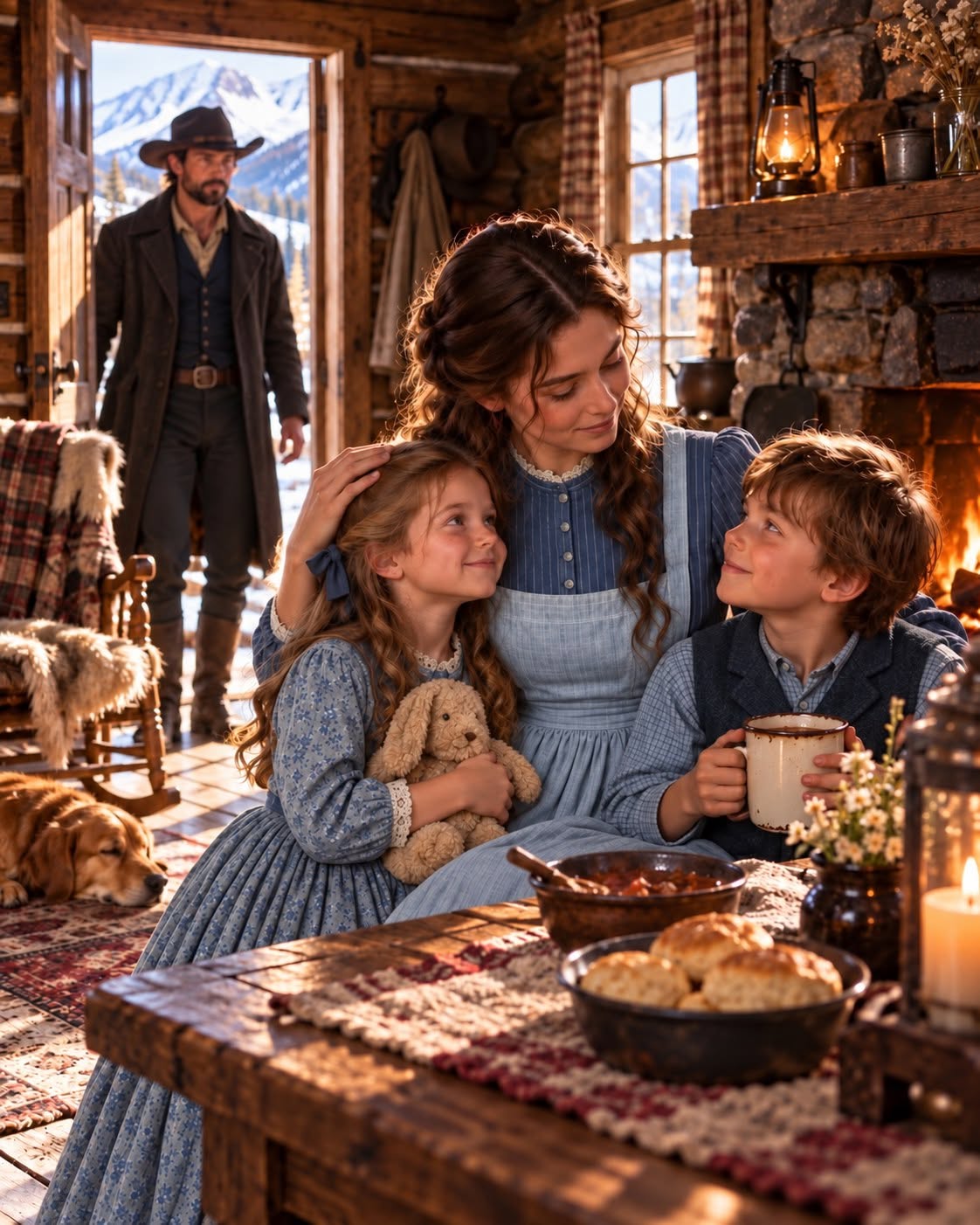
Tess was on the floor sorting ʙuттons by color. Toby sat beside her, carefully carving a piece of wood with a blunt little knife Gideon had allowed him to use.
Then the front door opened.
Gideon entered with the woman behind him.
“Miss Maeve,” he said, “this is Mrs. Eleanor Whitaker.”
The woman looked Maeve up and down.
“So you’re the girl.”
Maeve wiped her hands on her apron.
“Yes, ma’am.”
Mrs. Whitaker’s gaze moved toward the children.
“Those are my sister’s grandchildren.”
Toby immediately put down his carving.
Tess moved closer to Maeve.
Gideon stepped between them.
“Eleanor, we discussed this in town.”
“And I told you what must happen.” The woman’s voice was cool. “The children need a proper home.”
“They have one.”
“A cabin in the mountains with a hired girl?”
Maeve lowered her eyes, but Gideon answered before she could.
“This cabin is their home. I’m their father.”
Mrs. Whitaker removed a pair of gloves.
“Then perhaps you should have acted like one sooner.”
The words landed hard.
Gideon did not answer.
Maeve understood that the woman knew something about the children’s past. She also understood that this was not simply a family visit.
Mrs. Whitaker approached the twins.
“Toby, Tess. Come here, darling.”
Neither child moved.
“I’ve brought you sweets,” she continued. “And new clothes. Wouldn’t you like to come with me?”
Tess shook her head.
Toby stood and took his sister’s hand.
“We stay here,” he said.
 Mrs. Whitaker sighed.
“Children don’t understand what is best for them.”
“They understand who makes them feel safe,” Maeve replied.
The woman turned sharply.
“I beg your pardon?”
Maeve felt her heart beating faster, but she did not retreat.
“They’ve already lost their mother. You shouldn’t make them think they’re losing their father, too.”
For a moment, Mrs. Whitaker said nothing.
Then she opened her handbag and removed a folded document.
“Gideon, your wife’s final instructions are clear. She wanted the children raised in town, with family who could provide an education and a respectable future.”
Gideon stared at the paper.
“She never told me that.”
“She wrote it in a letter.”
“Where is the letter?”
“I have it.”
“Then show me.”
Mrs. Whitaker hesitated.
That hesitation did not escape Maeve.
Gideon stepped forward.
“Show me.”
The woman placed the document on the table.
It was a copy of a letter, written in a familiar hand. Gideon read it slowly, then looked up.
“This isn’t her handwriting.”
Mrs. Whitaker’s face тιԍнтened.
“You cannot possibly know that.”
“I knew my wife for nine years.”
He held the paper toward the light.
“My wife wrote her capital E differently. And she always signed her name with the same little mark beneath it.”
Maeve watched Mrs. Whitaker’s expression change.
“Perhaps grief has affected your memory,” the woman said.
“Perhaps someone has forged a letter.”
The cabin went silent.
Mrs. Whitaker gathered her gloves.
“I will return with the sheriff.”
When she had gone, Toby began to cry.
Gideon knelt in front of him.
“No one’s taking you anywhere today, son.”
“But she said we have to go.”
“She doesn’t get to decide that.”
Tess climbed into Maeve’s arms.
“Will you stay?” she whispered.
Maeve looked at Gideon.
He did not answer for her.
“I’ll stay tonight,” Maeve said. “And tomorrow, we’ll see what happens.”
Tess nodded against her shoulder.
That evening, Gideon finally told Maeve the rest.
His wife, Clara, had grown up in a wealthy family. Her older sister, Eleanor, had always believed Clara had made a foolish choice by marrying a mountain trapper.
When Clara became ill, Eleanor had offered to bring her to town.
Gideon had refused at first, but when the fever worsened, he agreed.
Clara died before he could reach her.
After the funeral, Eleanor insisted that the twins should live with her.
Gideon refused.
“She said I was unfit,” he explained. “She said the children would be better off without me.”
“Why did you let her make you doubt yourself?”
He looked at the floor.
“Because some days I believed her.”
Maeve sat quietly.
She thought of her uncle Amos, who had traded her away without a second thought. She knew what it was like when someone with authority decided your life was worth less than their convenience.
“Then don’t let her decide again,” she said.
Gideon looked at her.
“You speak as though it’s easy.”
“No. I speak as someone who knows what happens when you let another person tell you what you’re worth.”
He was silent for a long moment.
Then he said, “You shouldn’t have been traded for those mules.”
Maeve looked down.
“No.”
“You should have been given a choice.”
“Yes.”
“And if you ever decide to leave this cabin, I’ll pay you what I’ve promised. I’ll help you find somewhere safe. You won’t owe me anything.”
Maeve’s eyes filled, but she kept her voice steady.
“Thank you.”
Gideon nodded.
He had begun to understand that kindness could not be used as another kind of ownership.
The following afternoon, Mrs. Whitaker returned.
This time, she brought the sheriff.
She also brought a second document.
“This is the legal peтιтion,” she announced. “I am asking the court to place the children in my care.”
The sheriff looked uncomfortable.
“Mr. Reed, we need to discuss the matter.”
Gideon stepped onto the porch.
“You can discuss it with my lawyer.”
“You have a lawyer?” Eleanor asked.
“I do now.”
She looked surprised.
Then her eyes moved past him and settled on Maeve.
“Young woman, I suggest you stay out of this. You are an employee. Nothing more.”
Maeve’s cheeks warmed.
Before she could answer, Toby appeared behind her.
“She isn’t nothing.”
Everyone turned.
The little boy stood with one hand wrapped around Tess’s.
“She makes bread,” he said. “And she stays when we’re scared.”
Tess nodded.
“She doesn’t leave us in the dark.”
Gideon looked at his children.
Then he turned to the sheriff.
“I want the original letter Clara wrote before she died. Not a copy. I want the doctor who treated her questioned. And I want to know why her sister waited until now to claim the children.”
Mrs. Whitaker’s face went pale.
For the first time, Maeve saw something besides disapproval in her expression.
Fear.
The sheriff noticed it, too.
“Mrs. Whitaker,” he said slowly, “perhaps we should hear both sides before taking further steps.”
Eleanor тιԍнтened her coat.
“There is no need.”
But the sheriff had already made up his mind.
He would investigate.
And until the matter was settled, the twins would remain with their father.
Mrs. Whitaker climbed into her carriage without another word.
Maeve watched it disappear down the mountain road.
Gideon stood beside her.
“This isn’t over,” he said.
“No,” Maeve replied. “But we’re not finished, either.”
That night, Maeve found a small envelope tucked inside the recipe book she had brought from her mother’s belongings.
It had not been there before.
Inside was a note written in a hurried hand.
Maeve,
If you are reading this, then Eleanor has found the children. There is something Gideon must know about Clara’s last days. I was present when she wrote her final letter. The document Eleanor presented is not the one Clara signed.
The real letter was hidden where the twins would never think to look.
And the person who helped Eleanor change it is someone Gideon trusts.
Maeve read the note twice.
Then she looked toward the bedroom, where Toby and Tess were sleeping.
A floorboard creaked behind her.
Gideon stood in the doorway.
“What is that?” he asked.
Maeve slowly handed him the note.
He read it once.
Then again.
His face became completely still.
“Who wrote this?” he whispered.
Maeve turned the paper over.
There was a name at the bottom.
Harlan Pike.
Gideon’s oldest friend.
The man who had helped him build the cabin.
The man who had stood beside him at Clara’s funeral.
And the man who had promised to protect the twins.
Gideon lowered the note.
“Tomorrow,” he said quietly, “we ride to Red Creek.”
But Maeve noticed something else.
The note was dated six months earlier.
And beneath the date was a final sentence:
If Harlan knows you have this letter, he will come for the children before sunrise.
Outside, somewhere beyond the trees, a horse whinnied.
Then came the unmistakable sound of someone approaching the cabin.
And Gideon had not yet told Maeve where the real letter was hidden.