PART 3 — THE SECRET BENEATH THE MOUNTAIN
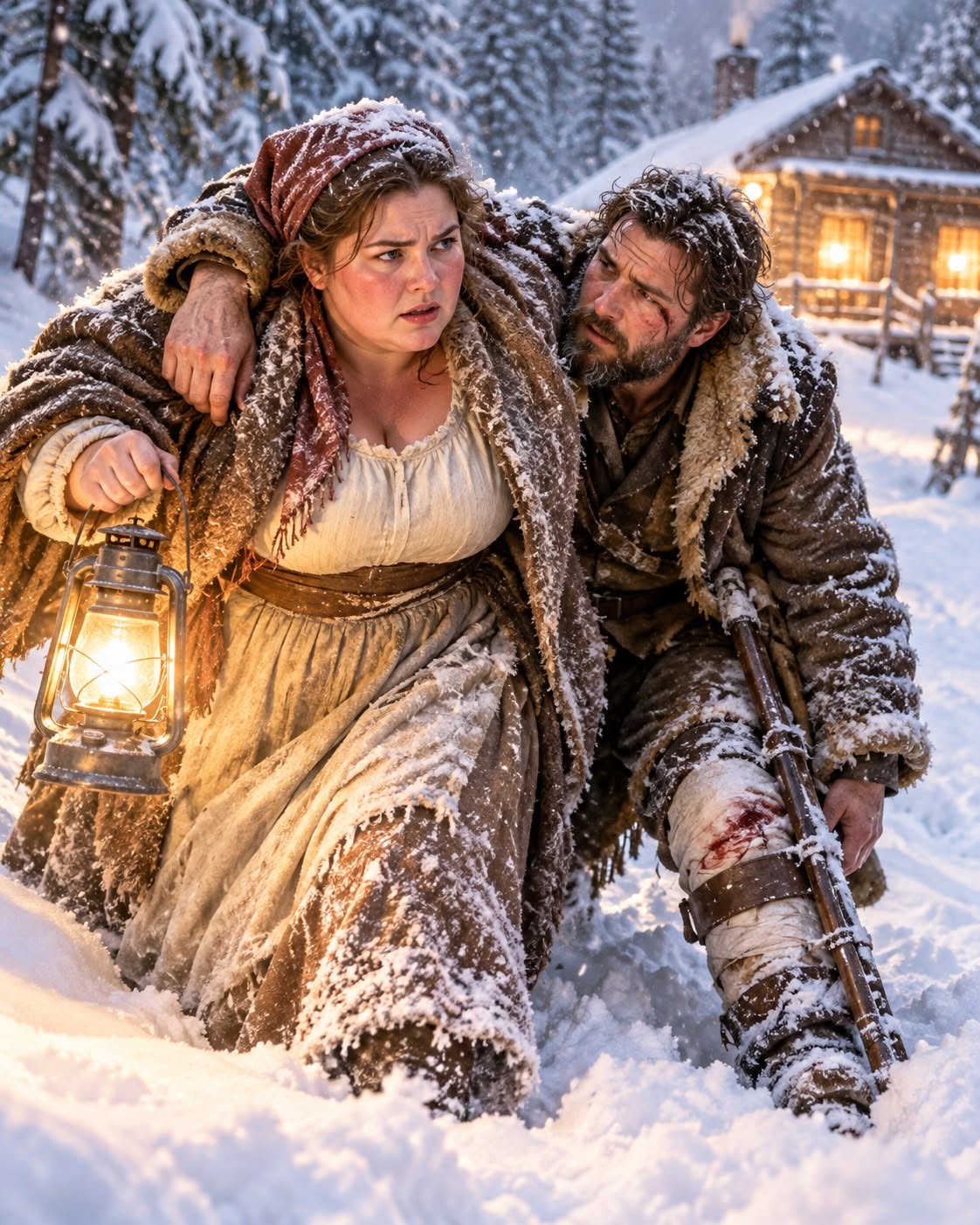
PART 3 — THE SECRET BENEATH THE MOUNTAIN
Amos spent the next several weeks recovering.
The doctor had insisted he remain off his injured leg, and Bessie made certain he followed the instructions.
At first, Amos found this difficult.
He was accustomed to doing everything himself. He had spent years trapping, hunting, repairing fences, and hauling supplies through the mountains.
Now he needed help getting from the bed to the chair.
He needed Bessie to bring his meals.
And he needed to accept that there were days when the best thing he could do was rest.
He wasn’t good at it.
“You’re staring at the wall again,” Bessie said one morning.
“There’s not much else to look at.”
“You could look at the window.”
“Same mountain.”
“Then look at the stove.”
“Same stove.”
Bessie placed a bowl of oatmeal on the table.
“Perhaps you should consider being grateful you have a wife willing to tolerate you.”
Amos looked up.
“Perhaps I should.”
She tried to hide her smile.
He noticed anyway.
The cabin changed during those weeks.
Bessie organized the pantry, repaired the curtains, and made shelves from leftover boards. She turned a corner of the room into a small worktable where she could mend clothes and prepare supplies.
She also discovered that Amos had been living on an unnecessarily limited diet.
There were sacks of beans in the pantry, dried apples in the loft, and enough flour to feed them for months.
Yet his meals had consisted mostly of meat, bread, and coffee.
Bessie began preparing proper stews, biscuits, and vegetable dishes whenever supplies allowed.
One evening, Amos took a second helping.
“You’ve made too much,” he said.
“Then you’ll have leftovers tomorrow.”
“I wasn’t complaining.”
“I know.”
He looked at the bowl.
“Bitter Creek never fed me anything like this.”
“Bitter Creek never had me cooking for it.”
Amos smiled.
“That is their loss.”
As the weather improved, visitors began arriving.
Some came to check on Amos. Others were curious about the woman who had dragged a mountain trapper through a blizzard.
The stories had already grown larger than the truth.
One man claimed Bessie had carried Amos on her back.
Another insisted she had pulled him through snowdrifts taller than a horse.
Bessie ignored the exaggerations.
She knew what she had done.
 She also knew she had been frightened every step of the way.
Strength, she had discovered, did not mean feeling no fear.
It meant doing what needed to be done despite it.
But not everyone had learned that lesson.
One afternoon, Silas Boone arrived with a sack of flour.
He stood awkwardly by the door.
“Brought this for you.”
Bessie accepted it.
“Thank you.”
Silas looked toward Amos.
“How’s the leg?”
“Better.”
“Good.”
For a moment, the three of them stood in silence.
Then Silas cleared his throat.
“There’s talk in the settlement.”
Bessie set the flour on the table.
“What kind of talk?”
“About the old cabin.”
Amos’s expression changed.
“What about it?”
Silas looked uncomfortable.
“Some men have been asking whether you’re planning to sell.”
“I’m not,” Amos answered.
“That’s what I told them.”
Bessie looked between the two men.
“Who wants to buy it?”
Silas hesitated.
“Elias Vane.”
Amos sat straighter.
“Vane is back?”
“Came through Bitter Creek last week. He’s been buying claims along the northern ridge.”
Amos’s face darkened.
“He has no business here.”
Silas nodded.
“That’s what I thought. But he’s got money, and he’s been asking questions about the mountain spring.”
Bessie frowned.
“What spring?”
Amos didn’t answer immediately.
Silas glanced at him.
“You haven’t told her?”
“It’s not the time.”
Bessie looked at her husband.
“I believe I should decide when it’s the time to hear about something that concerns our home.”
Amos studied her.
Then he nodded toward the chair.
“Sit down. There’s something you need to know.”
The spring lay behind the cabin, beyond a narrow stand of pine trees.
Bessie had seen the stream that ran from it, but she had never thought much about its source.
Amos explained that the water came from a natural spring high on the mountain.
His family had used it for generations.
Years earlier, a mining company had tried to claim the land around it, arguing that the water could support a larger operation.
Amos’s father had refused.
The dispute had ended after the company withdrew, but Amos had never been certain that the matter was truly settled.
“Why does Elias Vane want it?” Bessie asked.
“He wants to reopen the old mine.”
“Would that affect the spring?”
“It could.”
Amos paused.
“The spring supplies more than this cabin. A small stream feeds the lower valley. Several families depend on it.”
Bessie looked toward the window.
“Then it isn’t just your property.”
“No. And that’s why I won’t sell.”
She understood now why Silas had looked so concerned.
“Does Vane have a claim?”
“He says he does.”
“Does he?”
Amos shook his head.
“Not one I’ve ever seen.”
Bessie considered this.
“Then perhaps we should find out what he has.”
Amos looked at her.
“You’ve been here less than a month.”
“And already I’ve learned that men who want something badly often expect everyone else to step aside.”
A quiet smile crossed his face.
“You’re beginning to sound like a mountain woman.”
“I was a mountain woman the moment I walked into this cabin.”
Two days later, Elias Vane arrived.
He came in a polished black carriage with two men riding behind him.
His coat was expensive, his boots clean, and his expression suggested that he had never been told no.
Amos met him on the porch, leaning on a wooden crutch.
Bessie stood beside him.
“Amos,” Vane said. “I see you’ve survived your little accident.”
“Disappointed?”
Vane ignored the remark.
“I’ve come to make an offer.”
“I told you before. I’m not selling.”
“Perhaps you haven’t heard the amount.”
“I have.”
Vane glanced at Bessie.
“And this must be your new wife.”
Bessie met his eyes.
“It must.”
He smiled faintly.
“I’ve heard quite a story about you.”
“Then I hope someone told it accurately.”
One of the men behind Vane laughed.
Vane removed a folded document from his coat.
“I am prepared to pay generously for the cabin and the surrounding land. You could both start somewhere more comfortable.”
Amos shook his head.
“No.”
Vane’s smile disappeared.
“Think carefully. Winter is hard on a man with an injured leg.”
Bessie stepped forward.
“My husband has already made his answer clear.”
Vane looked at her.
“I was speaking to Amos.”
“And I was answering you.”
For a moment, the porch went silent.
Then Vane folded the paper.
“You may regret this.”
Bessie watched him return to his carriage.
“People keep saying that,” she murmured.
Amos glanced at her.
“Perhaps we should start keeping a list.”
That evening, Amos seemed troubled.
He sat beside the stove, turning a small brᴀss object between his fingers.
Bessie noticed it.
“What is that?”
“A key.”
“To what?”
“Something my father left behind.”
He opened his hand.
The key was old and worn, with a small mark shaped like a pine tree near its handle.
“There’s a storage room beneath the old spring house,” he explained. “My father kept records there. Maps, agreements, old letters.”
“Why haven’t you looked?”
“I tried once, years ago. The entrance was blocked after a rockslide.”
Bessie studied the key.
“And now?”
“Now I think Vane knows something is there.”
She sat opposite him.
“Then we should find out what.”
Amos shook his head.
“Not while I’m recovering. The ground near the spring house isn’t safe.”
Bessie nodded.
“Then we wait until it can be examined properly.”
He looked surprised.
“You’re not going to tell me to go digging?”
“No. I married a mountain man, not a fool. We can ask someone experienced to inspect it.”
Amos laughed softly.
“That’s probably the wisest thing anyone has said in this cabin.”
The next morning, Bessie went to Bitter Creek to purchase supplies.
The settlement had changed since her wedding.
People who once laughed at her now stopped to ask about Amos.
Some offered kind words.
Others seemed embarrᴀssed whenever she looked their way.
At the general store, she found Silas talking to two men.
They fell silent when she entered.
“Morning,” she said.
Silas nodded.
One of the men, a thin fellow named Caleb, gave her an uncomfortable smile.
“Mrs. Amos.”
“Bessie.”
He cleared his throat.
“We’ve been talking about that business with Vane.”
“Have you?”
“He’s been asking around about the spring. Says he has an old agreement with Amos’s father.”
Bessie set her basket on the counter.
“What kind of agreement?”
Caleb shrugged.
“Something about access to the water.”
“Have you seen it?”
“No.”
“Then you don’t know whether it exists.”
The man looked away.
Silas leaned forward.
“There’s another thing. Vane says he intends to bring the matter before the county judge.”
Bessie felt a quiet determination settle inside her.
“Then I suppose we’ll have to be ready.”
She finished her shopping and left.
But before she reached the road, she noticed a folded paper tucked beneath the strap of her basket.
She hadn’t put it there.
She unfolded it.
There were only two sentences.
Ask Amos what happened the winter his father disappeared.
Bessie read the words again.
Then she looked toward the mountains.
That night, she showed the note to Amos.
He read it once.
Then he closed his eyes.
“Someone is trying to frighten us,” Bessie said.
“Perhaps.”
“But you know something.”
Amos sat quietly.
“My father didn’t disappear.”
Bessie waited.
“He left the mountain one winter and never came back. We were told he had died on the trail.”
“Were his remains found?”
“No.”
“Then how could anyone be certain?”
Amos looked toward the old pH๏τograph on the mantel.
“I was seventeen. My mother was sick. The men who came to tell us said there was nothing to recover.”
Bessie placed the note on the table.
“And you believed them?”
“I had no reason not to.”
He paused.
“Until now.”
Later that night, Bessie couldn’t sleep.
She sat beside the window, listening to the wind moving through the trees.
Amos had finally drifted off, but his father’s pH๏τograph remained on the table.
She picked it up.
The older man stood beside a small wooden building near the spring. Behind him was a stone marker with the same pine-tree symbol as the brᴀss key.
Bessie turned the pH๏τograph over.
There was writing on the back.
For the one who knows where the water begins.
Beneath the sentence was a date.
And a name.
Not Amos’s father’s name.
Not Vane’s.
A name Bessie recognized from the papers she had seen at the general store.
Elias Vane.
Her heart began to pound.
She looked again at the pH๏τograph.
Vane had been connected to the spring long before he returned to Bitter Creek.
And perhaps he knew far more about Amos’s father’s disappearance than he was admitting.
Bessie woke Amos.
He sat up slowly.
“What is it?”
She handed him the pH๏τograph.
When he saw the name, the color drained from his face.
“My father knew Vane.”
“Apparently.”
Amos stared at the writing.
Then he reached for the brᴀss key.
“There’s something else in that storage room,” he whispered.
“What?”
He looked at Bessie.
“My father once told me that if anything happened to him, I should never trust the man who claimed the spring belonged to the mining company.”
Bessie looked at the pH๏τograph again.
“Then we need to find out what your father left behind.”
Amos nodded.
But before either of them could say another word, a loud crack sounded outside.
They rushed to the window.
A lantern was moving through the trees.
Someone was standing near the spring house.
And beside the lantern lay a fresh trail of disturbed snow leading straight toward the old entrance.
Amos gripped his crutch.
Bessie reached for her coat.
Then she noticed something else.
The stranger had left a small object on the doorstep.
A leather pouch.
Inside was an old silver pocket watch.
Amos recognized it immediately.
It had belonged to his father.
He turned the watch over with trembling fingers.
Engraved on its back were three words:
HE IS ALIVE.
For several seconds, neither of them moved.
Then Amos whispered the question that would change everything.
“Bessie… where has my father been all these years?”