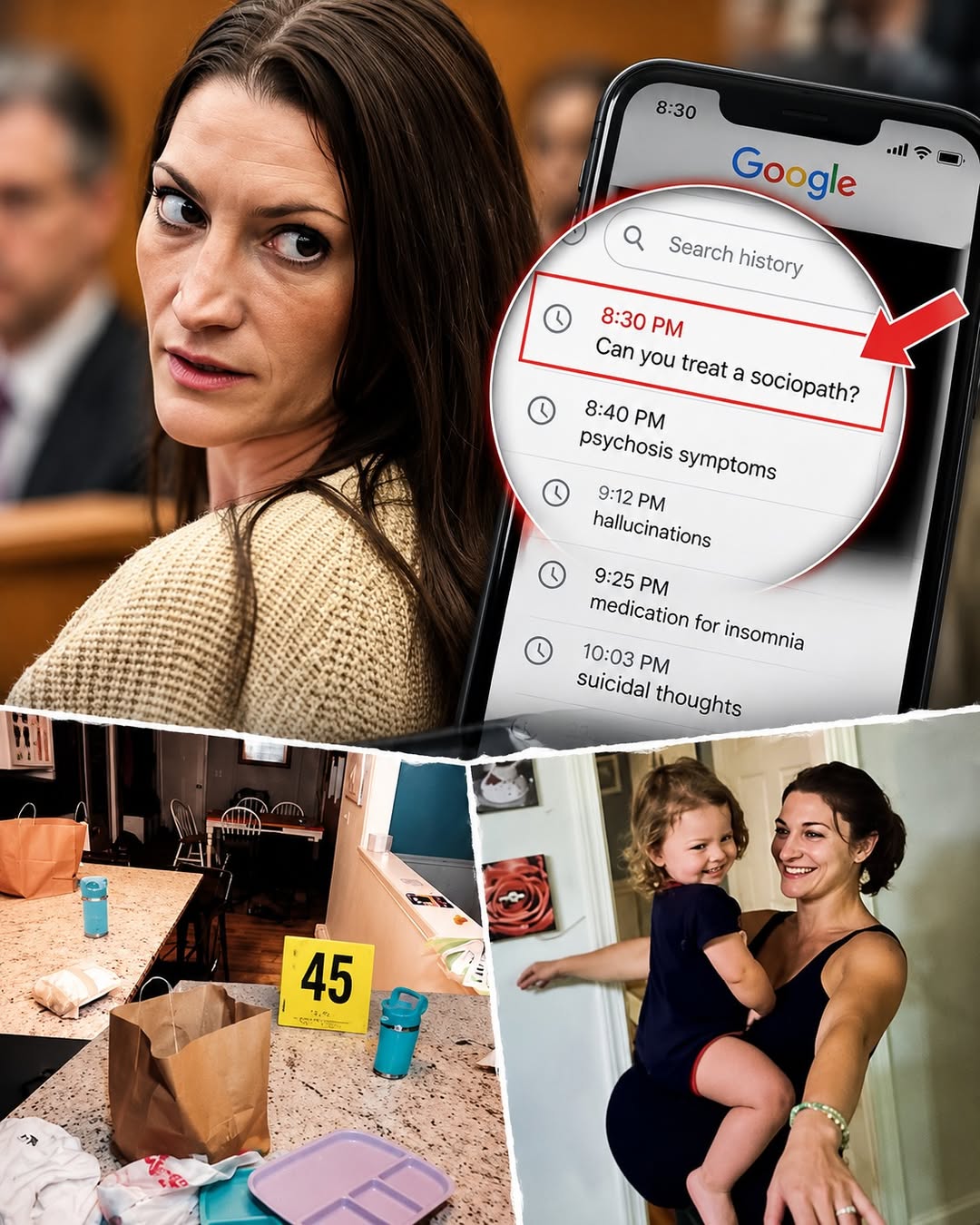
Four days before the deaths of Cora, Dawson, and Callan, Lindsay Clancy reportedly searched Google for “Can you treat a sociopath?”
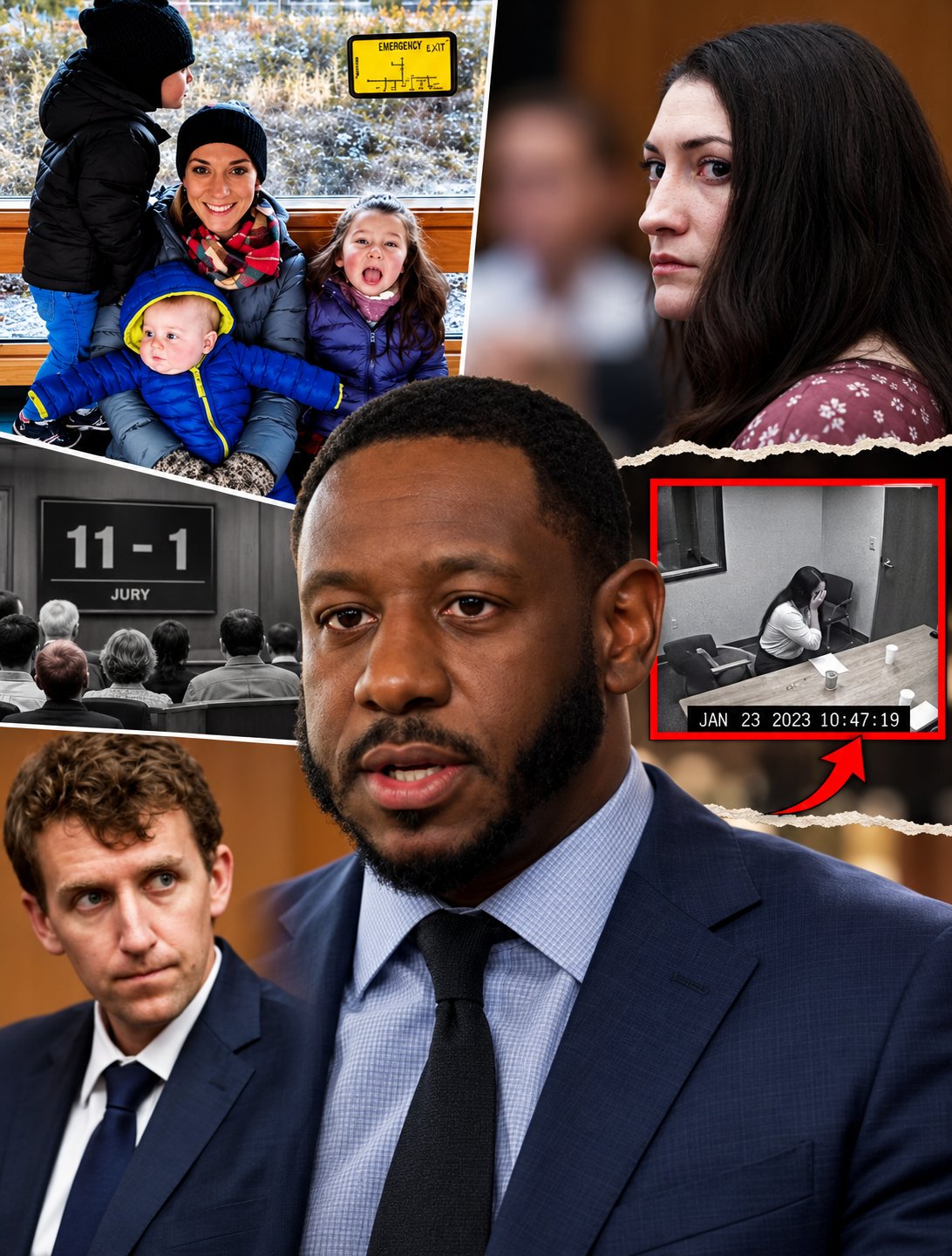
Michael Desronvil has finally explained why he refused to join the other eleven jurors in the Lindsay Clancy trial.
But he has not explained everything.
In his first televised interview after the mistrial, the lone holdout juror said he had no reasonable doubt about the conclusion he reached and believed the evidence showed Lindsay knew what she was doing.
One word became central to his explanation:
“Methodical.”
Desronvil told Fox News that he was struck by what he viewed as the thought process behind Lindsay’s actions and said watching a video, together with what he heard in the courtroom, was “really big” for him.
Then came the part that left the most important question unanswered.
He declined to identify the specific evidence.
“I had a lot of evidence to back up my claim,” Desronvil said, but added that he would leave the specifics alone while the legal process continued.
That means the public now knows the conclusion.
It still does not know the complete reasoning chain that produced it.
The 11–1 Split Was About Criminal Responsibility
The jury did not divide simply over whether the prosecution had created reasonable doubt about the physical acts.
The central issue at trial was Lindsay Clancy’s criminal responsibility.
Eleven jurors were prepared to find her not criminally responsible because of mental disease or defect, while Desronvil stood alone in favor of conviction.
That distinction matters.
The trial focused heavily on whether Lindsay could appreciate the wrongfulness of her conduct or conform her behavior to the law.
It was not merely a binary argument about whether something happened.
It was about what her mental state meant legally.
Desronvil Says He Never Had the Doubt Others Described
After the mistrial, several jurors publicly described the deliberations differently.
They said the holdout appeared to acknowledge uncertainties while still refusing to join the majority.
Desronvil rejected that characterization.
“I didn’t have any doubts,” he said in a statement released before his longer Fox interview.
He said that when he raised different possible theories during deliberations, other jurors treated the questions as though they represented doubt.
According to him, they did not.
They were part of his effort to test the evidence.
He Said the Evidence Showed Lindsay “Planned”
Desronvil’s earlier statement was already unusually strong.
He said the physical evidence, key witnesses, and prosecution presentation were enough for him to conclude Lindsay knew exactly what she was doing and “planned.”
That language goes directly to the divide between him and the other eleven jurors.
The defense had argued that severe mental illness deprived Lindsay of the legal capacity required for criminal responsibility.
Desronvil interpreted the evidence differently.
To him, the sequence appeared organized rather than uncontrolled.
Then He Used the Word “Methodical”
In the Fox interview aired in October, Desronvil sharpened that explanation.
He said Lindsay appeared “methodical” in what he called the execution of the children.
He emphasized the “thought process” he believed was reflected in the conduct.
That was not a medical diagnosis.
It was one juror’s interpretation of the evidence.
And that distinction is crucial.
A person can appear organized while still suffering from serious mental illness.
The legal question requires more than an impression of order.
Methodical Behavior Does Not Automatically Resolve Insanity
This is where the public discussion can become too simplistic.
“Methodical” may sound synonymous with legally responsible.
It is not.
A person can perform actions in sequence while experiencing delusions, psychosis, severe mood disorder, or another mental disturbance.
The relevant Mᴀssachusetts legal standard asks whether mental disease or defect deprived the defendant of substantial capacity to appreciate the wrongfulness of conduct or conform conduct to the law.
Orderliness may be evidence.
It is not automatically the answer.
The Other Jurors Heard the Same Trial
That is what makes the split so significant.
Desronvil did not receive a separate prosecution case.
The other eleven jurors heard the witnesses.
Saw the exhibits.
Listened to the psychiatric testimony.
Observed the same courtroom presentation.
And they reached a different conclusion about criminal responsibility.
The 11–1 result therefore was not produced because one side had access to evidence the other side never saw.
The difference lay in interpretation.
This is where his Fox interview becomes particularly intriguing.
Asked what drove his conclusion, Desronvil referred to “watching the video” and also listening in the courtroom.
But Fox’s report does not identify the precise video he meant.
Nor did Desronvil publicly describe the specific moment inside it that changed his view.
That limitation matters.
The public should not fill in the blank with whichever trial video seems most dramatic.
There Were Multiple Visual Exhibits During the Trial
Trials involving detailed timelines can include numerous forms of visual evidence.
Surveillance footage.
Family videos.
Recorded interviews.
Medical or demonstrative exhibits.
PH๏τographs.
Digital records.
Without Desronvil identifying the material, one cannot responsibly say which recording he meant.
The phrase “the video” sounds specific.
But publicly, it remains underspecified.
That is the first unresolved piece.
He Focused on “Thought Process”
Desronvil’s explanation suggests he believed the sequence of actions revealed conscious decision-making.
He said the thought process necessary to fulfill what he viewed as the commitment mattered to him.
That statement helps explain his vote.
But it still does not reveal the chain of inference.
What specific action showed thought?
Was it timing?
Movement?
Sequence?
Something said?
Something done before or after?
He did not say.
A Sequence Can Look Deliberate Without Explaining Mental State
This is another critical distinction.
Imagine evidence establishes that Action A occurred before Action B and Action C.
That may establish sequence.
It may even suggest planning.
But criminal responsibility asks what was happening mentally while that sequence occurred.
A person experiencing psychosis can still move from one action to another.
The defense’s argument was not necessarily that Lindsay’s behavior was physically random.
It was that mental illness fundamentally altered her capacity.
Desronvil Rejected That Interpretation
For him, the evidence apparently crossed the line in the other direction.
He believed there was enough organization and purposeful behavior to establish knowledge and responsibility.
That was his judgment as a juror.
He has every right to explain how he interpreted the evidence.
But his interpretation does not become a psychiatric fact simply because he used the word “methodical.”
It remains one juror’s reasoning.
His Certainty Contradicted the Majority
Eleven jurors ultimately disagreed.
Juror Paula Devlin later told CBS that the panel began deliberations more divided than the final vote suggested: eight initially leaned toward not criminally responsible, two were undecided, and two favored guilt.
Over time, all but Desronvil moved toward the lack-of-criminal-responsibility verdict.
That progression is important.
The final 11–1 split was reached after discussion.
It was not necessarily the starting point.
Patrick Clancy’s Testimony Influenced at Least One Juror
Devlin said Patrick Clancy’s testimony may have influenced her more than anything else.
That illustrates how different jurors could ᴀssign very different weight to different evidence.
One juror might focus primarily on psychiatric experts.
Another might focus on physical sequence.
Another might give particular importance to Patrick’s account.
Desronvil appears to have focused strongly on what he perceived as deliberate action.
Jurors are allowed to weigh evidence differently.
The Holdout Was Accused of Ignoring Reasonable Doubt
After deliberations ended, accusations surfaced that Desronvil had acknowledged doubts but still refused to change his vote.
The defense seized on those allegations.
Other jurors described frustration with how deliberations unfolded.
Desronvil denied that account repeatedly.
According to him, discussing alternative theories did not mean he doubted the prosecution.
He considered them and rejected them.
That Dispute Is Now Part of the Post-Mistrial Battle
The disagreement over Desronvil’s deliberation conduct did not end when jurors left the courthouse.
Kevin Reddington has pursued inquiries relating to the holdout juror and the circumstances surrounding the mistrial.
The defense has also sought to prevent another prosecution through separate legal arguments.
That makes Desronvil’s public explanation potentially important beyond public curiosity.
What he says about his reasoning may be compared with allegations from other jurors.
But Public Interviews Are Not Jury-Room Transcripts
That limitation should remain clear.
No public interview recreates seven days of deliberations.
A juror speaking weeks later summarizes.
Selects details.
Responds to accusations.
Explains conclusions in language that may be more concise than the discussions that actually occurred.
Desronvil’s Fox interview tells us how he now describes his reasoning.
It cannot independently reconstruct every exchange in the jury room.
His Refusal to Give Specifics Is Deliberate
The most compelling aspect of the interview may therefore be what Desronvil did not say.
Fox reported that he declined to explain the evidence in detail.
He said he had “a lot of evidence” supporting his position but would put it aside while the process continued.
That leaves his central claim partially unsupported in public.
Not because the evidence necessarily does not exist.
Because he chose not to identify it.
That Choice Creates a Natural Open Question
If the video was so important, what did Desronvil see in it?
If the conduct looked methodical, which part?
If he believed the sequence demonstrated planning, what sequence convinced him?
Those questions are not attempts to attack him.
They are necessary to evaluate the reasoning he has chosen to discuss publicly.
A conclusion can be understood only when the evidence behind it is visible.
“A Lot of Evidence” Is Still Too General
The phrase covers almost everything presented at trial.
Physical evidence.
Witness testimony.
Medical records.
Statements.
Digital evidence.
Videos.
The prosecution’s reconstruction.
Without specifics, it tells the public the quanтιтy of support Desronvil believed existed.
It does not identify quality.
That distinction matters.
A juror may sincerely believe many pieces point in one direction.
Others may interpret the same pieces differently.
The Video Could Matter in Several Different Ways
A video might establish timing.
It might show movement.
It might capture demeanor.
It might preserve a statement.
It might simply provide context.
But none of those possibilities should be inserted into Desronvil’s account unless he identifies them.
Otherwise, an unanswered detail becomes an invented revelation.
The strongest version of the story keeps that gap intact.
Demeanor Alone Would Be Especially Weak
If what impressed Desronvil involved appearance or demeanor, that would require particular caution.
A face on video cannot reliably establish legal sanity.
Calmness does not prove planning.
Emotion does not prove innocence.
People under extreme psychological distress can appear controlled.
Others can appear chaotic while thinking clearly.
The legal analysis must depend on the evidence as a whole.
Sequence Evidence Can Be Stronger but Still Incomplete
If instead Desronvil was referring to a sequence of actions, that might provide more concrete evidence of organization.
Still, organization does not alone resolve the legal question.
The prosecution had to persuade jurors that Lindsay retained the necessary capacity despite mental disease or defect.
Eleven jurors were not persuaded.
Desronvil was.
That disagreement is the core of the mistrial.
His Personal Connection to the Children Also Affected Him
Desronvil told Fox that he has a five-year-old daughter.
Seeing pH๏τographs of Cora, Dawson and Callan was emotional for him, he said, and he wanted attention returned to what he called the “three angels.”
That response is understandable.
But emotional identification with the victims is separate from the legal test.
A juror still must evaluate criminal responsibility under the court’s instructions.
Desronvil Says He Did Exactly That
He insists he did not abandon the legal standard.
He says he considered the evidence and concluded Lindsay knew exactly what she was doing.
He rejects the idea that he voted from emotion or refused to deliberate.
His lawyer has likewise defended his conduct publicly.
Other jurors dispute parts of that account.
That conflict itself remains unresolved publicly.
Eleven Votes Do Not Automatically Make the Majority Correct
The 11–1 number is dramatic.
But criminal trials require unanimity precisely because one juror is permitted to disagree sincerely.
A lone holdout is not automatically irrational.
Nor does being in the majority automatically establish the correct interpretation.
The legal problem is that the jury did not reach unanimity.
That is why Judge William Sullivan declared a mistrial after seven days of deliberations.
One Vote Does Not Automatically Make Desronvil Right Either
The reverse is equally important.
Desronvil’s willingness to stand alone does not establish that he saw something the other eleven somehow missed.
They saw the evidence too.
The possibility remains that he weighted the same material differently.
Until he identifies the specific evidence behind his certainty, there is no basis to claim he discovered a hidden fact unavailable to everyone else.
“Methodical” Was His Interpretation
That single word has now become shorthand for his position.
But it should remain attributed to him.
It was Desronvil who saw method.
Desronvil who saw thought.
Desronvil who believed the evidence proved planning.
Those descriptions should not quietly transform into established findings about Lindsay’s mental state.
The jury never returned such a finding.
It could not reach a verdict.
The Mistrial Preserved the Disagreement
That is what September 4 ultimately meant.
Eleven jurors were ready to resolve the criminal-responsibility question one way.
One juror was not.
The judge did not choose between them.
The mistrial preserved the dispute rather than resolving it.
And Desronvil’s interview has now given the public more insight into one side of that divide—but not enough to reconstruct it fully.
The Missing Detail Is Still the Evidence Behind the Word
“Methodical.”
That word tells us what Desronvil thought.
It does not tell us exactly why.
He mentioned a video.
He mentioned courtroom evidence.
He mentioned a thought process.
He said he had substantial evidence supporting his conclusion.
Then he stopped short of identifying the decisive pieces.
That is where the story remains open.
One Man Saw a Plan — But What Exactly Did He See?
The public now knows Michael Desronvil did not describe himself as uncertain.
He says he had no reasonable doubt.
He believed Lindsay knew what she was doing.
He interpreted her behavior as deliberate and methodical.
And he says a video helped shape that conclusion.
But the most important part of the explanation remains outside the interview.
He has not publicly identified the precise video.
He has not isolated the specific moment.
He has not explained the exact sequence that, in his mind, transformed psychiatric evidence into proof of deliberate thought.
Until he does, the central mystery behind the 11–1 split remains remarkably simple:
what exactly did Michael Desronvil see in the evidence that convinced him Lindsay Clancy was acting with deliberate thought—and why, after finally breaking his silence, is that specific detail still the one thing he will not reveal?