PART TWO: THE WOMAN WHO MADE A BANKER TREMBLE
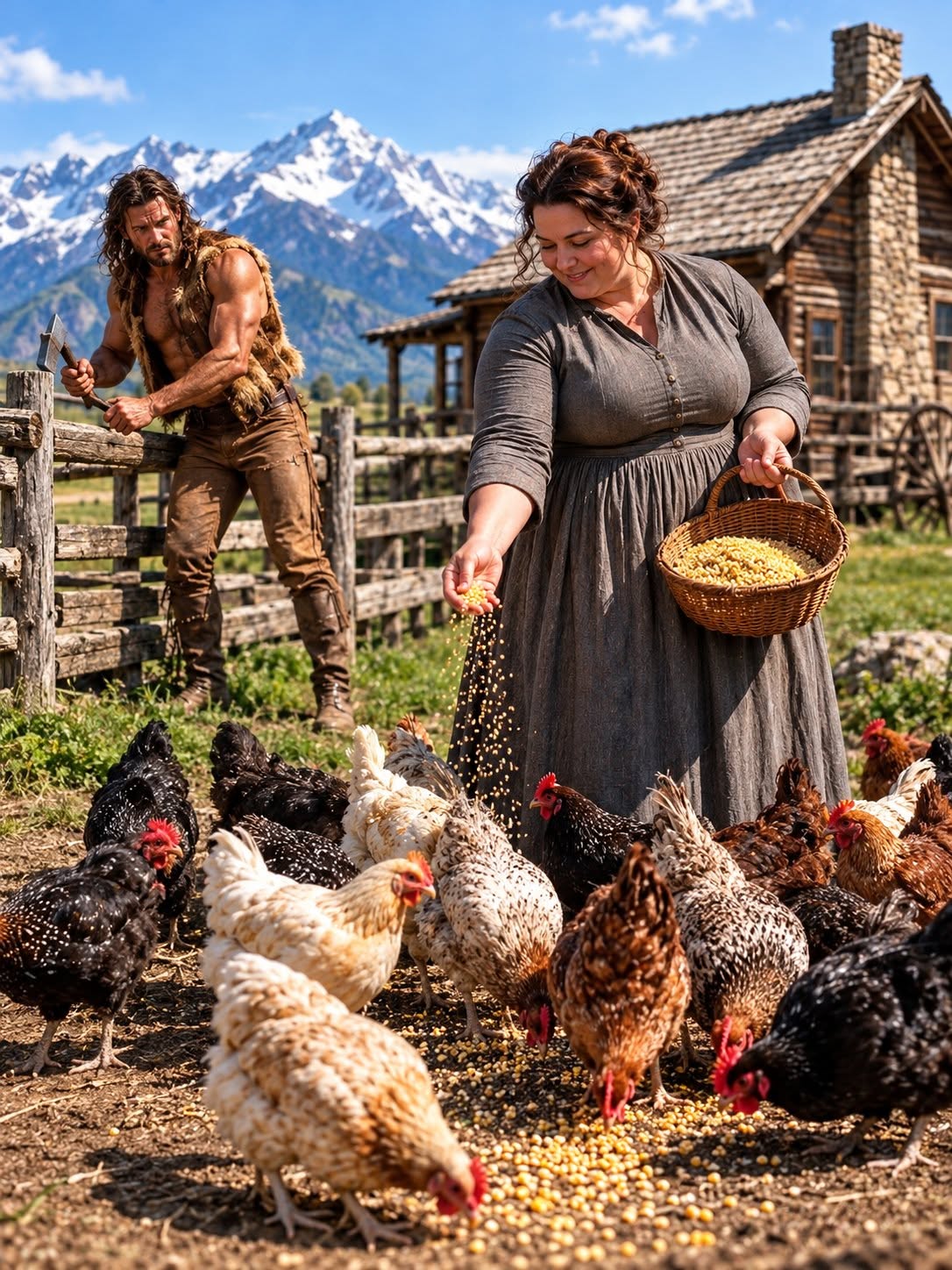
Harrison Caldwell laughed so loudly that the deputy beside him shifted uncomfortably in his saddle.
“Co-signer?” Caldwell repeated, removing his black riding gloves one finger at a time. “Griffin, have you gone completely mad? You bring a mail-order bride onto a bankrupt homestead, and now you expect me to believe she has some legal claim to your property?”
Griffin stood behind Mattie on the porch, his hands clenched at his sides.
“She’s my wife,” he said.
“Then she’s welcome to help you pack.”
Caldwell held up a folded document bearing the county seal.
“Your final payment was due three days ago. You failed to meet it. By the terms of your agreement, the Broken Spur is mine.”
He tossed the paper toward Griffin.
It landed in the dust.
Mattie didn’t bend to pick it up.
“Mr. Caldwell,” she said, “before you congratulate yourself on becoming the owner of this miserable piece of land, perhaps you’d care to explain why your office charged my husband interest at fourteen percent when the original agreement specified eight?”
Caldwell’s smile faltered for half a second.
Then he laughed again.
“Women should leave financial matters to men.”
Mattie opened her velvet ledger.
“An interesting philosophy from a man whose arithmetic appears to be worse than his manners.”
The deputy coughed into his fist.
Caldwell’s face darkened.
“You have no idea who you’re dealing with.”
“Oh, I do. Harrison Caldwell, owner of Caldwell Mercantile and controlling partner in the Laramie Agricultural Credit Office. You hold mortgages on seventeen farms within fifty miles of this ranch. Nine have already been transferred to your company. Four others are scheduled for foreclosure before winter.”
She turned a page.
“And every one of those borrowers was charged for cattle weights that don’t match the original shipping records.”
The yard went silent.
Griffin stared at her.
“How do you know all that?” he whispered.
Mattie didn’t look back.
“Because your banker is a thief, and thieves are creatures of habit.”
Caldwell’s hand drifted toward the leather folder hanging from his saddle.
“You’d better be careful, Mrs. Tucker.”
“I’m being exceptionally careful.”
She pointed to the paper in the dust.
“Your foreclosure notice is defective. The amount you claim is owed includes disputed charges, an unrecorded penalty, and a payment my husband made in cash last spring. I have the receipt.”
She produced a small slip of paper from her ledger.
Caldwell’s eyes narrowed.
“That receipt is worthless.”
“Then you’ll have no objection to presenting it to a judge.”
For the first time, Caldwell looked at Griffin instead of Mattie.
“You let her go through your accounts?”
Griffin swallowed.
“She found the discrepancies.”
“You foolish man. Do you have any idea what you’ve done?”
Mattie closed the ledger with a soft snap.
“Yes,” she said. “We’ve stopped being afraid of you.”
Caldwell turned toward the deputy.
“Seize the property.”
The deputy hesitated.
“Sir, if the amount is disputed, we may need confirmation from the county clerk before proceeding.”
“I said seize it!”
Mattie stepped forward.
“And I suggest you ask that deputy whether he intends to enforce a questionable civil claim without a proper order.”
The deputy looked at Caldwell, then at the documents in his own saddlebag.
“Mrs. Tucker has a point. We ought to verify the paperwork.”
Caldwell’s face had turned an ugly shade of red.
He leaned toward Mattie.
“You’ve made a very dangerous enemy today.”
She smiled.
“No, Mr. Caldwell. I’ve merely made an honest man out of your deputy for five minutes. Let us see whether the habit takes.”
One of the armed men snorted before catching himself.
Caldwell wheeled his horse around.
“This isn’t over, Griffin!”
Griffin found his voice at last.
“For the first time in years, Caldwell, I believe you.”
The banker rode away with his men, leaving a cloud of dust hanging over the yard.
Griffin remained motionless until the hoofbeats disappeared.
Then he turned to his wife.
“Mattie, who in heaven’s name are you?”
She looked down at the ledger.
“A woman who knows how to add.”
“That isn’t what I meant.”
“I know.”
She walked into the house.
“Come inside, Griffin. We have a ranch to save.”
That evening, Griffin found Mattie sitting at the kitchen table, surrounded by papers and a plate of untouched biscuits.
He placed two cups of coffee in front of her.
“Tell me the truth,” he said. “How did you learn all this?”
Mattie wrapped her hands around the cup.
“My father owned a small freight business in Missouri. He couldn’t read well, so I kept his books. When he died, I discovered that a railroad agent had been underpaying him for years by manipulating the shipping weights.”
“What happened?”
“I took the books to a lawyer. We recovered enough money to settle his debts and keep the business running.”
She paused.
“Afterward, I worked for a grain cooperative. I learned bookkeeping, agricultural pricing, transportation contracts, and the difference between a fair loan and a trap.”
Griffin studied her.
“And the marriage advertisement?”
Mattie looked at him over the rim of her cup.
“I wanted land.”
He blinked.
“What?”
“I had enough money to survive for a while, but not enough to purchase a working homestead outright. I wanted a place where I could grow food, raise livestock, and establish a business of my own.”
“You married me for my land?”
“I married you because your advertisement said you needed a wife who could work, and your letters suggested you were honest, even if you were proud.”
Griffin’s face fell.
“Then why didn’t you tell me?”
“Because you never asked what I could do. You told me what I was allowed to do.”
The words struck harder than he expected.
He stared into his coffee.
“I thought I was being practical.”
“You were being frightened.”
He looked up sharply.
Mattie continued.
“You were ashamed of your debts. Ashamed that your father’s ranch was failing. Ashamed that a banker who couldn’t tell a heifer from a haystack had more power over your life than you did.”
Griffin’s jaw тιԍнтened.
“And you think you can fix it?”
“No.”
Her answer surprised him.
“I think we can determine whether it is worth fixing. Then we can decide together.”
For a long moment, neither spoke.
Finally, Griffin asked, “Why did you call Caldwell a thief in front of armed men?”
“Because he was counting on you being too ashamed to defend yourself.”
Mattie reached across the table and tapped his hand.
“Listen to me, Griffin. There is no disgrace in a failing business. There is no shame in being poor. The disgrace lies in allowing another person to convince you that you deserve to be cheated.”
Griffin looked away.
For the first time since his father died, he felt the weight on his shoulders shift.
Not disappear.
Shift.
Perhaps the Broken Spur wasn’t beyond saving.
Perhaps he wasn’t, either.
The next morning, Mattie began her inspection.
She walked the property with a notebook, a measuring chain, and a determination that made the ranch hands stare.
There were only two hands left on the Broken Spur. Both had been working without full wages for weeks.
The well was nearly dry. The south pasture had been overgrazed. The chicken coop needed repairing, and half the cattle were thinner than they should have been for the season.
Mattie wrote everything down.
Griffin followed her, growing increasingly uncomfortable.
“You don’t need to record every broken board.”
“Yes, I do.”
“Why?”
“Because if we don’t know what is broken, we can’t know what it will cost to repair.”
She stopped beside the empty feed shed.
“How much do you pay for grain?”
“Whatever Caldwell’s supplier charges.”
“Which supplier?”
“His company.”
Mattie slowly turned.
“You buy feed from the same man who holds your mortgage and sets the price of your cattle?”
Griffin rubbed the back of his neck.
“He gave me credit when nobody else would.”
“And how much do you owe him?”
“I don’t know exactly.”
Mattie stared at him.
“Griffin, that sentence is going to kill this ranch.”
He winced.
“I know.”
“No. You suspect. Now we are going to know.”
For the next three days, she worked from dawn until late evening.
She separated the genuine debts from the questionable ones. She compared the cattle sales against the original shipping receipts. She calculated how much feed the ranch needed and how much it was wasting.
She also discovered something neither Griffin nor Caldwell had anticipated.
The Broken Spur had a valuable ᴀsset that nobody had properly measured.
Water.
Not in the dry creek bed, but beneath the eastern pasture, where the soil remained damp long after the surrounding ground had turned brittle.
Mattie noticed the pattern while inspecting the grᴀss.
“Why does this strip stay green?” she asked.
Griffin shrugged.
“Old spring, maybe. It never amounted to much.”
“How far does it run?”
“Don’t know.”
“Then we’ll find out.”
They hired a local surveyor with the little money Mattie could spare. He discovered that an underground spring fed a narrow stretch of the eastern pasture and could potentially support a small irrigated garden and additional livestock if properly developed.
It wasn’t a fortune.
But it was an opportunity.
Mattie drew up a plan.
They would reduce the herd to a manageable size, sell the healthiest surplus animals at the best available market price, repair the well, and establish a small vegetable plot near the spring. They would also stop purchasing supplies on Caldwell’s terms.
Griffin studied the figures.
“It’ll take every dollar we have.”
“Yes.”
“And if the spring doesn’t produce enough?”
“Then we adjust the plan.”
He looked at her.
“You really believe this can work?”
Mattie set down her pencil.
“I believe a ranch cannot be saved by pretending it is already healthy. We have to work with what we actually possess.”
Griffin nodded slowly.
“All right. What’s first?”
She smiled.
“First, you apologize to your two ranch hands for making them wait for their wages.”
He blinked.
“That’s the first thing?”
“It’s the first thing.”
And for the first time in months, Griffin did exactly as he was told without arguing.
Caldwell did not remain quiet for long.
A week later, a notice appeared on the door of the general store in Bitter Creek.
PUBLIC AUCTION: THE BROKEN SPUR HOMESTEAD.
The sale was scheduled for the following Friday.
Mattie read the notice twice.
Then she took it down.
The storekeeper watched her nervously.
“You can’t remove that.”
“I can remove it from this door. Whether the notice is valid is another matter.”
“You’re going to anger Caldwell.”
Mattie folded the paper and placed it in her ledger.
“Mr. Caldwell seems determined to be angry regardless of what I do.”
She went straight to the county clerk.
There, she requested copies of the mortgage records, the foreclosure filing, and the original loan agreement.
The clerk looked uncomfortable.
“Mrs. Tucker, these records are complicated.”
“Then it is fortunate that I have time to read them.”
He hesitated.
“Mr. Caldwell has considerable influence here.”
“So I’ve heard.”
Mattie laid down her receipts.
“But records are still records, aren’t they?”
The clerk glanced at the documents.
His expression changed.
“Where did you get these?”
“From the man who paid the money.”
The clerk pulled the original filing from a cabinet.
He compared the dates.
Then he compared the amount listed in the notice with the amount in the recorded agreement.
His mouth тιԍнтened.
“There’s a discrepancy.”
“Several, actually.”
He looked at her.
“I’ll need to refer this to the county attorney.”
“Please do.”
When Mattie returned to the Broken Spur, Griffin was waiting on the porch.
“Caldwell came by,” he said.
“What did he want?”
“He offered to cancel the debt if I sent you away and signed a new agreement.”
Mattie’s face became still.
“What did you tell him?”
Griffin drew a breath.
“I told him that if he wanted to discuss the ranch, he could speak to both of us.”
For the first time, Mattie looked genuinely pleased.
“And?”
“He called me a fool.”
“Then we’re making progress.”
Griffin laughed.
It was the first unguarded laugh she had heard from him.
Then he sobered.
“Mattie, I owe you an apology.”
She waited.
“When you arrived, I saw your size and ᴀssumed you couldn’t do the work I needed. I treated you like a hired servant instead of a partner.”
“Yes,” she said.
He swallowed.
“I was wrong.”
Mattie studied his face.
“Thank you for saying it.”
“I don’t expect you to forgive me immediately.”
“Good. Because I won’t.”
He nodded.
“But I would like to start again.”
Mattie closed her ledger.
“Then start by helping me repair the well.”
He grinned.
“Yes, ma’am.”
For the first time, the Broken Spur felt less like a graveyard and more like a beginning.
PART THREE: THE FRONTIER LEGEND
By early spring, the Broken Spur had changed.
Not dramatically.
Not yet.
The house still had a draft beneath the kitchen door. The fences still needed work. The cattle were not suddenly fat, and the bank had not magically forgiven the debt.
But the well had been repaired, the eastern pasture had been fenced, and the spring-fed garden was producing its first rows of greens.
The ranch hands were being paid on time.
Griffin had learned to keep a proper set of books, though Mattie still checked his arithmetic whenever he became too confident.
And Mattie had begun selling eggs, ʙuттer, and vegetables in Bitter Creek.
Her prices were fair.
Her measurements were exact.
Her customers quickly learned that she would rather lose a sale than cheat someone.
Within weeks, the people who had once stared at her in the depot began bringing her their accounts.
A widow wanted help calculating the true cost of her flour purchases. A rancher suspected he was being underpaid for his cattle. A shopkeeper needed someone to reconcile three years of invoices.
Mattie helped where she could, charging modest fees when people could afford them and accepting produce or labor when they couldn’t.
Soon, she was earning enough to cover the costs of the garden and contribute to the ranch’s operating expenses.
Griffin watched her build a reputation with a mixture of amazement and pride.
“You realize half the county thinks you’re some sort of financial wizard,” he told her one evening.
Mattie was sorting receipts beside the stove.
“Half the county has never seen a balanced ledger.”
He laughed.
“You’re impossible.”
“And yet, here you are.”
He grew quiet.
“Yes,” he said. “Here I am.”
He reached for her hand.
“I’m glad.”
She looked at him.
“I’m glad too, Griffin.”
Their marriage had begun as a transaction.
It was becoming something neither of them had expected.
Not because Griffin had suddenly become wealthy or Mattie had transformed into a different woman.
Because he had finally learned to respect her, and she had discovered that she could trust him to listen.
They were still learning.
But they were learning together.
Caldwell’s downfall began with a letter from the county attorney.
The disputed foreclosure was suspended pending review of the loan documents.
An independent examination found that several borrowers had been charged amounts inconsistent with their written agreements. Other records showed unexplained differences between cattle weights recorded at the ranches and those entered into Caldwell’s purchasing books.
The evidence was referred for further investigation.
Caldwell denied wrongdoing.
He claimed clerical mistakes had been exaggerated by jealous compeтιтors and disgruntled debtors.
But his reputation had begun to crumble.
One rancher came forward with a receipt proving that he had paid a debt Caldwell’s office still listed as outstanding.
Another produced two copies of the same invoice, each showing a different amount.
Then a former clerk agreed to provide testimony about instructions he had received to alter shipping weights.
The county attorney’s office proceeded according to the evidence, and Caldwell’s attempt to take the Broken Spur was delayed while the disputed claims were reviewed.
When Griffin heard the news, he stood in the yard for a long time, looking toward the road.
“I thought he was untouchable,” he said.
Mattie stood beside him.
“No man is untouchable simply because people are afraid to challenge him.”
“What happens now?”
“Now the evidence speaks.”
She slipped her hand into his.
“And we keep working.”
In late summer, the Broken Spur hosted its first community market.
Mattie had arranged for several small ranchers and farmers to bring their goods to the property. There were eggs, ʙuттer, vegetables, preserves, leatherwork, and fresh bread.
The market was modest, but people came from miles around.
Mattie had calculated the prices carefully so that each seller could cover costs and earn a reasonable profit.
She also introduced a simple system for weighing and recording livestock before shipment, allowing ranchers to keep their own copies of the figures.
Within a month, several families were using her forms.
Within three months, buyers began asking for them.
The little ledger that had once frightened Griffin now sat on a table in the market office, its pages filled with names, transactions, and notes.
One afternoon, a young rancher approached Mattie.
“Mrs. Tucker, I’ve heard you can help people get out of debt.”
Mattie shook her head.
“I can help people understand their debt. Getting out of it requires work, time, and sometimes difficult decisions.”
He nodded.
“My father says you saved the Broken Spur.”
She glanced toward Griffin, who was helping unload a wagon.
“We saved it.”
The young man looked surprised.
“Your husband does the bookkeeping now?”
“He does some of it.”
“Really?”
Mattie smiled.
“He’s learning.”
The young man laughed, and Mattie returned to her accounts.
She had no desire to become a legend.
She wanted the ranch to succeed, the workers to be paid, and the families around her to have a fair chance at keeping their land.
But stories travel quickly on the frontier.
And people began telling the story of the woman who had confronted Harrison Caldwell with nothing but a velvet ledger and a refusal to be intimidated.
Some exaggerated the tale.
They claimed she had stared down six armed men without blinking. They said she could calculate compound interest faster than a bank clerk could sharpen a pencil. One storyteller swore she’d once made a cattle buyer apologize to an entire town.
Mattie dismissed most of it.
“People enjoy a good story,” she told Griffin.
“And what story do you think they’ll tell about you?”
She considered that.
“Hopefully, one about fair prices and chickens that lay enough eggs to pay for their feed.”
Griffin laughed so hard that he nearly dropped the sack he was carrying.
Two years after Mattie arrived at the Broken Spur, the ranch’s debts had been reduced substantially.
They had sold surplus cattle at a fair price, expanded the garden, and established a dependable trade in eggs, ʙuттer, and preserved vegetables.
Griffin no longer hid his books in a locked box.
Instead, he kept them on a shelf in the kitchen, where Mattie could reach them whenever she needed to check a figure.
The velvet ledger had become famous in the county.
It was still battered at the corners, and one of its brᴀss fittings was loose.
But its pages held the story of the Broken Spur’s recovery.
One evening, Griffin found Mattie sitting on the porch, watching the sunset turn the distant hills gold.
He lowered himself into the chair beside her.
“Do you ever regret coming here?” he asked.
She looked at him.
“Sometimes.”
He stiffened.
“Sometimes?”
“I regret the first week. I regret the rot in the chicken feed, the broken well, and the fact that you thought a woman could be hired to save a ranch without being allowed to make a decision.”
He nodded solemnly.
“That seems fair.”
“But I don’t regret staying.”
He took her hand.
“Neither do I.”
For a while, they watched the cattle move slowly across the pasture.
Then Griffin said, “When I sent for a wife, I thought I needed someone to tend the chickens.”
Mattie raised an eyebrow.
“And now?”
“Now I know I needed someone to teach me that the chickens weren’t the problem.”
She laughed.
“What was the problem?”
He looked at her with quiet affection.
“I thought being a man meant carrying every burden alone. I thought asking for help made me weak. And I thought a wife was someone who made my life easier without asking me to change.”
He squeezed her hand.
“You showed me how wrong I was.”
Mattie’s expression softened.
“You’ve changed too, Griffin.”
“Have I?”
“You now ask before deciding what other people are capable of.”
He smiled.
“I learned from the best.”
She leaned against his shoulder.
Beyond the fence, the spring-fed pasture shimmered in the last light of day.
The Broken Spur was no longer the dying homestead Griffin had shown her on that first miserable ride from Laramie.
It was a working ranch, a place of honest trade, and a gathering point for families who had once believed that debt and bad luck would force them from their land.
And Mattie was no longer merely the woman who had arrived carrying a velvet ledger.
She had become the person people sought when a contract looked suspicious, when a buyer offered too little, or when a powerful man insisted that his word mattered more than the written agreement.
She never claimed to be fearless.
She simply refused to confuse fear with a reason to surrender.
Years later, when travelers pᴀssed through Bitter Creek, they would hear stories about Martha “Mattie” Tucker.
They would hear about the banker who came to seize a bankrupt homestead and rode away without it.
They would hear about the woman who taught ranchers to keep their own records, helped small farmers negotiate fair prices, and turned a failing property into a thriving community enterprise.
And they would hear about the man who ordered a wife to tend his chickens, only to discover that she could see the value in a piece of land, a business, and a human being long before anyone else could.
But the story Mattie treasured most was much simpler.
It was the story of a man who had been ashamed of his failures, who had mistaken control for strength, and who finally learned that a partnership was not built by giving orders.
It was built by listening.
One spring morning, Griffin came into the kitchen holding a basket.
“Mattie, we’ve got a problem.”
She looked up from her ledger.
“What now?”
“The hens have laid so many eggs that the basket won’t hold them all.”
She stared at him.
Then she burst out laughing.
“Griffin Tucker, after everything we’ve survived, you’re telling me our biggest problem is too many eggs?”
He grinned.
“It’s a terrible burden, Mrs. Tucker.”
She stood, took the basket from his hands, and kissed his cheek.
“Then I suppose we’ll have to find a market.”
Outside, the ranch was waking beneath a clear Wyoming sky.
The chickens clucked.
The cattle grazed.
The creek carried water through the eastern pasture.
And the velvet ledger rested on the kitchen table, ready for another day.
Griffin had ordered a wife to tend the chickens.
Instead, he found the woman who taught him how to save a ranch—and how to become worthy of the life they built together.
THE END.