Aileen Wuornos: From Conviction to Execution
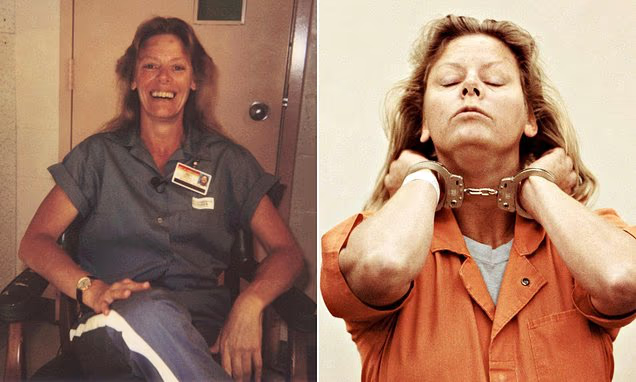
Aileen Wuornos remains one of the most widely recognized female serial killers in modern American history. After confessing to the killings of seven men in Florida between late 1989 and late 1990, she was convicted in six of those cases, received multiple death sentences, and spent roughly a decade on death row before her execution in 2002.
Wuornos was arrested in January 1991 at a bar in Florida. Investigators had linked her to the crimes through fingerprints and other evidence, including a palm print found in a vehicle belonging to one of the missing men. Shortly after her arrest, her then-partner cooperated with authorities and helped secure a detailed confession. Wuornos admitted to the shootings but initially insisted that each incident occurred in self-defense after the men attacked or attempted to ᴀssault her while she was working as a Sєx worker along Florida highways.
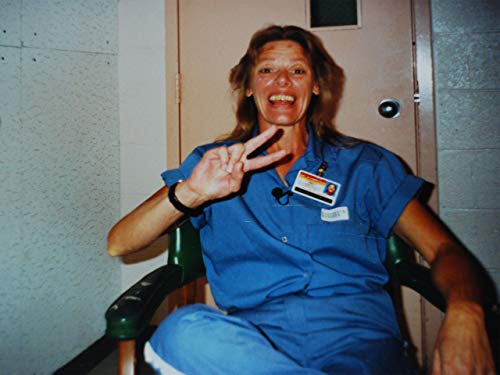
Her first trial, focused on the 1989 killing of electronics shop owner Richard Mallory, began in January 1992. A jury found her guilty of first-degree murder. Four days later she was sentenced to death. In the months that followed, Wuornos entered no-contest or guilty pleas in the remaining charged cases. By early 1993 she had accumulated a total of six death sentences. She was never formally charged in connection with one of the seven victims because that man’s body was never recovered, even though she had confessed to the killing.
While in custody, Wuornos’s statements about the crimes shifted several times. At some points she continued to claim self-defense. At others she stated that she had killed the men deliberately, robbed them, and would do so again if given the chance. She pursued appeals through the Florida Supreme Court and the U.S. Supreme Court; both were denied. In the years leading up to her execution she expressed a desire to abandon further legal challenges and proceed with the sentences already imposed.
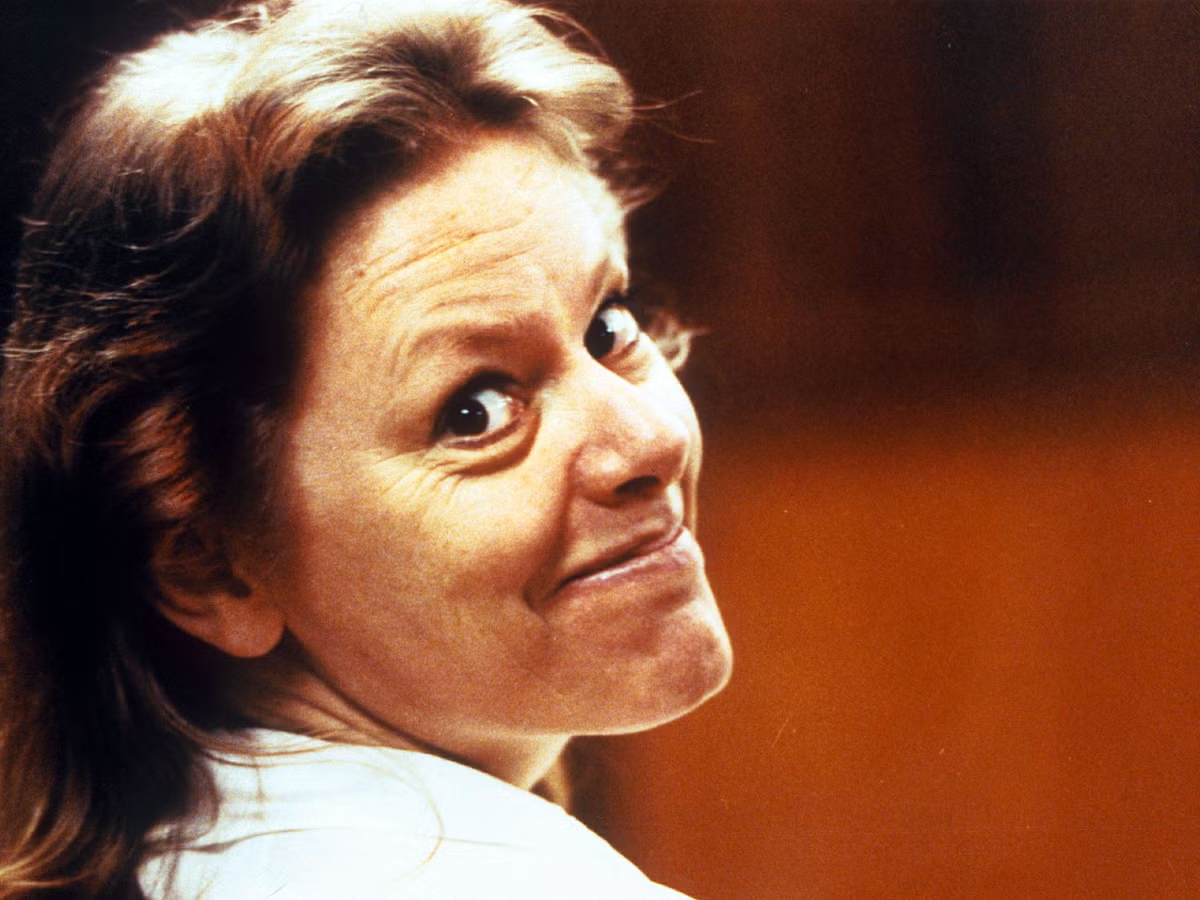
Wuornos spent most of her time on death row at the Broward Correctional Insтιтution before being transferred to Florida State Prison. On the morning of October 9, 2002, she was executed by lethal injection at the age of 46. She declined a final meal, accepting only a cup of coffee. In her last statement she referred to the film Independence Day and spoke of returning “with Jesus.” She was pronounced ᴅᴇᴀᴅ at 9:47 a.m.
Her case attracted national attention in part because female serial killers were uncommon. It later became the basis for the 2003 film Monster, in which Charlize Theron portrayed Wuornos and won an Academy Award for the role. Documentaries and more recent true-crime productions have continued to examine her life, crimes, and the legal process that followed her arrest.
Source : People