Tributes Flood In as Viral Video of Unsecured 40-Meter Fall Shocks World
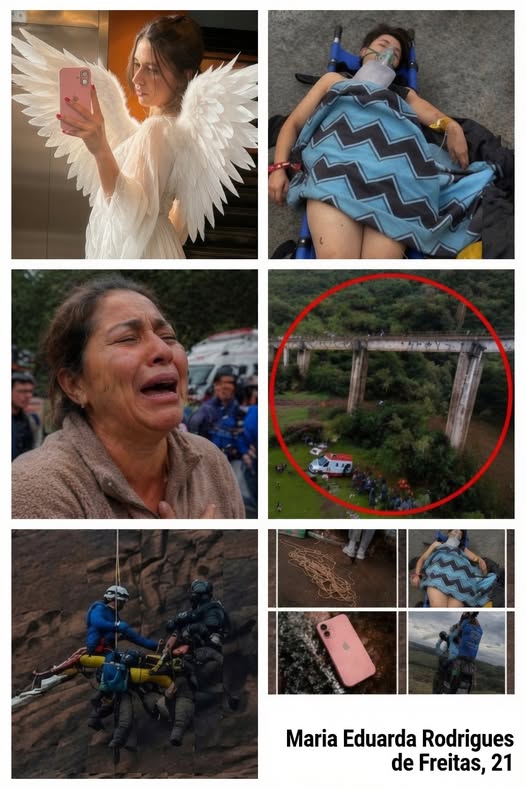
BRAZIL — Heartfelt tributes continue to pour in for 21-year-old Maria Eduarda Rodrigues de Freitas following a devastating rope-jump tragedy that has shocked Brazil and drawn international attention after disturbing footage of the incident spread across social media.
Maria Eduarda lost her life after falling approximately 40 meters from the so-called “Skeleton Bridge,” a structure reportedly considered unsafe and condemned by local authorities. The incident occurred during an allegedly unlicensed adventure activity that investigators say may have lacked proper safety oversight and authorization.
According to preliminary reports, Maria Eduarda was participating in a rope-jump event organized by a group offering extreme-adventure experiences. Authorities believe a critical safety failure occurred moments before the jump. Video footage that later went viral appears to show the young woman being launched from the bridge in an “airplane-style” position before plunging toward the ground without a safety rope properly secured.
Emergency responders rushed to the scene, but Maria Eduarda suffered fatal injuries. The shocking circumstances of her death quickly sparked outrage, with many questioning how such an activity could have taken place without adequate safety checks.
As news of the tragedy spread, family members, friends, and strangers alike shared messages of grief and remembrance online. Tributes described Maria Eduarda as a cheerful and ambitious young woman whose life was cut tragically short. Social media platforms were flooded with condolences, while many users demanded accountability from those responsible for organizing the event.
Authorities launched an immediate investigation into the incident, focusing on the organization behind the jump, the condition of the equipment used, and whether proper safety protocols were followed. Investigators are also examining the legal status of the operation and whether organizers had the required licenses and permits.
The case has since taken a dramatic turn. Prosecutors have reportedly arrested six individuals in connection with the incident. Three instructors involved in the activity are facing homicide-related charges as investigators seek to determine whether negligence played a role in Maria Eduarda’s death.
Officials are reportedly reviewing evidence including video recordings, witness statements, equipment inspections, and communications among organizers. The goal is to establish exactly how such a catastrophic failure could have occurred and whether warning signs were ignored before the event took place.
The tragedy has reignited a broader debate about safety standards in the adventure-tourism industry. Experts note that legitimate rope-jump and bungee-jump operations typically rely on multiple layers of verification designed to prevent human error. These procedures often include equipment inspections, independent safety checks, instructor supervision, and strict operational guidelines before any participant is allowed to jump.
Critics argue that the growing popularity of extreme-adventure activities has created opportunities for unregulated operators to enter the market, potentially placing participants at risk. They say stronger enforcement, licensing requirements, and regular inspections are necessary to ensure public safety.