In 1992, 18-year-old John Thompson suffered an accident that should have been fatal.
On January 11, 1992, 18-year-old John Thompson was working alone on his family’s farm near Hurdsfield, North Dakota.
It was supposed to be an ordinary day.
Then one moment changed everything.
While moving barley with a grain auger, John slipped on the icy ground beside a tractor. His shirt became caught in the exposed power takeoff shaft that powered the machinery.
In seconds, he was pulled in with terrifying force.
Both of his arms were severed near the shoulders before he was thrown into the snow.
When John regained consciousness, his dog, Tuffy, was licking his face.
The machine was still running.
No one was there to help him.
His parents were out of town.
And the house was still about 100 yards away.
Most people would have believed survival was impossible.
But John made one decision.
He stood up.
Then he began walking.
Bleeding heavily and unable to use his arms for balance, he struggled through the snow toward the house. Every step took strength most people cannot imagine.
When he reached the door, he used his mouth to open it.
Inside, he picked up a pencil with his teeth and used it to dial the phone. There was no 911 service in his area, so he called his cousin and calmly explained what had happened.
Then John did something that showed the kind of person he was.
He went into the bathroom because he did not want to stain his mother’s new carpet.
When rescuers arrived, he was still conscious. He even told them where his arms had landed and instructed them to pack them in ice.
What followed became one of the most extraordinary medical efforts of its time.
After a long journey by ambulance and aircraft, John arrived at a hospital in Minnesota, where surgeons began the difficult work of reattaching both arms.
The operation lasted for hours.
There was no guarantee he would survive.
There was no guarantee his arms would survive either.
But John kept fighting.
The months that followed brought pain, infections, skin grafts, repeated surgeries, and years of rehabilitation. Recovery was slow and difficult, but he refused to give up.
When he finally returned home, he told reporters:
“I came down in three pieces and I’m going home in one.”
His story captured national attention. He met President George H. W. Bush, appeared on television, and became known as the teenager who survived the impossible.
But his journey did not end with the surgery.
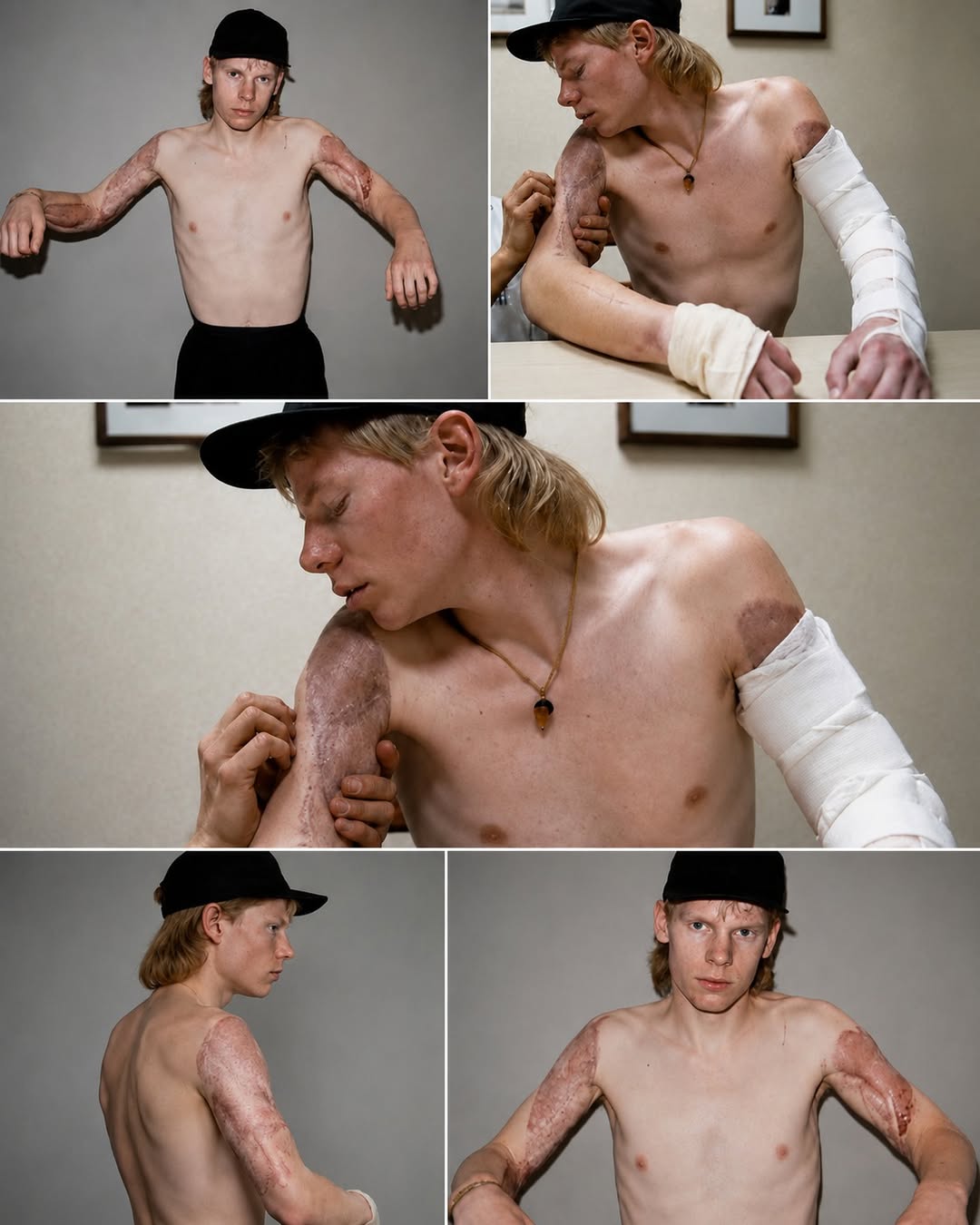
His hands never fully returned to normal. Many everyday movements remained difficult. The accident left physical and emotional scars that stayed with him for life.
Still, John adapted.
He learned new ways to work, create, and live.
Years later, both of his reattached arms were still alive and useful enough for daily life. When doctors suggested modern prosthetics might give him better movement, there was one condition — his own hands would have to be removed.
John refused.
After everything he had survived, they were still his hands.
A farm accident nearly ended his life.
But one walk through the snow, one phone call, and one refusal to give up turned John Thompson’s story into one of the most unbelievable survival stories in modern medicine.
Sometimes survival is not only about strength.
Sometimes it is about the decision to keep moving when giving up would be easier.