The artifact known as the Arkalochori Axe represents one of the most enigmatic and stylistically refined examples of Minoan metalwork ever recovered from the island of Crete. Dating to the Late Minoan I period, approximately 1500 BC, this double-bladed axe—or labrys—was discovered in the sacred Arkalochori Cave, a site located on the western slope of the Prophet Elias hill. This cave served as a significant cult center for centuries, and the axe was part of a mᴀssive hoard of bronze and gold votive offerings. Unlike functional tools, the Arkalochori Axe is characterized by its exaggerated proportions and delicate construction, signaling its status as a non-utilitarian, ceremonial object. Its discovery has provided archaeologists with critical insights into the religious fervor and metallurgical prowess of the Minoan civilization during its cultural zenith.

In terms of material and craftsmanship, the axe is primarily composed of a high-quality bronze alloy, though its lustrous surface, as seen, suggests a high level of polishing or the potential use of a gold-wash common in elite Minoan objects. The blades are exceptionally thin and wide, flaring out into elegant, crescentic edges that would have been too fragile for physical combat or timber work. The most remarkable detail of its fabrication is the presence of fifteen incised symbols on one of the blades, arranged in three vertical columns. These characters belong to Linear A, the undeciphered script of the Minoans. The precision of these incisions indicates the use of specialized fine-point metal chisels, and the script itself suggests that the object was not only a physical offering but also a carrier of a specific, perhaps liturgical, message intended for the divine.

The significance and primary function of the labrys were deeply embedded in the Minoan religious consciousness. In the context of Crete, the double axe was the preeminent symbol of religious authority and is frequently ᴀssociated with a female deity, often referred to as the “Mother Goddess” or “Mistress of Animals.” The Arkalochori Axe was likely a votive offering, a “gift” to the gods deposited in the sacred cave to secure divine favor, celebrate a successful harvest, or commemorate a specific ritual event. Its lack of a sharpened edge and the presence of sacred writing elevate it from a weapon to a symbolic “scepter” of power. For the Minoans, the symmetry of the double blade represented balance and duality, and placing such a precious, inscribed item in a subterranean sanctuary reinforced the connection between the earthly world and the chthonic powers dwelling within the mountain.
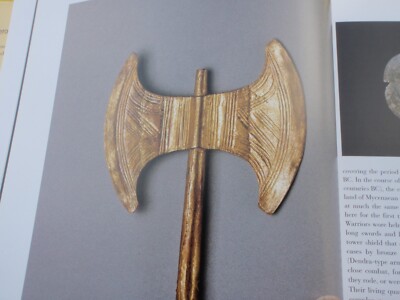
The formal archaeological recovery of this artifact was a monumental task undertaken in the 1930s. Although the cave had been known to locals and partially explored, the systematic excavation was led by the prominent Greek archaeologist Spyridon Marinatos, under the auspices of the Heraklion Archaeological Museum and the Greek Archaeological Service. Marinatos’s team navigated the challenging, debris-filled interior of the cave to uncover hundreds of bronze blades and several gold and silver axes. The discovery was sensational because it proved that the Arkalochori Cave was not just a local shrine, but a major center for metalwork and pilgrimage. The rigorous documentation of the find-spots within the cave allowed researchers to determine that these axes were often intentionally jammed into crevices or laid in neat piles, indicating a highly organized and intentional ritual deposition.
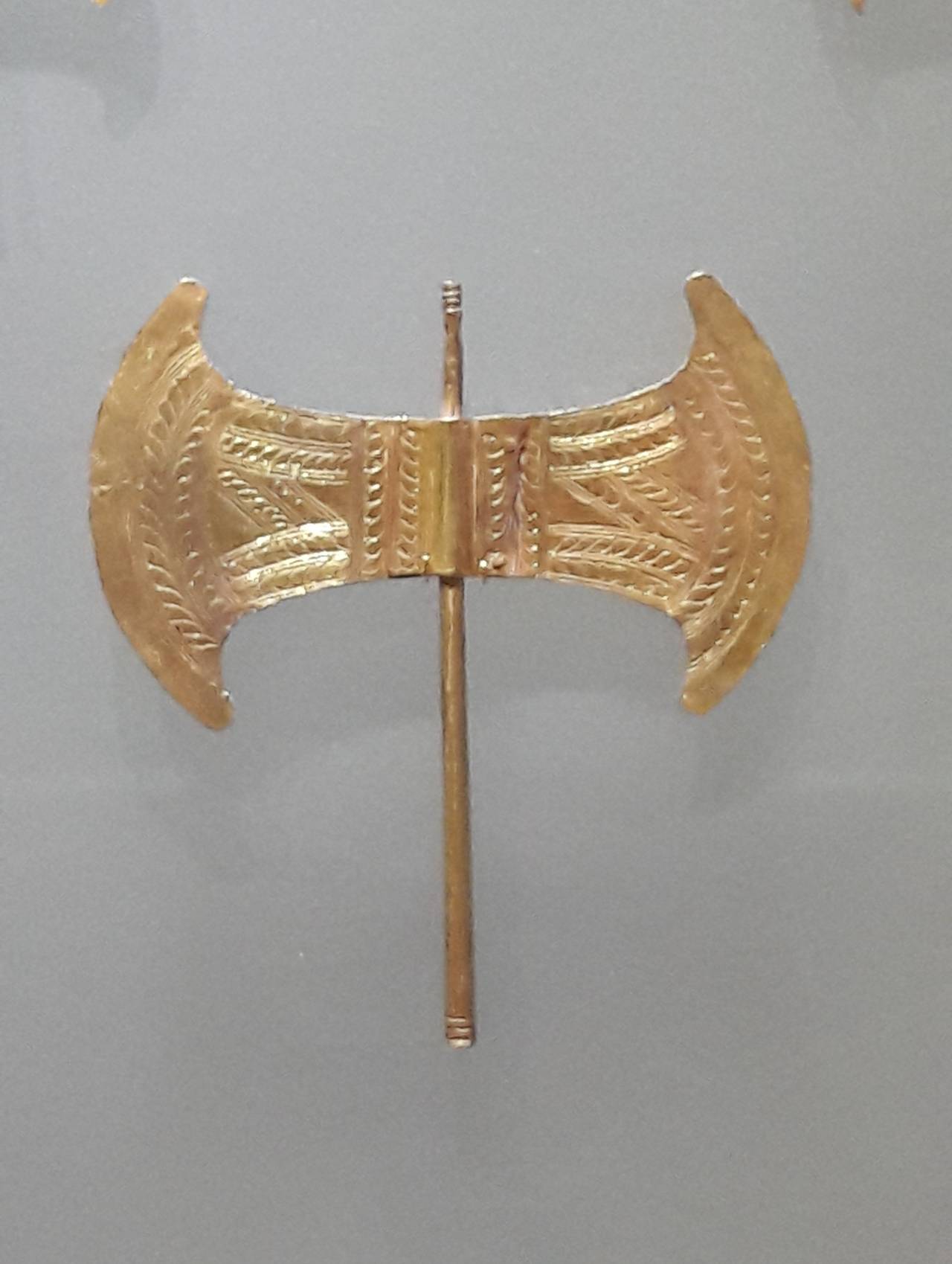
Today, the Arkalochori Axe remains a centerpiece of the Heraklion Archaeological Museum, continuing to fascinate scholars and visitors alike. As a primary archaeological source, it provides a rare, tangible link to the lost language of Linear A, as the symbols on its blade are among the few examples of this script found on metal rather than clay. The integrity of the artifact, showcased in image_c63cbe.jpg, serves as a testament to the durability of Minoan bronze and the sophistication of their aesthetic values. It remains a silent witness to a civilization that prioritized the fusion of art, religion, and technology, standing as one of the most important cultural markers of the Bronze Age Aegean. Through ongoing linguistic and metallurgical analysis, archaeologists hope that this specific axe might one day provide the “Rosetta Stone” needed to finally unlock the secrets of the Minoan tongue.