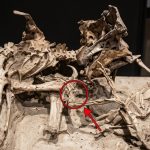
Gaiasia jennyae: Namibia’s Giant Salamander-Like “Swamp Monster” That Ruled 280 Million Years Ago.lh
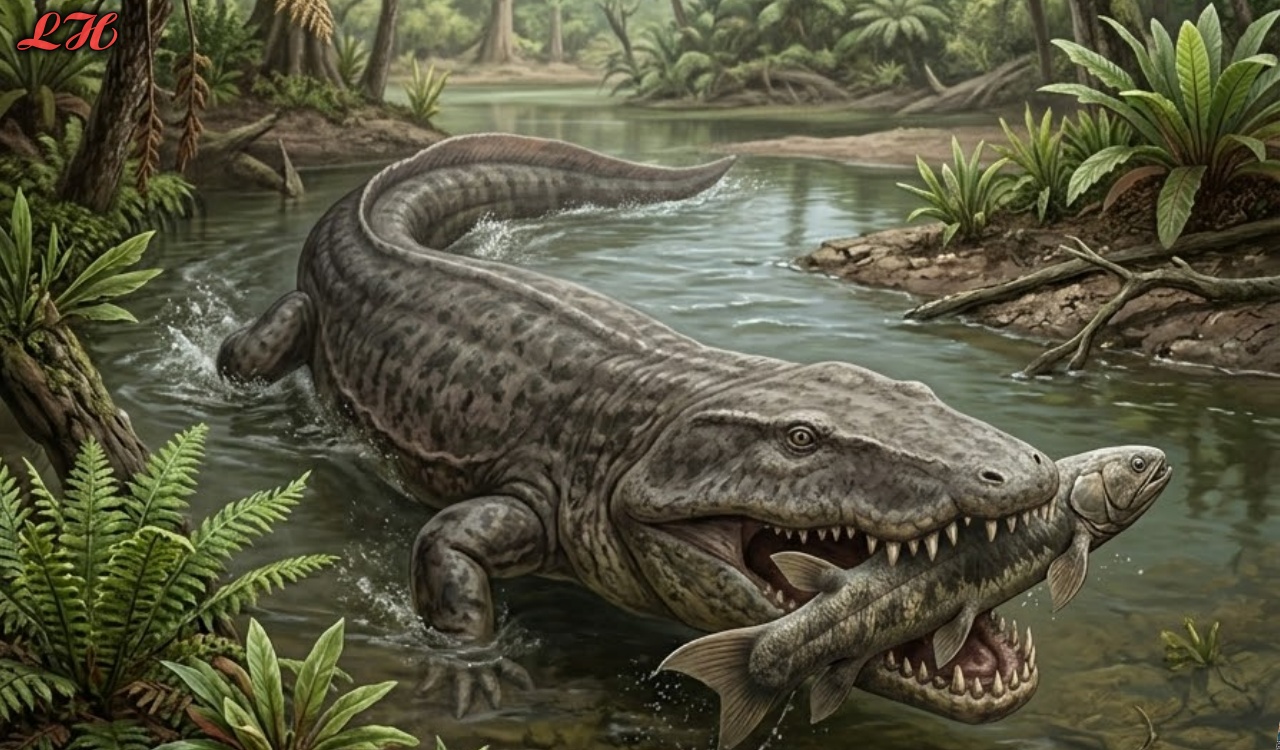
Gaiasia jennyae: Namibia’s Giant Salamander-Like “Swamp Monster” That Ruled 280 Million Years Ago
Long before dinosaurs roamed the Earth, a mᴀssive, fang-filled predator lurked in the cold swamps and lakes of ancient Gondwana. Gaiasia jennyae, a newly described stem tetrapod, reached over 2.5 meters (8+ feet) in length and dominated freshwater ecosystems in what is now northwestern Namibia around 280 million years ago during the Early Permian.
Fossils of at least four individuals, including a remarkably complete skull and articulated spine, were recovered from the Gai-As Formation along the Skeleton Coast and Ugab River valley. The first major specimen surfaced in 2015, with key material prepared at Iziko South African Museum. Published July 3, 2024, in Nature, the study by an international team led by Claudia A. Marsicano reveals Gaiasia as an ambush hunter with a broad, “toilet-seat-shaped” skull dominated by a diamond-like parasphenoid and enormous interlocking fangs lining the front of its mouth.
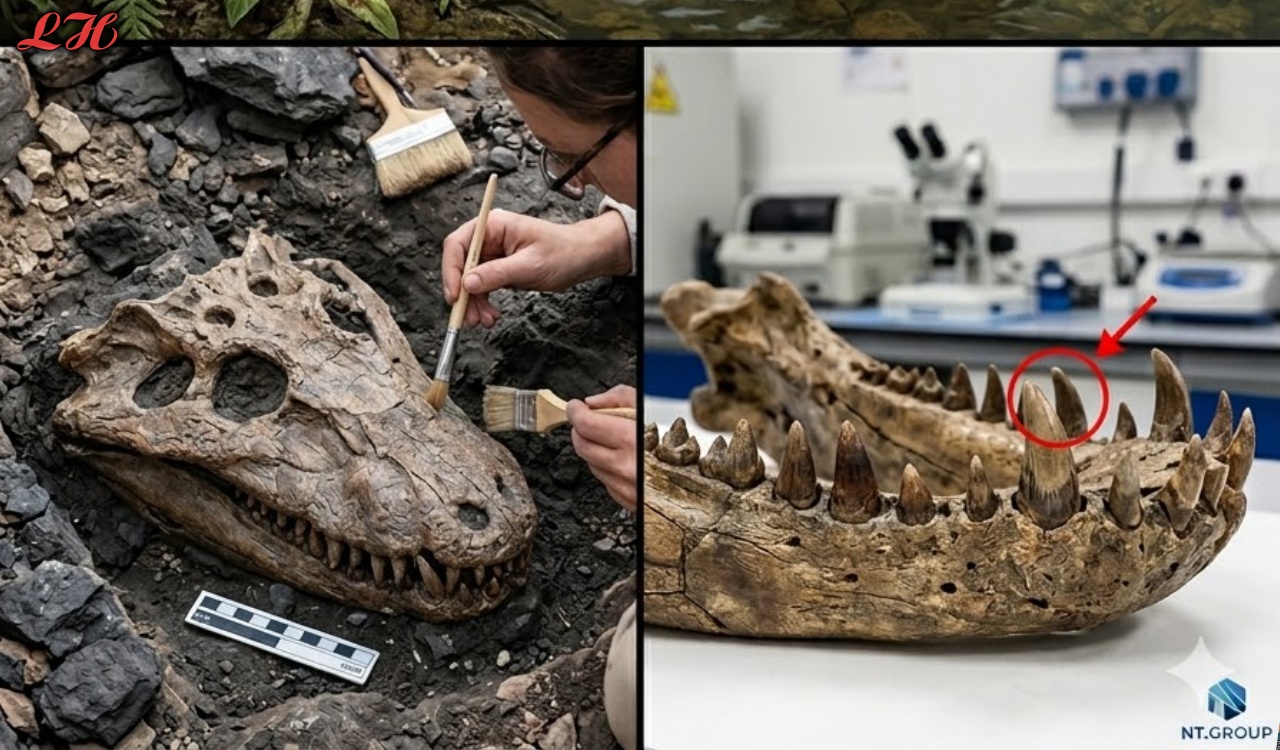
Its anatomy blends primitive and specialized traits: weakly ossified skull, posteriorly projecting occiput, and robust limbs suited for slow, powerful strikes on fish and other aquatic prey. Phylogenetic analysis places it as the sister taxon to the Carboniferous Colosteida, making it a late-surviving relic of early tetrapod evolution—some 40 million years after most relatives had vanished.
Named for the Gai-As Formation and pioneering paleontologist Jenny Clack (who died in 2020), Gaiasia jennyae challenges long-held views that tetrapods were rare or absent in high-laтιтude Gondwana during the final stages of the Late Paleozoic Ice Age. Instead, it proves these four-legged vertebrates were already thriving across southern continents, rewriting the narrative of early land-animal dispersal.
This discovery highlights how even “archaic” forms could become apex predators in isolated refugia. As more Gondwanan fossils emerge, Gaiasia stands as a dramatic reminder that the pre-dinosaur world teemed with strange giants far stranger than modern salamanders.