Super-Ancient Discovery in Afar: Four Hominin Species Lived Together in East Africa 3–2.5 Million Years Ago.lh
Super-Ancient Discovery in Afar: Four Hominin Species Lived Together in East Africa 3–2.5 Million Years Ago
A landmark 2025 study published in Nature has confirmed that at least four distinct hominin species coexisted in the same region of eastern Africa between roughly 3.0 and 2.5 million years ago.
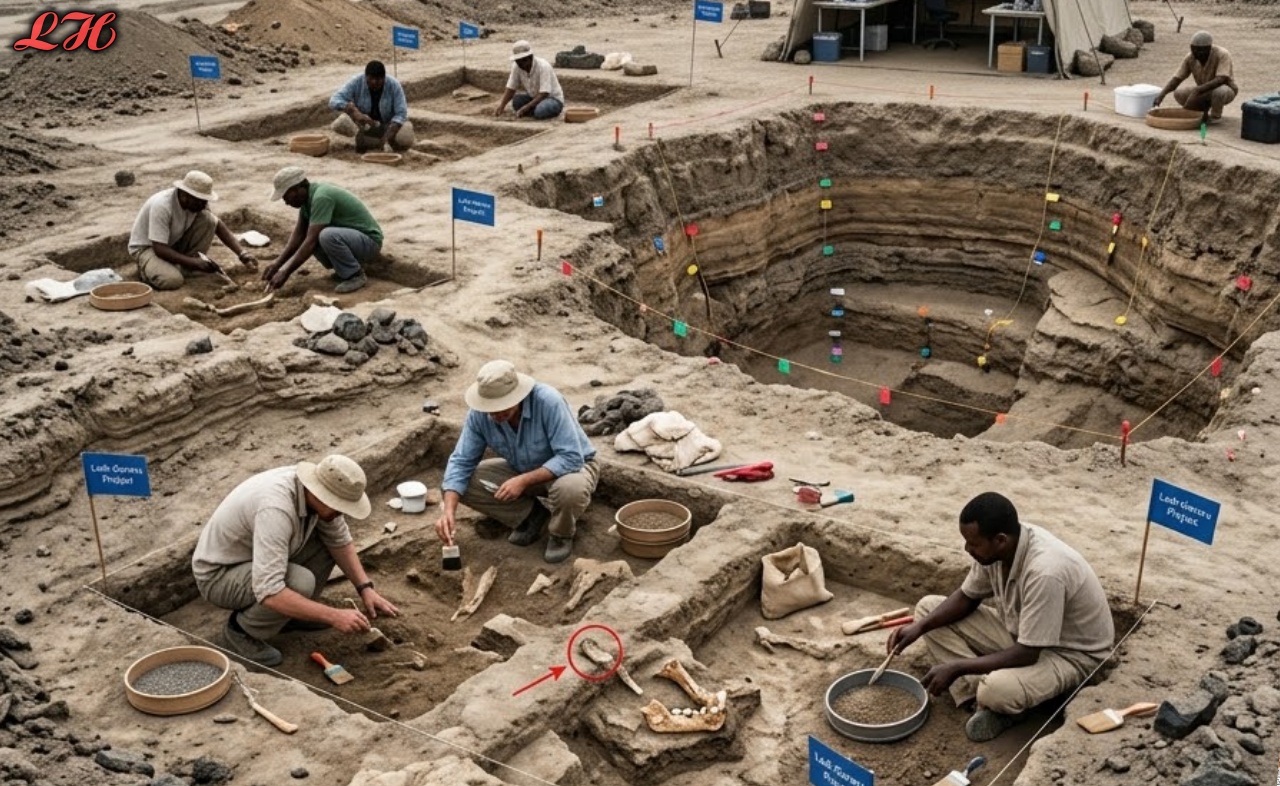
The evidence comes from the Ledi-Geraru site in Ethiopia’s Afar Depression. Researchers recovered 13 fossil teeth dated between 2.59 and 2.78 million years ago using volcanic ash layers. Ten of the teeth belong to a previously unknown species of Australopithecus, while three belong to early Homo.
Combined with other finds from the same time window and region, scientists have identified four contemporaneous lineages:
- Early Homo (the lineage that eventually gave rise to modern humans)
- Paranthropus (the “Nutcracker Man” group)
- Australopithecus garhi
- A new, undescribed species of Australopithecus from Ledi-Geraru
This is the clearest fossil evidence yet that multiple hominin species lived side-by-side in the same landscape during this critical period. The different species likely occupied slightly different ecological niches — differing in diet, tool use, or preferred habitats — rather than one simply replacing another.
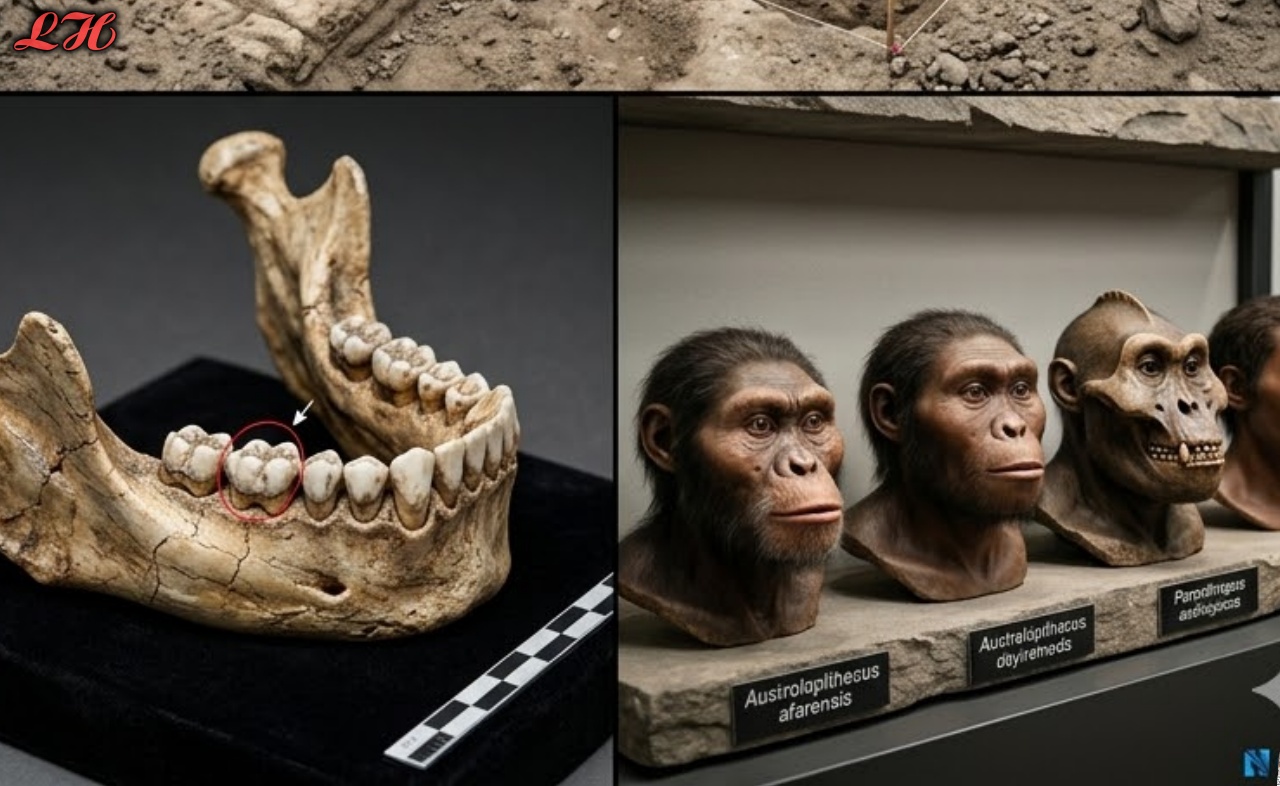
The discovery strongly supports the “branching bush” model of human evolution over any simple linear progression. Instead of a straight line from one species to the next, our family tree was a crowded, overlapping tangle of lineages sharing the same African landscape for hundreds of thousands of years.
As of June 2026, Ledi-Geraru continues to yield new fossils, and researchers are working to determine whether these four species competed directly, coexisted peacefully, or occupied different parts of the environment. The Afar region has once again proven to be one of the richest and most important windows into the complex, multi-species dawn of humankind.