1-Million-Year-Old Skull in China Rewrites Human Evolution – But It Is NOT a Homo sapiens Fossil.lh
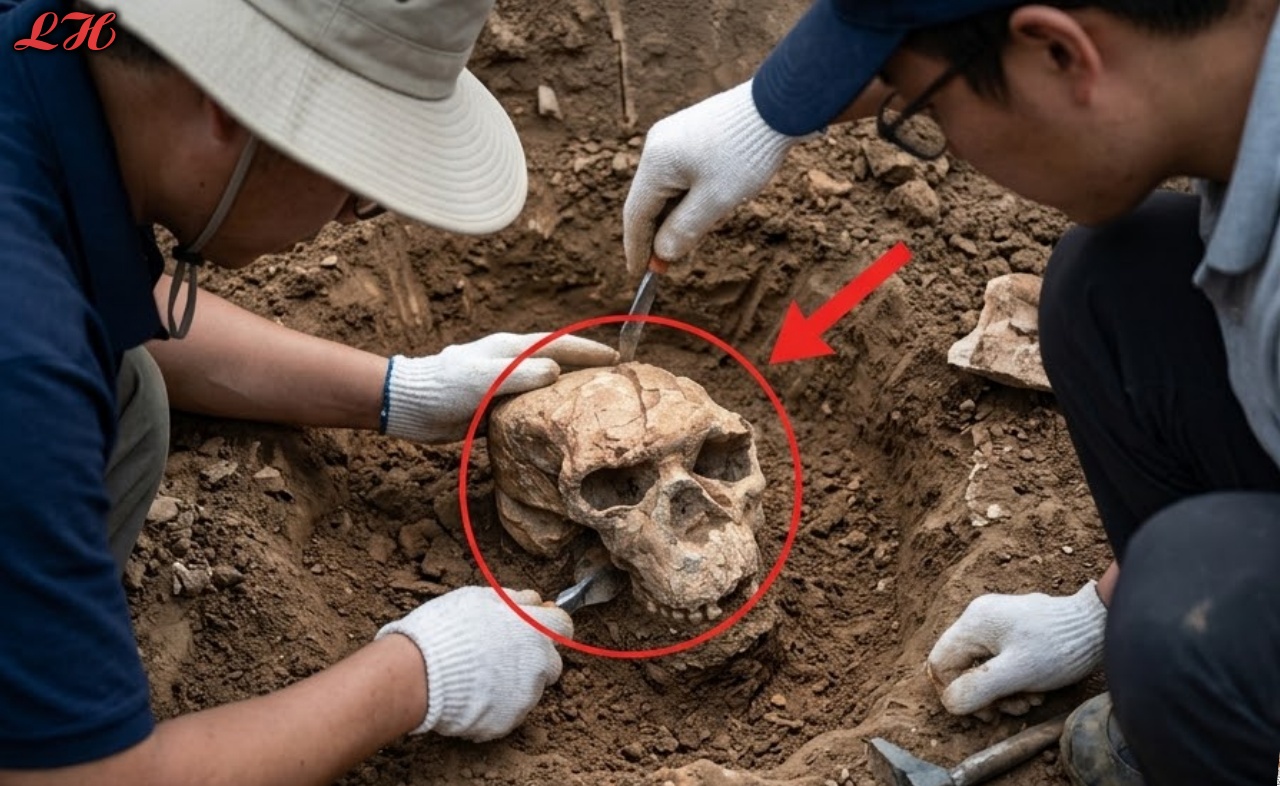
1-Million-Year-Old Skull in China Rewrites Human Evolution – But It Is NOT a Homo sapiens Fossil
A September 2025 study published in Science made headlines worldwide with the digital reconstruction of the Yunxian 2 skull, unearthed in 1990 in Hubei Province, central China. The crushed cranium, originally classified as Homo erectus, was reanalyzed using advanced CT scanning and 3D modeling. Researchers concluded it belongs to an early member of the evolutionary lineage that includes Homo longi (“Dragon Man”) and the enigmatic Denisovans — pushing back the estimated divergence of the Homo sapiens / Neanderthal / Denisovan branch by roughly 400,000–500,000 years.
The skull, dated between 940,000 and 1.1 million years old, shows a mosaic of primitive and derived traits. It retains some Homo erectus-like features but also displays characteristics closer to later hominins such as larger brain capacity and specific facial architecture. Lead researchers, including Xijun Ni of the Chinese Academy of Sciences and Chris Stringer of London’s Natural History Museum, argue this indicates the common ancestor of Homo sapiens, Neanderthals, and Denisovans split from other lineages much earlier than previously thought — possibly around 1.3 million years ago or more.
Important clarification: The skull is not Homo sapiens. It is an archaic hominin on a sister branch. The sensational claim that “Homo sapiens existed 1 million years ago” or is “half a million years older” is a misinterpretation of the findings. The oldest confirmed Homo sapiens fossils remain those from Jebel Irhoud, Morocco (~315,000 years old), with genetic and fossil evidence consistently pointing to an African origin for anatomically modern humans around 300,000 years ago.
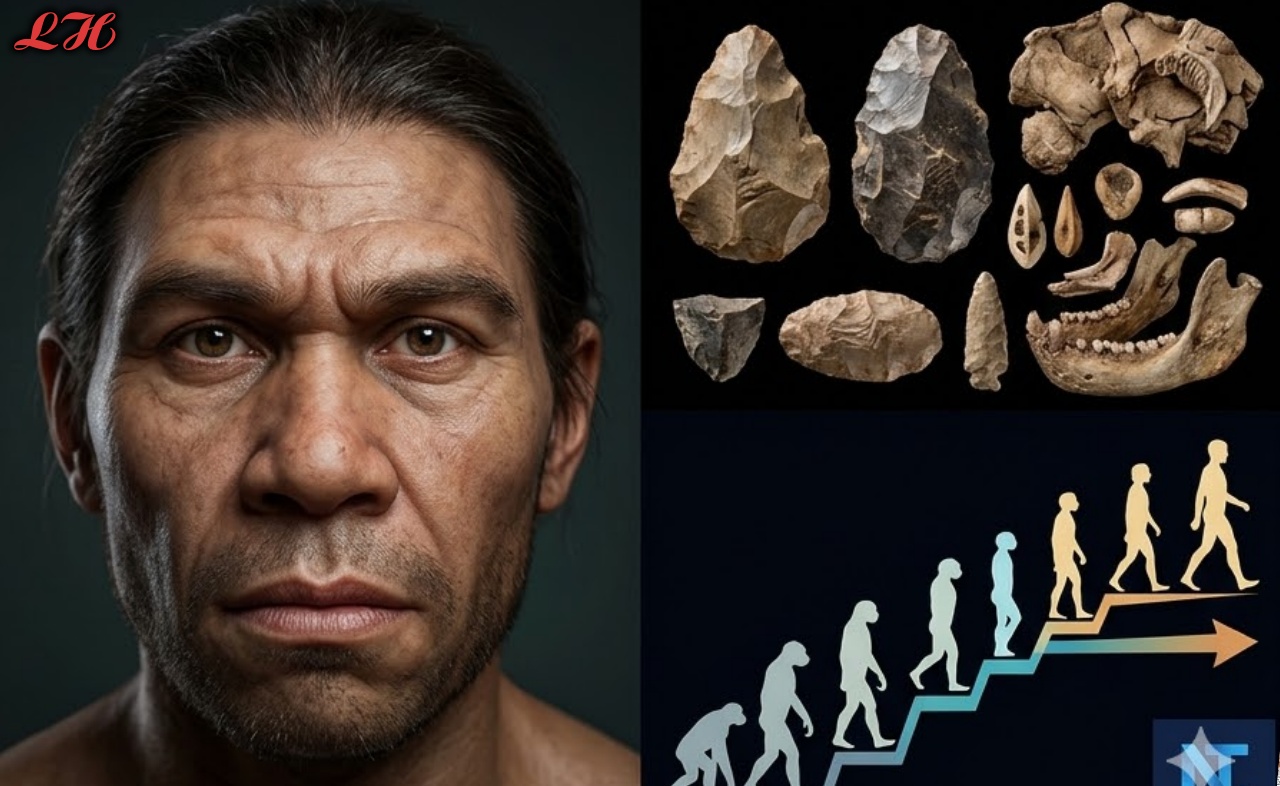
The study suggests a more complex, earlier branching “bush” in human evolution rather than a simple linear progression. It raises the possibility that the sapiens lineage began diverging outside Africa or much earlier than the ~700,000-year mark previously estimated from DNA studies.
A follow-up 2026 analysis in Science Advances redated the Yunxian skulls to approximately 1.77 million years old and reclassified them as Homo erectus, reigniting debate. Not all paleoanthropologists accept the Homo longi lineage interpretation.
As of June 2026, the Yunxian 2 reconstruction has sparked renewed fieldwork and phylogenetic modeling but has not overturned the established timeline for Homo sapiens itself. The Ethiopian badlands and African sites still hold the strongest evidence for our species’ deep roots. The Chinese skull enriches the story of human diversity in Asia but does not place modern humans on Earth 700,000 years earlier than science currently accepts.