New Ethiopian Fossil Adds Evidence for Complex, Branching Human Evolution
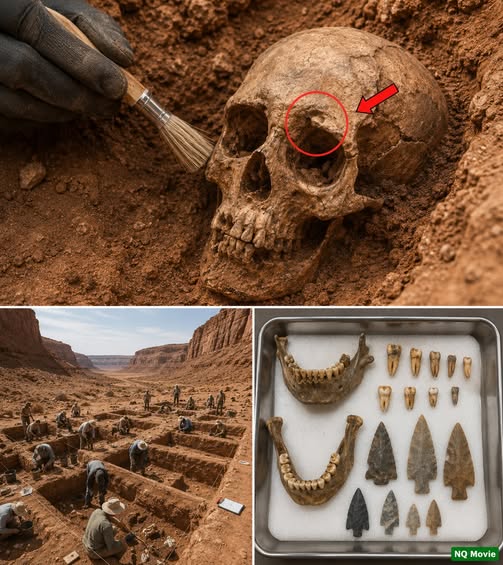
A newly reported fossil discovery from Ethiopia is drawing attention in the scientific community for what it may reveal about the complexity of early human evolution. While initial public reactions have described the find as potentially “challenging” established evolutionary theory, researchers emphasize that it more accurately contributes to an already evolving picture of human origins rather than overturning it.
According to preliminary interpretations shared in scientific discussions, the fossil appears to support the idea that early human evolution was not a simple linear progression from primitive ancestors to modern humans. Instead, increasing evidence from Africa and other regions suggests that multiple hominin species may have existed at the same time, occupying overlapping geographic areas and ecological niches.
Some researchers involved in the broader field of paleoanthropology propose that these groups may have interacted in complex ways, including possible interbreeding events. This view is supported by genetic studies of modern humans, which show traces of DNA inherited from archaic human populations such as Neanderthals and Denisovans, indicating that interspecies contact was not only possible but relatively common in evolutionary history.
The Ethiopian fossil adds to a growing body of evidence from East Africa, a region widely regarded as one of the key centers of early human evolution. Over the past several decades, numerous discoveries in Ethiopia, Kenya, and surrounding areas have revealed a rich diversity of early hominin species, some of which coexisted during overlapping time periods rather than replacing one another in a direct sequence.
Experts caution, however, that detailed conclusions about the newly discovered fossil cannot yet be made without full publication of the findings, including morphological analysis, dating methods, and contextual archaeological data. In paleoanthropology, early interpretations are often revised as additional evidence becomes available, and careful peer review is essential before any major claims about evolutionary relationships are accepted.
Despite these limitations, the discovery reinforces a well-established scientific shift away from the outdated “ladder” model of human evolution. Modern research instead supports a branching “tree” or even “braided stream” model, where multiple populations diverged, coexisted, and occasionally merged over hundreds of thousands to millions of years.
As further studies of the Ethiopian fossil continue, scientists hope it will help clarify how different early human populations were related and how traits ᴀssociated with modern humans gradually emerged. Rather than overturning evolutionary theory, the find is more likely to refine and deepen understanding of a highly complex evolutionary past.