Yunxian Crania Redated to 1.77 Million Years:…lh
Yunxian Crania Redated to 1.77 Million Years: Earliest Homo erectus in East Asia Rewrites Human Dispersal Timeline
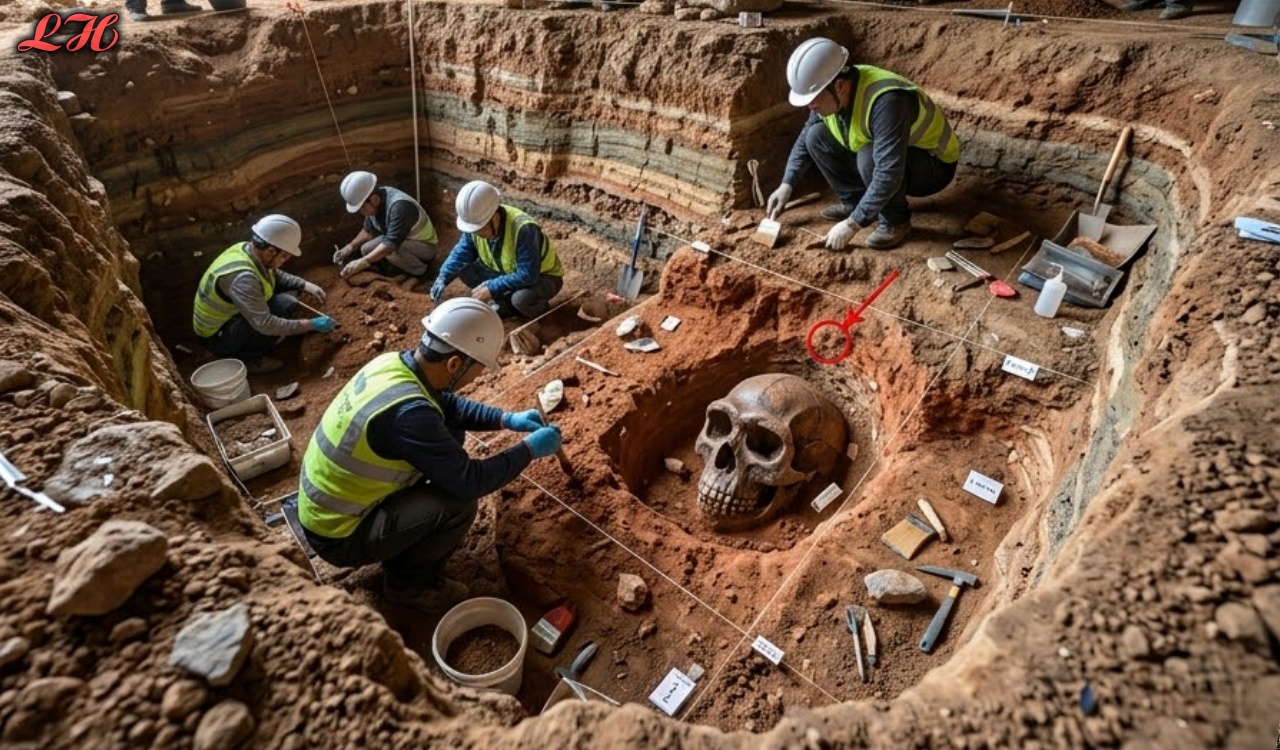
In a Science Advances paper published February 18, 2026, researchers have redated three Homo erectus crania from Yunxian, Hubei Province, China, to 1.77 ± 0.08 million years ago—nearly 600,000 years older than previous estimates. Using cutting-edge 26Al/10Be cosmogenic nuclide burial dating on quartz gravel from the in situ sedimentary context, the team led by Hua Tu, Xiaobo Feng, and Christopher Bae has established these as the oldest securely dated H. erectus fossils in eastern Asia.
The crania, discovered in 1989, 1990, and 2022 at the Xuetangliangzi site, were previously ᴀssigned to ~0.8–1.1 Ma based on electron spin resonance and magnetostratigraphy. The new isochron age places them squarely in the Early Pleistocene, contemporaneous with the Dmanisi hominins in Georgia (~1.85–1.77 Ma). Over 500 stone tools—cores, choppers, and flakes—recovered from the same layers confirm behavioral continuity with early African and Caucasian H. erectus.
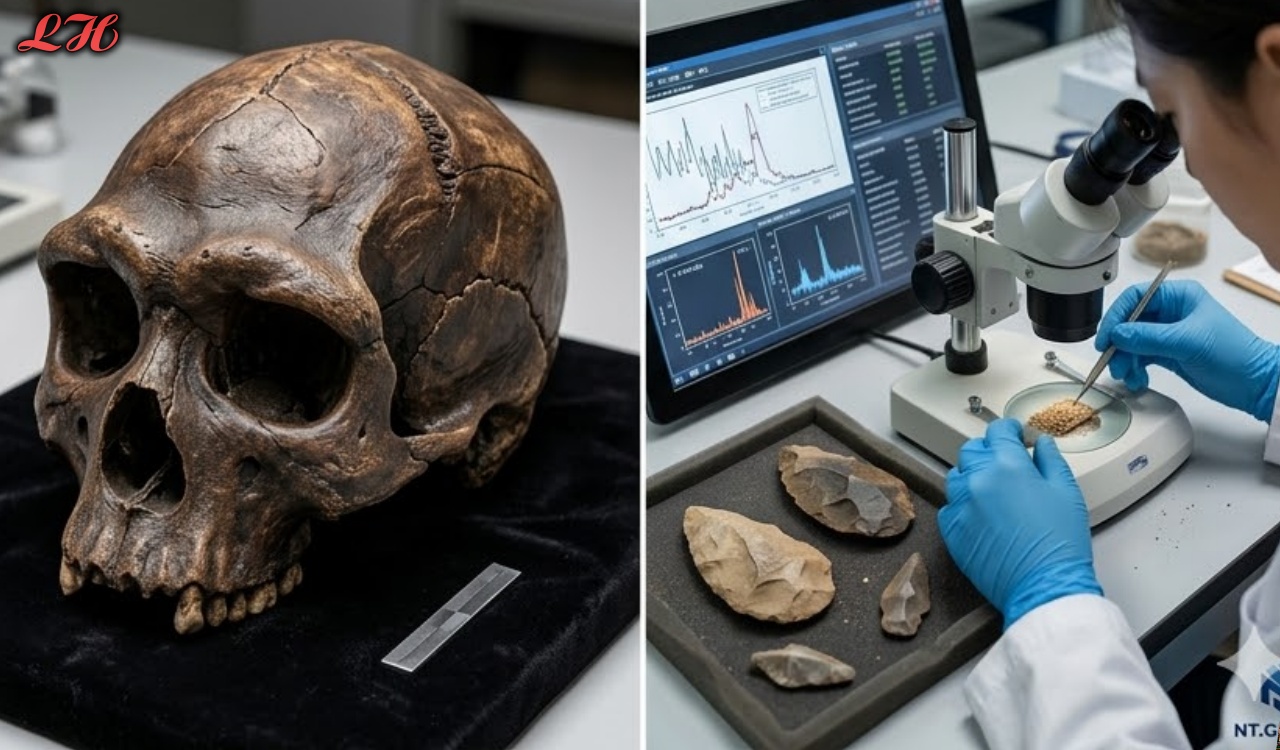
“This is an absolute surprise,” Bae noted. “It demonstrates that Homo erectus dispersed out of Africa and reached East Asia with remarkable speed—within a few hundred thousand years of its African origins.” The redating narrows the chronological gap between the earliest East Asian archaeology and hominin fossils, supporting models of rapid, widespread colonization rather than staggered or delayed arrivals.
Morphologically, the Yunxian specimens retain classic H. erectus traits while showing subtle regional variation, reinforcing a single, highly adaptable species that thrived across Eurasia by 1.8 Ma. The discovery forces a reevaluation of migration routes and ecological flexibility, proving that early humans were far more mobile—and successful—than once believed.
Yunxian has transformed from a mid-Pleistocene footnote into the cornerstone of early Asian prehistory.