Neanderthals Practiced Advanced Dentistry 59,000 Years Ago Using Stone Drills.lh

Neanderthals Practiced Advanced Dentistry 59,000 Years Ago Using Stone Drills
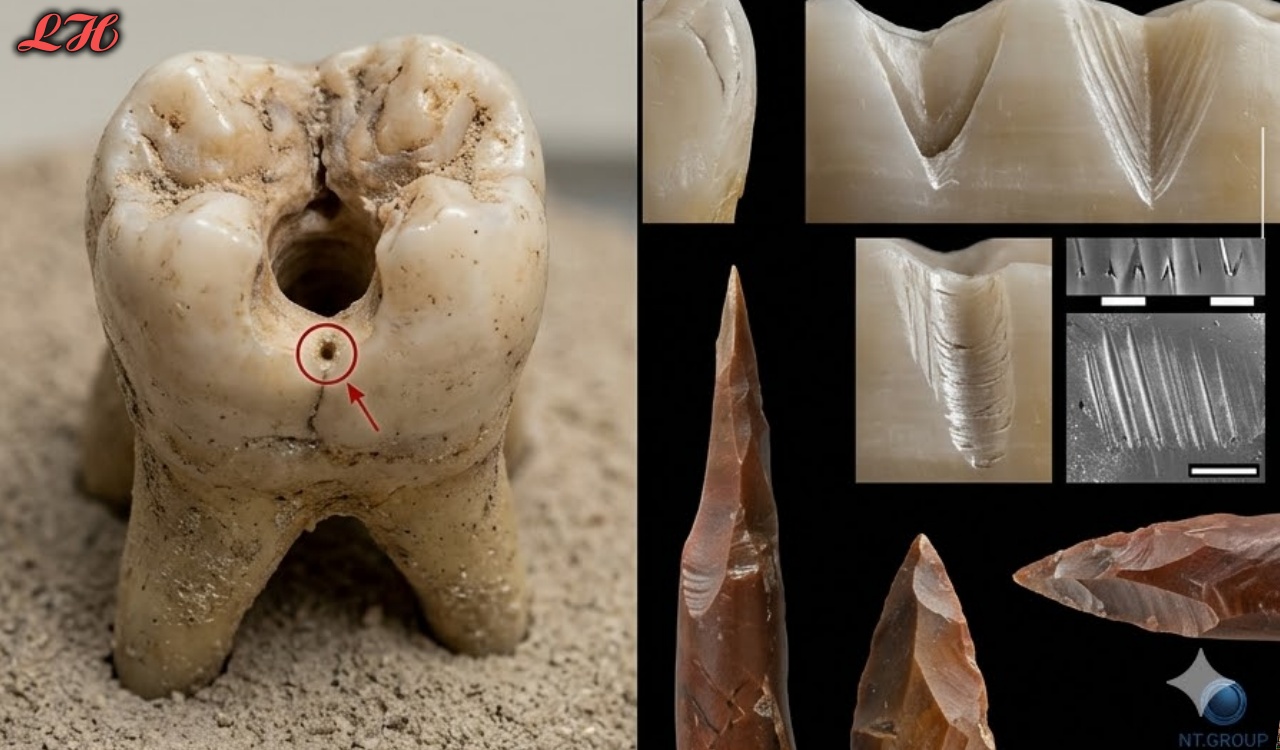
In a May 2026 PLOS ONE study, researchers have uncovered the earliest known evidence of intentional dental treatment: a Neanderthal lower molar from Chagyrskaya Cave in southern Siberia, dated to approximately 59,000 years ago, featuring a deep, deliberately drilled hole extending into the pulp cavity.
The tooth, originally excavated in 2016, shows severe decay with clear microscopic scratch patterns and grooves matching those produced by sharp stone points. Experiments on modern human teeth, using lithic tools identical to those abundant at the site, successfully replicated the exact shape, depth, and internal striations—ruling out natural wear or post-mortem damage.
Lead author Anna Zubova and colleagues conclude that a Neanderthal “dentist” repeatedly used a small, pointed stone drill to remove infected tissue and relieve excruciating pain. Mineralization changes around the cavity indicate the procedure occurred while the tooth was still alive, and the individual survived long enough for some healing to begin.
This discovery pushes back the origins of dentistry by more than 40,000 years and marks the first documented case outside Homo sapiens. It demonstrates that Neanderthals possessed sophisticated knowledge of anatomy, tool use, and pain management—skills once thought exclusive to later humans.
Chagyrskaya’s rich record of stone tools and Neanderthal occupation provides the perfect context: these “cavemen” were not crude but capable of precise, invasive medical intervention. The Siberian molar rewrites our view of Neanderthal cognition and social care, proving they actively treated one of humanity’s oldest ailments with advanced stone technology long before modern dentistry emerged.