Mysterious “Ghost Lineage” at Donghulin, China: Ice Age Survivors Who Vanished Without a Genetic Trace!lh
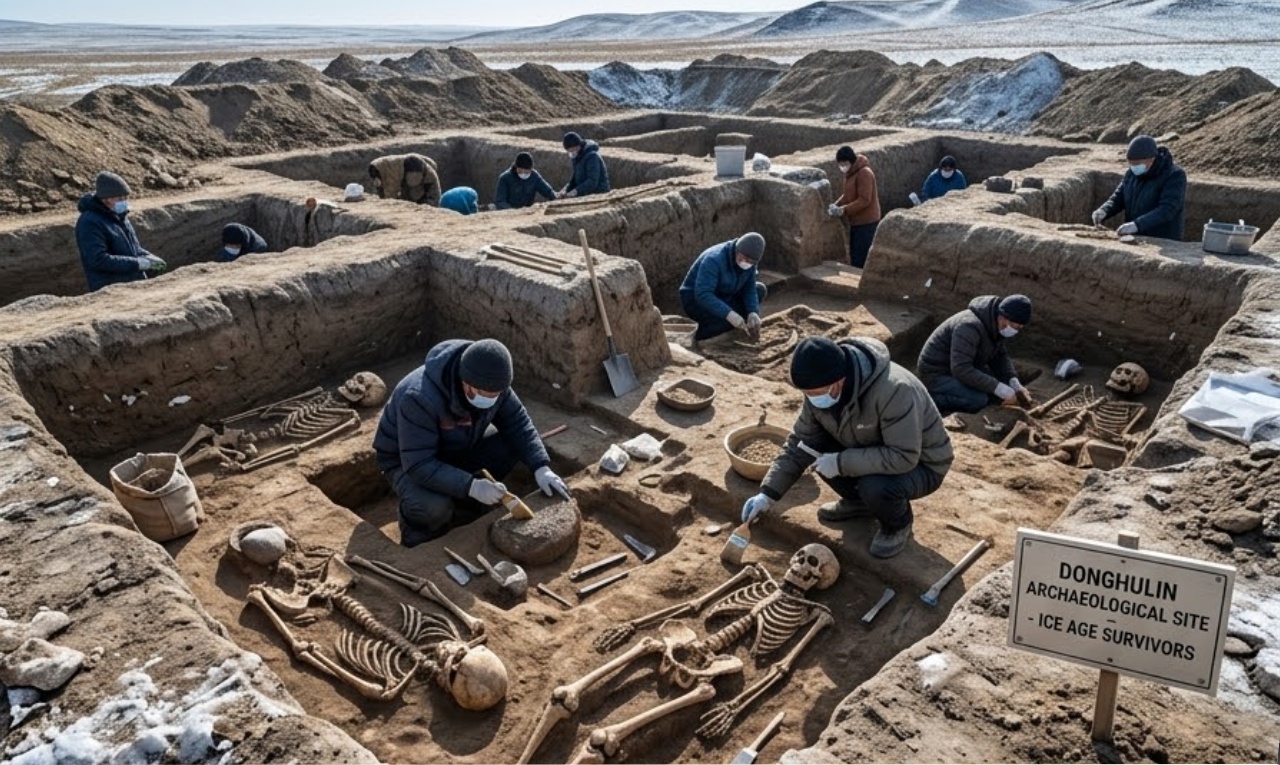
In a landmark study published April 2026 in Current Biology, researchers led by Ganyu Zhang and Qiaomei Fu have sequenced ancient genomes from the Donghulin site near Beijing, revealing a previously unknown northern East Asian human lineage that thrived at the end of the last Ice Age—only to disappear without leaving detectable descendants in any living or later ancient populations.
The Donghulin site, one of northern East Asia’s most important Paleolithic-to-Neolithic transition locales, yielded three individuals buried between ~11,000 and 9,000 years ago. The oldest, DHL_M1 (a female dated 11,170–10,700 years ago), carries a deeply divergent genome that split from other East Asian lineages tens of thousands of years earlier. Her mitochondrial and autosomal DNA match no known group—not Tianyuan Man, not later northern Chinese farmers, not modern East Asians, and not even Tibetan highlanders who carry some related ancestry.1
Younger individuals at the same site show completely different genetic profiles, indicating rapid population replacement during post-glacial warming. The “ghost lineage” survived dramatic climate shifts and cultural transitions yet left no genetic legacy—suggesting it was either outcompeted, absorbed in tiny numbers, or simply went extinct locally.
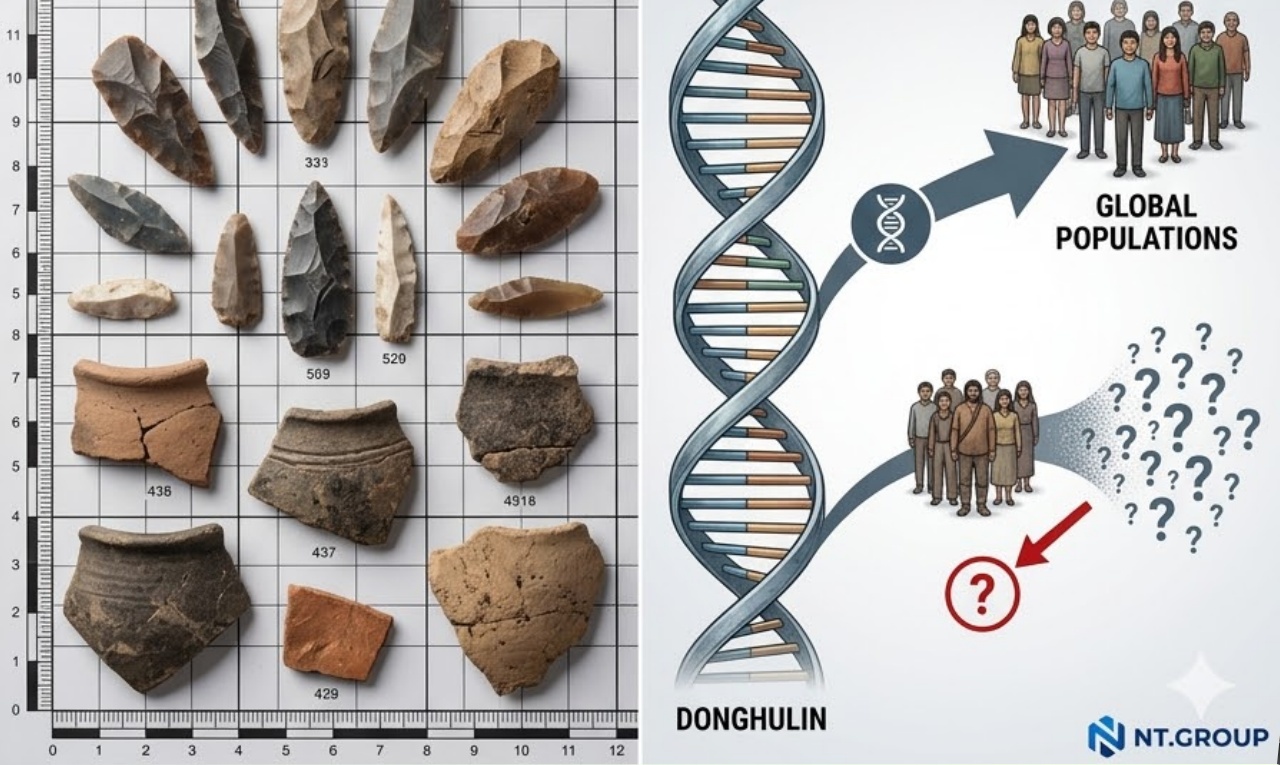
“This is the first clear evidence of a lost human branch that persisted right through the end of the Ice Age in East Asia,” the team reports. The discovery forces a major revision of models for early East Asian peopling: multiple divergent lineages coexisted, and at least one vanished without trace.
As more highland and northern Chinese sites are sampled, Donghulin’s ghost lineage may illuminate how entire populations can disappear from the genetic record—leaving only bones and an enduring mystery of human resilience and loss.