🥺🧠 AT JUST 8 YEARS OLD, SHE LOST HALF OF HER BRAIN — BUT SHE NEVER LOST HER DREAMS 💗🙏
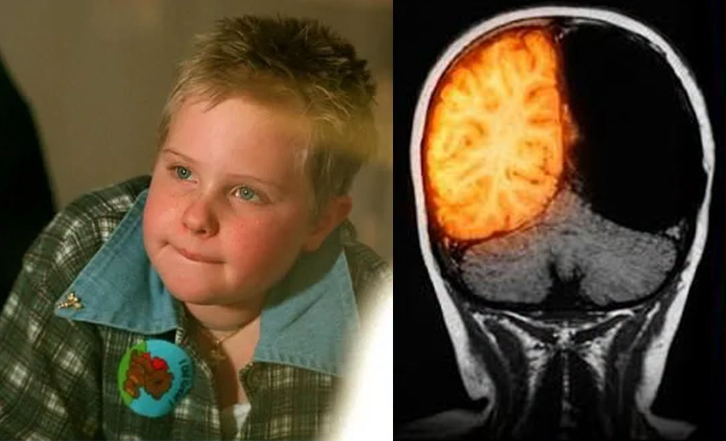
🥺🧠 AT JUST 8 YEARS OLD, SHE LOST HALF OF HER BRAIN — BUT SHE NEVER LOST HER DREAMS 💗🙏
At just eight years old, Christina Santhouse was facing a reality no child should ever have to endure.
Her life had been overtaken by relentless seizures.
She was experiencing as many as 150 epileptic seizures in a single day, making ordinary childhood activities like playing, learning and spending time with friends almost impossible. 💔
The cause was a rare neurological condition called Rasmussen’s encephalitis, in which the immune system mistakenly attacks one side of the brain, causing progressive damage and severe epilepsy.
Medication could no longer control Christina’s seizures.
Her condition continued to deteriorate.
She needed a wheelchair and increasingly required help with everyday activities.
Then doctors presented her family with an unimaginable choice.
A procedure called a hemispherectomy — removing or disconnecting the diseased half of the brain — offered Christina a chance to stop the devastating seizures.
It was an enormous risk.
But on February 13, 1996, Christina spent 14 hours in surgery at Johns Hopkins Hospital.
Surgeons removed her damaged right hemisphere.
And somehow, she made it through. ❤️🙏
The operation achieved what everyone had hoped for.
The seizures that had controlled Christina’s life finally stopped.
But surviving the surgery was only the beginning.
Christina was left with significant weakness on the left side of her body and part of her visual field was lost. She had to relearn many everyday movements and discover new ways to do things that had once come naturally.
But giving up was never part of her plan.
With intensive therapy, patience and the support of her family, Christina slowly rebuilt her life.
She learned to walk again.
She used a special leg brace.
And little by little, she found ways to do things on her own. 🌷
Then she began accomplishing things that many people had once doubted would be possible.
At 17, Christina earned her driver’s license.
She even became captain of her high school bowling team. 🎳✨
But Christina wasn’t finished.
She went on to college and continued working toward her education.
In 2010, she earned a master’s degree in speech-language pathology.
And perhaps the most beautiful part of her story came next.
She began working with children who struggled with speech and communication.
The little girl who had once faced enormous obstacles was now helping other people find their voices. 🥹💗
Christina’s journey is also a remarkable reminder of the brain’s ability to adapt.
Her remaining brain didn’t simply become “normal” overnight.
Instead, it found new pathways and took over some functions that had once been handled by the removed hemisphere.
But Christina herself adapted too.
She learned that losing something doesn’t always mean losing everything.
Her illness took away part of her brain.
It did not take away her personality.
It did not take away her dreams.
And it certainly did not take away her ability to make a difference in other people’s lives. ❤️
At eight years old, Christina’s future looked frightening and uncertain.
But she kept moving forward.
She survived a life-changing operation.
She learned to walk again.
She earned her driver’s license.
She became a student, a professional and someone who could help children facing their own challenges.
Her story is a powerful reminder that a diagnosis does not always get to write the final chapter of someone’s life.
Sometimes, the greatest success story begins at the exact moment when everything seems impossible. 🥺💗🙏✨