🚨 PAMELA CISNEROS TIMES SQUARE CASE: THREE FACTORS MAY EXPLAIN WHY THE TASER FAILED
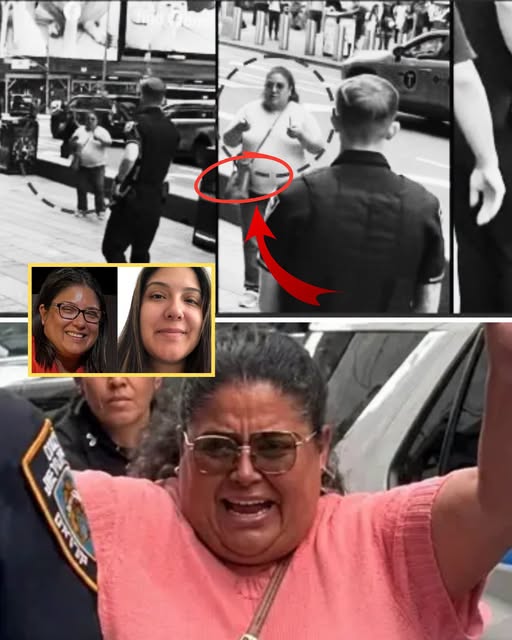
A bag, body tissue and constant movement are among the factors a Taser expert has highlighted while examining why the devices appeared to have little effect during the confrontation involving Pamela Cisneros in Times Square.
According to retired NYPD detective and Taser instructor Artur Sadowski, both probes need effective contact to create the electrical circuit required for the device’s intended effect. In this case, one probe reportedly became caught on the bag around Cisneros, while another may have been less effective because of the amount of tissue between the probe and the underlying muscle.
Movement was another factor. Officials said three officers deployed Tasers, but they had no apparent effect. Cisneros continued moving toward officers while holding two kn!ves, prompting two officers to use their service firearms.
That means the footage does not necessarily point to one single reason for the failure. Instead, several smaller factors may have occurred at the same time — probe placement, the bag, body composition and continuous movement.
The encounter was captured on police body-camera footage and remains under investigation by New York’s Attorney General’s Office of Special Investigation. Authorities have stressed that the currently released account is preliminary and could change as the investigation continues.
As for the claim that a specific moment at the “ten-second mark” reveals exactly why the Tasers failed, that interpretation should be treated cautiously. Available reporting supports the expert’s explanation of the possible factors, but it does not establish that one particular second of footage provides a definitive answer.
SOURCES:
New York Attorney General — Official investigation