🏔️ PART 6: THE WOMAN THEY CALLED A BURDEN BECAME THE ONE WHO SAVED THEM ALL
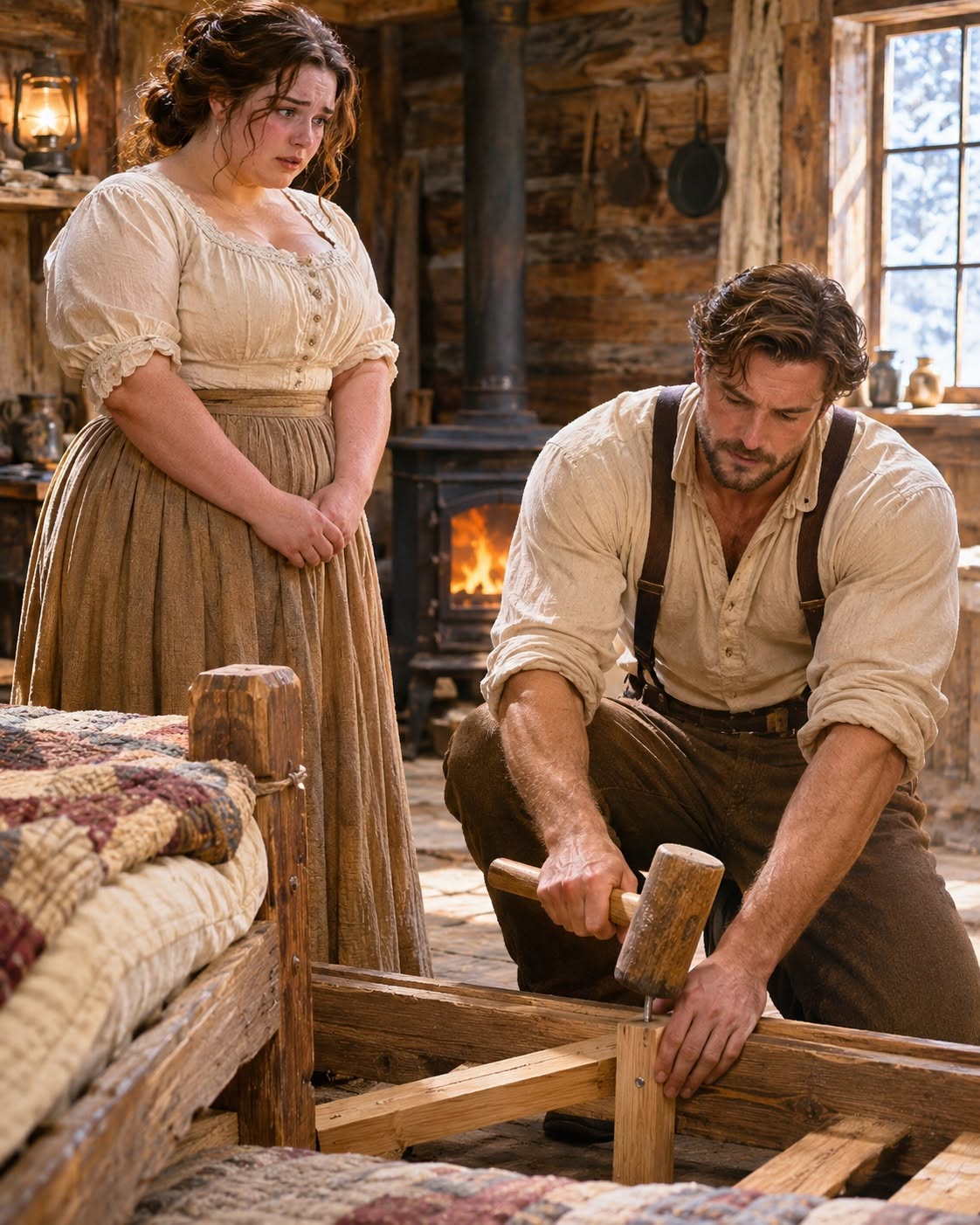
🏔️ PART 6: THE WOMAN THEY CALLED A BURDEN BECAME THE ONE WHO SAVED THEM ALL
The next morning, the old family house was crowded.
Samuel Pike had arrived from Wyoming. Two local attorneys had been summoned, and Margaret had agreed to give a formal statement about the forged deed.
Cora sat at the dining table with her mother’s notebook open before her.
She had barely slept.
Every page revealed another piece of the story.
The eastern property contained the main spring, but the water flowed beneath several neighboring farms. Years earlier, the families had signed an agreement guaranteeing access to the water.
Her mother had preserved the original records.
Thomas had attempted to transfer the land to Granger’s company.
And Granger had hoped that once the property belonged to him, he could challenge the old agreement.
But the notebook contained something else.
A letter dated eleven months before Cora’s wedding.
It was addressed to Thomas.
You promised that the families would retain access to the spring. I will not allow you to sell the land in secret. If you continue, I will make the original agreement public.
Cora read it twice.
“Mother confronted him.”
Samuel nodded.
“And that may explain why the documents were hidden.”
Wyatt stood near the window.
“There’s another problem.”
Cora looked up.
“What?”
“Granger’s men have already been surveying the eastern property. If they begin construction before the ownership dispute is settled, they could damage the old water channels.”
Samuel closed the notebook.
“Then we must stop them through the proper authorities.”
Thomas, who had been sitting silently near the fireplace, suddenly laughed.
“You think a few old papers will stop a company with money, lawyers, and friends in every office?”
Cora looked at him.
“Perhaps not. But the truth might.”
Thomas stood.
“You have no idea how business works.”
“I know how a promise works.”
He shook his head.
“You sound just like your mother.”
For the first time, Cora considered that a compliment.
“Thank you.”
Thomas stared at her.
Then he turned and left the room.
That afternoon, Cora and Wyatt traveled with Samuel to meet several families who lived near the eastern property.
The first was an elderly farmer named Mr. Bell, who remembered Cora’s mother.
“She came out here herself,” he said, sitting on his porch. “Carried those papers in a little leather case. Told us nobody should have to beg for water that ran beneath their own land.”
“Did she ask you to sign an agreement?” Cora asked.
“She did. And I signed it.”
He went inside and returned with an old copy.
The signature was faded, but it was unmistakable.
One by one, other families came forward.
Some had copies of the agreement.
Others remembered the meetings.
A few had letters from Cora’s mother explaining the arrangement.
By sunset, Samuel had gathered enough testimony to challenge Granger’s claim.
But the most important witness had not yet spoken.
Margaret.
That evening, she confessed that she had seen Thomas copying Cora’s signature months before the marriage.
“I was afraid,” Margaret said. “He told me I would lose everything if I spoke.”
Cora took her sister’s hand.
“You don’t have to protect him anymore.”
Margaret looked down.
“I should have told you sooner.”
“You were afraid. I understand.”
The sisters sat together in the greenhouse until the lantern burned low.
For the first time in years, they were no longer competing for their father’s approval.
They were standing together.
The hearing resumed three days later.
This time, the courtroom was filled with farmers, witnesses, and reporters from the local paper.
Silas Granger arrived with two attorneys.
Thomas sat beside him.
Neither man looked particularly worried.
Until Samuel Pike began presenting the evidence.
First came the original inheritance record.
Then the family solicitor’s statement.
Then the water agreement, bearing the signatures of the neighboring families.
Finally, Samuel placed the notebook on the table.
“This record demonstrates that Mr. Granger’s company knew about the existing water agreement before attempting to purchase the property.”
Granger’s attorney stood.
“We question the authenticity of this notebook.”
Samuel nodded.
“Then perhaps the court would like to hear from the person who witnessed its creation.”
The courtroom doors opened.
An elderly woman entered, leaning on a polished cane.
Cora recognized her immediately.
Mrs. Eleanor Whitcomb.
Her mother’s former solicitor.
The woman who had prepared the original inheritance papers.
She walked to the witness stand.
“I prepared the documents myself,” she said. “And I can confirm that Mrs. Hayes placed the eastern property in her daughter’s name.”
Thomas looked stunned.
Mrs. Whitcomb continued.
“I also witnessed the water agreement. Mr. Granger was present when it was signed.”
Granger’s attorney rose again.
“Are you certain?”
The old woman looked directly at him.
“I have spent thirty years keeping records. I do not confuse signatures.”
She opened a leather folder.
Inside was the original deed.
The courtroom became silent.
Cora looked at the document.
There it was.
Her mother’s signature.
Her own name.
And the legal description of the eastern property.
The judge examined it carefully.
Then he looked toward Granger.
“Mr. Granger, did your company knowingly attempt to acquire property already subject to this agreement?”
Granger’s attorney requested a recess.
The judge refused.
“I have heard enough to require an immediate review of the disputed transfer. The sale is suspended pending further investigation. The original inheritance remains subject to the court’s protection, and the water agreement must be respected.”
 A wave of relieved whispers moved through the courtroom.
Thomas sat motionless.
Cora didn’t cheer.
She simply closed her eyes.
For years, she had imagined standing before her father and finally hearing him say he was proud of her.
But now she understood that his approval was no longer something she needed.
The hearing ended with the disputed deed referred for investigation.
Outside, reporters gathered around the courthouse steps.
One asked Cora how she had managed to uncover the truth.
She looked toward the farmers waiting nearby.
“I didn’t do it alone,” she said. “My mother left the records. My sister found them. People who remembered her came forward. And I finally stopped believing that I was incapable of speaking for myself.”
Wyatt stood a few steps away.
He didn’t interrupt.
When the crowd dispersed, Cora approached him.
“There’s something I need to ask you.”
He nodded.
“Ask.”
“When you first agreed to marry me, did you believe you could make me happy?”
Wyatt considered the question.
“I hoped I could give you a safe place. But I didn’t understand that safety without honesty wasn’t enough.”
Cora looked at him.
“And now?”
“Now I know I can’t decide what happiness looks like for you. I can only ask whether you still want me beside you while you build it.”
She was quiet for a long moment.
Then she reached for his hand.
“I want to go home.”
Wyatt’s expression softened.
“To the cabin?”
“To our cabin.”
He held her hand, but didn’t rush to answer.
“Then we’ll go home.”
The journey back to Wyoming took several days.
When they finally reached the mountain cabin, snow still covered the northern slopes, and the wooden porch creaked beneath their boots.
Cora stepped inside.
The reinforced bed stood exactly where Wyatt had repaired it months earlier.
She ran her fingers along the sturdy oak support.
Wyatt noticed.
“Still holding?”
She smiled.
“Better than ever.”
He looked toward the stove.
“I thought I’d make supper.”
“You?”
“I can manage beans.”
Cora laughed.
“Then perhaps I’ll supervise.”
That evening, they sat beside the fire.
There was no grand celebration. No expensive gifts. No promises that life would never become difficult again.
There was only warmth, a simple meal, and the quiet comfort of being somewhere she had chosen to stay.
After a while, Wyatt placed a small envelope on the table.
“What is this?”
“Something I should have given you earlier.”
Inside was a folded paper.
It was a deed.
Not to the eastern property.
To the small meadow beside the cabin.
Cora looked up.
“Wyatt, what is this?”
“Your name is on it.”
“Why?”
“Because I want you to have something here that belongs to you without anyone being able to question it.”
She studied the document.
“You don’t have to give me land to prove I belong here.”
“I know.”
He sat across from her.
“That’s why I’m giving it to you. Not because you need to earn a place in this house, but because you deserve to own something without asking anyone’s permission.”
Cora folded the paper carefully.
Then she looked at him.
“I want to make something of that meadow.”
“What?”
“A proper garden. Vegetables, herbs, fruit trees. Perhaps a small greenhouse.”
Wyatt smiled.
“Sounds like work.”
“Good. I’ve never been afraid of work.”
He nodded toward the window.
“Then I suppose I’ll have to build you a greenhouse.”
Cora laughed.
And this time, the sound filled the cabin without hesitation.
Spring arrived.
Cora planted the first seeds in the meadow.
Margaret visited from St. Louis and brought a collection of her mother’s old gardening books. The neighboring farmers began restoring the water channels under the supervision of the county inspector.
The investigation into Granger’s company continued, and Thomas eventually had to answer questions about the forged documents and the attempted sale.
He never offered Cora the apology she had once longed to hear.
But one afternoon, a letter arrived from him.
It contained only a few lines.
I never thought you would be capable of managing the property. I was wrong.
Cora read it, folded it, and placed it in a drawer.
It wasn’t forgiveness.
It wasn’t reconciliation.
But it was an admission.
And for now, that was enough.
Several weeks later, Wyatt found her standing in the garden, examining the new wooden fence.
“Something wrong?” he asked.
“One of the posts is leaning.”
“I’ll fix it.”
Cora shook her head.
“I can fix this one.”
Wyatt handed her the hammer.
She worked carefully, adjusting the post until it stood straight.
When she finished, she stepped back to inspect it.
Wyatt looked at the fence, then at her.
“Good work.”
Cora smiled.
“Thank you.”
He leaned against the gate.
“You know, when you first arrived, I thought I was bringing a stranger into my cabin.”
“And now?”
“Now I can’t imagine the place without you.”
Cora looked toward the little house, the garden, and the mountains rising beyond them.
For most of her life, other people had decided what she was worth.
Her father had called her a burden.
Society had treated her as someone who should be grateful for whatever kindness she received.
Even her first days with Wyatt had been shaped by the fear that she might take up too much space.
But the truth had been waiting for her all along.
She had never needed to become smaller to deserve love.
She had never needed to prove that she was useful before she could belong.
And she had never needed permission to build a life of her own.
Wyatt held the gate open.
“Coming inside?”
Cora looked at the meadow one last time.
Then she smiled.
“I’m already home.”
And for the first time, she didn’t say it because someone had invited her to stay. She said it because she had finally chosen where she belonged. ❤️