🔥 PART 3: THE NAME HIDDEN INSIDE THE OLD JOURNAL
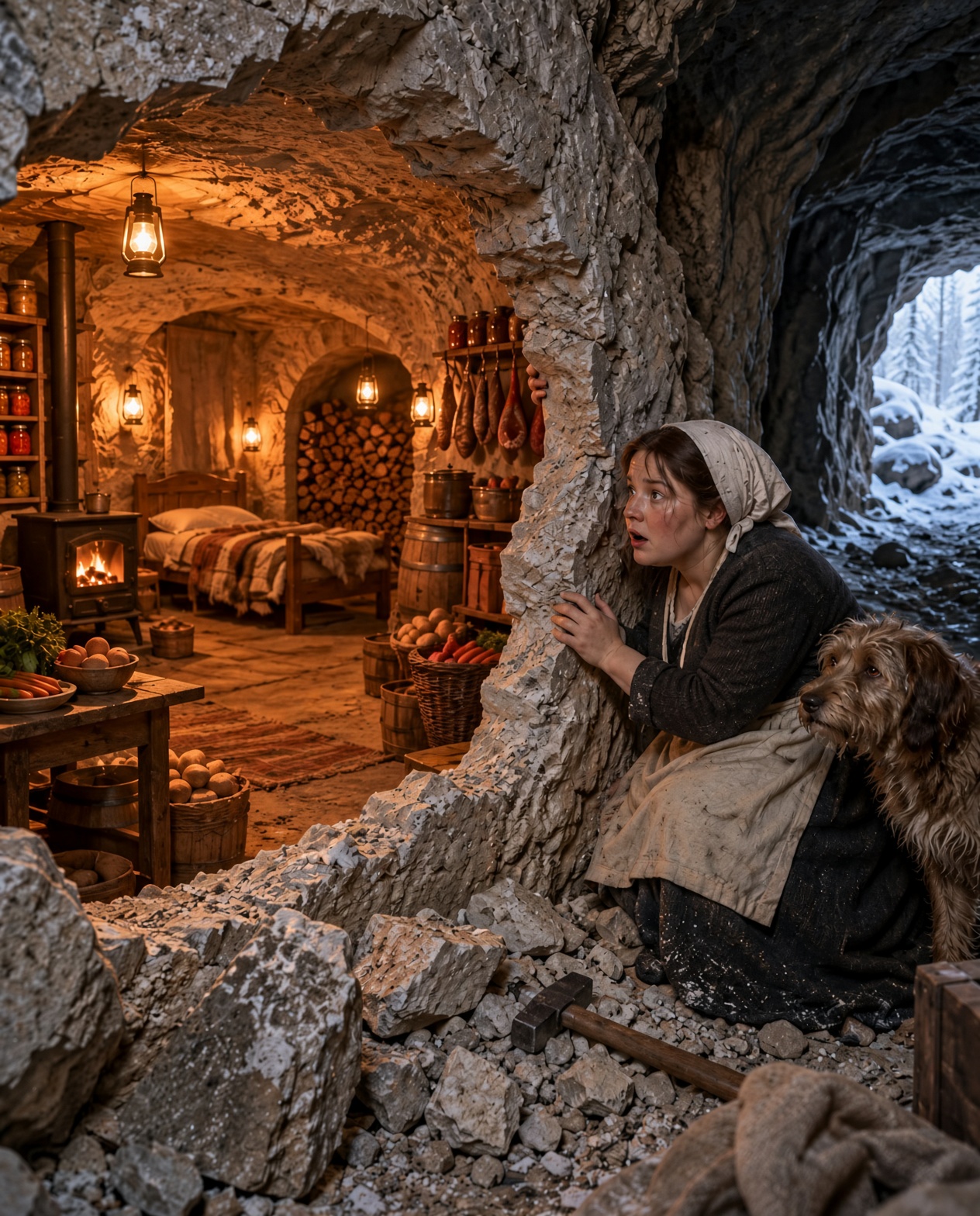
🔥 PART 3: THE NAME HIDDEN INSIDE THE OLD JOURNAL
Thessaly did not sleep that night.
She sat beside the cast-iron stove with the hammer across her lap and the old journal open on the table.
Every few minutes, she looked toward the concealed entrance.
The men had gone, but their words remained.
The papers might be here.
What papers?
She turned back to the first pages.
Jonah Bell had begun the journal in 1868, but several entries referred to an earlier event.
In March of that year, he had written:
The company offered me three hundred dollars for the ridge. I refused. They said no man should own water he cannot see.
A few pages later:
I met with the families from the valley. They understand now. If the spring is taken, every farm below the mountain will suffer.
Thessaly frowned.
The map had shown a spring beneath the ridge.
Perhaps the hidden house had been built to protect more than a family.
Perhaps it had been built to protect the spring itself.
She read on.
Amelia believes we should take the evidence to the county office. I fear the office is already in their hands.
Then another entry:
I have hidden the original agreement beneath the hearthstone. No one will think to look there.
Thessaly immediately rose.
She went to the fireplace.
The hearth was made of flat stones, some darkened by years of smoke.
She examined each one.
At the far right, a rectangular stone appeared slightly different from the others.
She pressed against it.
It shifted.
Using the chisel, she carefully lifted it.
Beneath lay a narrow cavity.
Inside was a wrapped bundle.
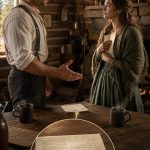
Thessaly removed it and placed it on the table.
The outer cloth had become brittle, but the papers inside were remarkably well preserved.
The first document was a hand-drawn survey.
The second was an agreement signed by several families in Newton County.
The third was a letter bearing the name of a man Thessaly recognized.
Elias Voss.
He had been the county surveyor in the 1860s.
Her father had spoken of him often.
Wells Ryland had once worked alongside Voss while surveying mineral deposits in the Ozarks.
Thessaly opened the letter.
Jonah,
I have examined the spring and confirmed your measurements. The water travels beneath the ridge and emerges in three separate valleys. If the company gains control of the upper property, they may attempt to divert the flow.
I will not approve their survey. The land must remain protected for the families who depend upon it.
Keep the original records safe.
Elias Voss.
Thessaly sat down.
Her father had known about this place.
Had he known Jonah Bell?
She searched her memory.
Years earlier, when she was a child, Wells had once returned from a surveying trip with a strange expression.
He had told her mother that certain men were trying to purchase land they did not understand.
When Thessaly asked what he meant, he had only answered:
“Some people see a mountain and think of what they can take from it. Others see the lives that depend upon it.”
She had never forgotten those words.
Now she wondered whether he had been referring to Jonah Bell.
The next morning, Thessaly packed some dried meat and cornmeal into her bag.
She could not remain in the cave indefinitely without knowing who the men were.
The journal mentioned a settlement called Mill Creek, several miles south of the ridge.
Perhaps someone there remembered Jonah.
She concealed the documents beneath her clothing and left the cave before sunrise.
The walk was difficult.
The autumn leaves had begun falling, covering the narrow paths with slippery layers. She used her father’s old walking stick to steady herself on the steep ground.
By noon, she reached a small settlement consisting of a general store, a blacksmith’s shop, a church, and several wooden houses.
The storekeeper was a broad-shouldered man named Amos Turner.
He looked up when she entered.
“Morning, ma’am.”
“Good morning. I’m looking for information about a man named Jonah Bell.”
Amos stopped arranging the jars on his shelf.
“Why?”
“I found something in a cave near Red Bone Ridge.”
His expression changed.
“Which cave?”
Thessaly described the opening.
Amos slowly put down the jar.
“You found the Bell place?”
“Was it known?”
“Not for a long time.”
He glanced toward the window.
“Come inside. We shouldn’t discuss that in the doorway.”
He led her to a small room behind the store.
“Jonah Bell was a carpenter,” he explained. “A clever one. Built houses, water channels, storage rooms. He came here with his wife, Amelia, and their little girl.”
“Do you know what happened to them?”
Amos shook his head.
“They disappeared in the winter of 1868. Some said they went west. Others said they died in the mountains.”
“Did anyone search for them?”
“Men from the mining company did. For months.”
Thessaly felt a chill.
“Why?”
“Jonah had refused to sell them the ridge. He knew about the spring and had proof that the company intended to claim it.”
Amos leaned forward.
“People said he had documents that could ruin the whole operation.”
Thessaly thought of the papers beneath her coat.
“Did the company ever get the land?”
“No. Not officially.”
“Who owns it now?”
Amos hesitated.
“That’s the strange part. The property records were changed twice. The original survey disappeared, and the company claimed the ridge was public land.”
“Who signed the new survey?”
“Silas Crowell.”
The name meant nothing to Thessaly.
But Amos continued.
“He was the company’s agent. A few years later, he bought the old mill and several farms near the spring. He still owns most of the land around here.”
Thessaly looked down.
The two men at the cave had mentioned papers.
Perhaps they worked for Crowell.
Perhaps they had discovered that the old house still existed.
She thanked Amos and started toward the door.
“Wait,” he said.
She turned.
“There’s something else. Jonah had a daughter.”
Thessaly remembered the name in the book.
“Eliza?”
Amos nodded.
“She would be about twenty now, if she survived.”
“Do you know where she went?”
“No. But there was a woman in town who helped Amelia before they disappeared. Her name was Ruth Bellamy. She lives beyond the old church.”
Thessaly thanked him again.
Then she made her way toward the church.
Ruth Bellamy was nearly seventy.
She opened the door slowly and studied Thessaly’s face.
“Can I help you?”
“My name is Thessaly Ryland. I’m looking for someone who knew Jonah and Amelia Bell.”
Ruth’s expression changed.
“Come in.”
The room smelled of tea and dried herbs.
Ruth listened carefully as Thessaly described the hidden house.
When she mentioned the journal, the old woman’s eyes filled with tears.
“So it’s still there.”
“You knew about it?”
“I helped Amelia prepare it.”
Thessaly leaned forward.
“Why did they hide?”
Ruth looked toward the window.
“Because Jonah discovered that the company had been diverting water from the spring. They were using it for their mining operation, and several families’ wells had begun running dry.”
“Did he confront them?”
“He threatened to take the evidence to the state authorities. They threatened him in return.”
Ruth folded her hands.
“Amelia was frightened for Eliza. So Jonah built the hidden house. He thought they could remain there until the trouble pᴀssed.”
“What happened to them?”
Ruth was quiet for a long moment.
“One night, Amelia came to me carrying the child. She said Jonah had gone to meet a man from the company and hadn’t returned.”
Thessaly’s heart тιԍнтened.
“Did he come back?”
“I don’t know. Amelia left the next morning. She said she was going to find family farther south.”
“Did she ever return?”
Ruth shook her head.
Then she reached beneath a small table and brought out a cloth-wrapped object.
“I’ve kept this for nineteen years.”
Inside was a small silver locket.
On its back was a simple engraving.
ELIZA BELL.
Thessaly stared at it.
“Why are you giving me this?”
“Because Amelia asked me to give it to the first person who found Jonah’s house and understood why it mattered.”
Ruth placed the locket in Thessaly’s palm.
“She said that person would know what to do with the truth.”
Thessaly felt the weight of the little object.
“Did Amelia say where she was going?”
Ruth nodded.
“Little Rock. She had a cousin there.”
Thessaly looked up.
“Do you know the cousin’s name?”
“Samuel Bell.”
She carefully tucked the locket away.
Now there was a living trail to follow.
By late afternoon, Thessaly was back on the ridge.
She approached the cave cautiously.
The outer entrance looked undisturbed.
But as she stepped inside, she noticed something wrong.
Her blanket had been moved.
The food bag was open.
And the stones she had carefully arranged beside the hidden doorway had been scattered across the floor.
Someone had entered the house.
Thessaly rushed toward the opening.
Inside, the table had been overturned.
The journal lay on the floor.
The storage chest stood open.
And the bundle of documents was gone.
She searched the room frantically.
The survey.
The water agreement.
The letter from Elias Voss.
All missing.
Then she noticed a small piece of paper beneath the iron key.
She picked it up.
The message contained only one sentence.
LEAVE THE RIDGE BEFORE THE NEXT SUNSET, OR YOU WILL DISAPPEAR JUST LIKE JONAH BELL.
Thessaly’s fingers trembled.
For a moment, fear nearly overcame her.
She was alone in the mountains.
She had no money to hire protection, no family nearby, and only a few cartridges for her rifle.
But then she looked at the old medical dictionary lying on the table.
Inside its pages was a note Merritt had written years earlier.
Knowledge is not meant to be hidden when it can save someone.
Thessaly closed the book.
She had spent months believing survival meant keeping her head down and avoiding trouble.
But now she understood why the hidden house had been built.
Jonah Bell had not hidden those papers because he wanted to keep them forever.
He had hidden them until someone could bring them into the light.
Thessaly picked up the hammer.
She would not leave.
Not yet.
And somewhere beyond the ridge, two men were already preparing to return.
This time, they would not come merely to search for the house. They would come to make certain its last witness never reached town.