European police bust international gang specializing in stealing luxury cars.
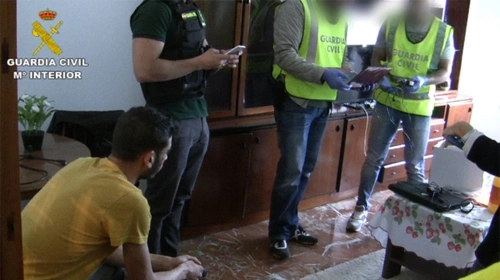
Italian, Spanish and Belgian authorities have dismantled an international criminal network accused of stealing high-end vehicles across Europe and smuggling them to Dubai for resale, exposing a sophisticated operation that allegedly targeted luxury cars in some of the continent’s most exclusive destinations.
The investigation, led by Italian police with support from Spanish and Belgian authorities, focused on a network believed to have stolen more than 100 expensive vehicles since early 2024. The cars were estimated by authorities to have a combined value of at least €3 million, according to Reuters.
The suspects allegedly operated across several countries, targeting vehicles in wealthy tourist areas including Forte dei Marmi and Cortina in Italy and Marbella in Spain. Among the main targets were Range Rover, Lexus and Toyota models.
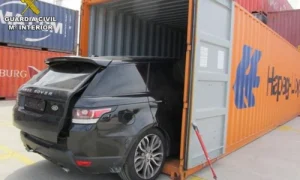
Investigators said the gang used a method that allowed members to identify potential targets well before the actual theft. Tracking devices were allegedly placed on selected vehicles so the suspects could monitor their movements and later determine the best opportunity to steal them.
Once a vehicle was taken, it was reportedly moved toward Belgium, where the criminal network allegedly attempted to make the cars more difficult to identify.
Authorities said the gang altered chᴀssis numbers and used fake or cloned license plates before transporting the vehicles through the port of Antwerp. From there, the stolen cars were shipped abroad, including to Dubai, where they were allegedly intended for resale.
The operation also relied on specialized equipment designed to overcome modern vehicle security systems. During the investigation, police seized devices used to clone car keys, equipment capable of interfering with alarms and GPS signals, and tools allegedly used to dismantle security transponders.
The use of such technology highlights the increasingly organized nature of luxury-car theft networks. Rather than simply stealing vehicles and immediately abandoning them, investigators said the suspects appeared to have developed a broader system involving surveillance, theft, transportation, modification and international resale.
The investigation involved cooperation between multiple European law-enforcement agencies. Eurojust and Europol ᴀssisted authorities as they followed the movement of vehicles and suspects across national borders. The international cooperation was considered important because the alleged criminal operation was not confined to a single country.
Police action targeted 24 suspects. According to the Carabinieri, six people were detained and another three were placed under house arrest during the operation. The suspects were mainly from Moldova, while others were reportedly from Russia, Romania and Ukraine.
Italian investigators also recovered four stolen vehicles along with electronic equipment and other materials allegedly connected to the operation.

Separate reporting from Italian media described a broader investigation known as “Operation Palma.” Italian authorities said the inquiry had identified roughly 100 luxury vehicles stolen in Italy and Spain, with local investigators estimating their value at more than €10 million. Italian reporting also said the investigation involved searches in several locations in Italy, Spain and Belgium.
The case illustrates the challenges faced by European authorities in combating organized vehicle theft. Luxury cars can be moved across borders relatively quickly, while cloned identification documents, altered chᴀssis numbers and sophisticated electronic equipment can make it harder for investigators and customs officials to determine a vehicle’s true origin.
For criminals, the international market can also create significant opportunities. A vehicle stolen in one European country can potentially be moved through several jurisdictions before reaching a buyer thousands of kilometres away, making cooperation between police forces essential.
Authorities are continuing to investigate the network and determine the full extent of its activities. The arrests represent a significant development in the case, but the investigation is expected to examine how the stolen vehicles were transported, who arranged their resale and whether additional people or organizations were involved.
The operation also demonstrates how the theft of luxury vehicles has evolved from opportunistic crime into an increasingly international business involving specialized technology and coordinated logistics.
As European police continue to dismantle cross-border car-theft networks, the case serves as another example of how stolen vehicles can move through complex international routes before reaching markets far from where they were originally taken.