Zakhar Biryukov: Surviving War, Rebuilding Life, and Defying the Limits of the Human Body

Introduction: The Life-Altering Blast
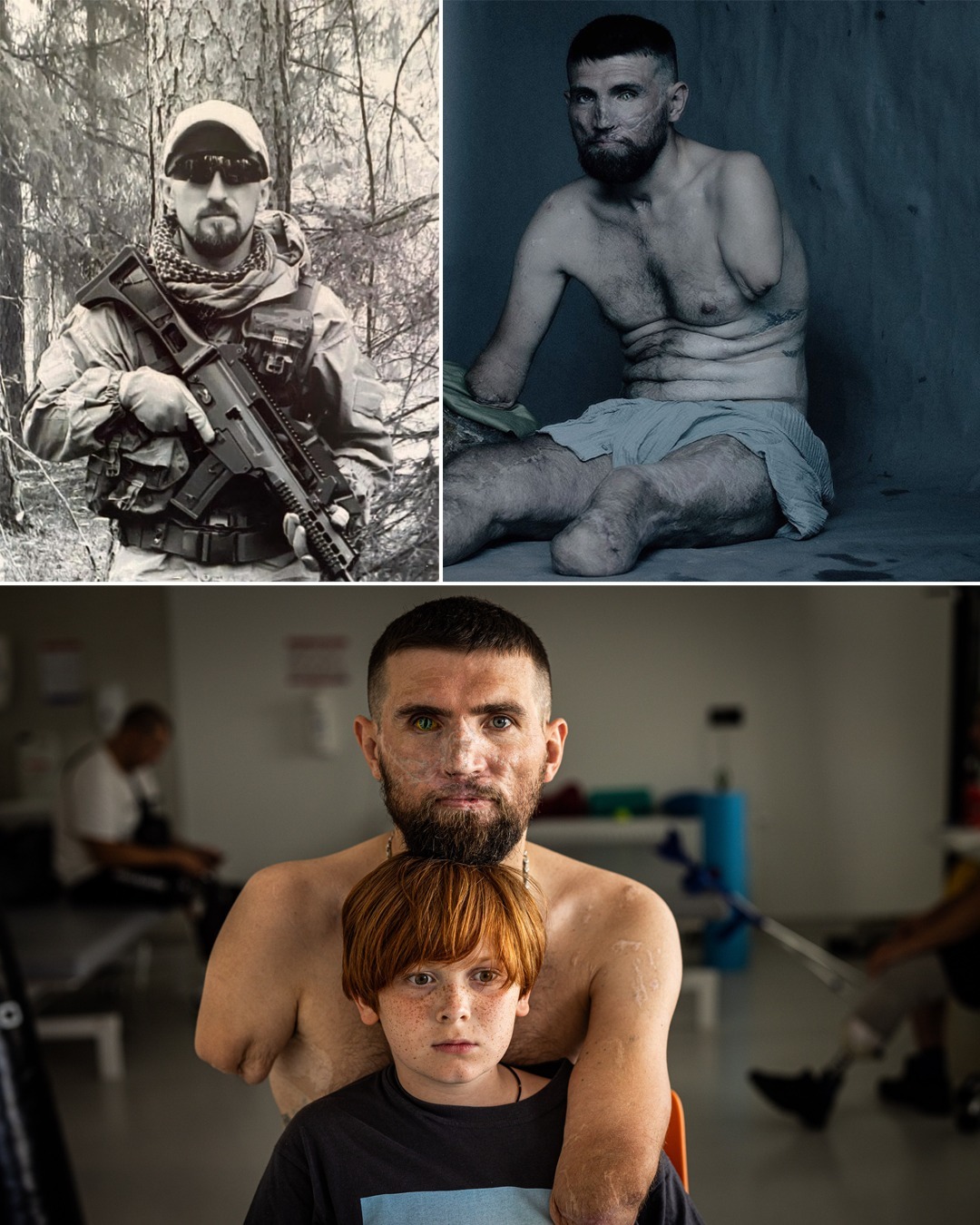
In July 2022, during the full-scale Russian invasion of Ukraine, a young soldier named Zakhar Biryukov faced an unimaginable ordeal. Serving on the frontlines since 2015, Zakhar had volunteered for duty, committed to defending his homeland. The artillery strike that would change his life forever did not discriminate: it destroyed both arms, his right leg, and the sight in one eye.
Survival was a miracle. Evacuated under extreme conditions, Zakhar was transported through field hospitals and emergency care centers in Ukraine before being moved to Germany for specialized treatment. His body had endured trauma that few could imagine, yet Zakhar’s will to survive proved stronger than the physical devastation he faced.
The Immediate Fight for Life
In the chaos following the blast, doctors had one primary objective: to stabilize Zakhar. Every procedure, every hour, was a battle against infection, hemorrhage, and organ failure. The surgeons worked tirelessly, often performing multiple operations in a single day, as the young soldier clung to life amid the wreckage of his body.
Every moment was critical. A misstep, a complication, or a delayed procedure could have meant death. Zakhar’s resilience was evident from the very beginning: despite unimaginable pain, he communicated with the medical team, insisted on staying conscious, and showed a willpower that inspired everyone around him.
Beyond Survival: The Journey of Rehabilitation
Survival was only the first step. Recovery meant starting from zero. Zakhar had to learn to live without limbs, relearn basic motor functions, and adapt to a new physical reality. Rehabilitation was grueling: prosthetic training, occupational therapy, and daily exercises became his world.

Psychological challenges compounded physical rehabilitation. Zakhar faced moments of despair, frustration, and fear of permanent disability. Yet his determination to reclaim independence pushed him forward. Every day, he trained with prosthetics, adapted to mobility aids, and strengthened his core resilience.
Rebuilding Independence
Learning to navigate the world with prosthetics is not merely physical—it is a profound psychological journey. Zakhar had to reestablish balance, coordination, and trust in his body. Simple tasks like eating, dressing, or writing required innovative techniques and immense patience.
Through relentless practice, he gradually regained autonomy. His determination became a beacon for fellow soldiers and patients in rehabilitation centers. He demonstrated that even when the body is broken almost completely, the human spirit can forge a path toward independence.
Education and Personal Growth
While undergoing physical rehabilitation, Zakhar also committed himself to intellectual and personal development. He enrolled in studies, exploring fields ranging from art to engineering. His commitment to growth reflected a philosophy that trauma does not define the entirety of one’s life; purpose and learning can coexist with healing.
Zakhar began creating art, using it as both therapy and expression. His artwork conveyed the struggle, resilience, and triumph that defined his recovery journey. Each piece became a narrative, a testimony to survival against extreme odds.
Climbing Mount Hoverla: A Symbol of Triumph
Zakhar’s achievements extended beyond rehabilitation exercises and classroom work. In a stunning testament to physical and mental perseverance, he climbed Mount Hoverla, the highest peak in Ukraine. This accomplishment symbolized more than physical endurance—it represented victory over adversity, the reclaiming of autonomy, and the affirmation of life after near-total devastation.

The climb required intricate planning, adaptive equipment, and relentless determination. Zakhar’s ability to conquer the peak, despite severe physical limitations, exemplified his refusal to be defined by injury.
The Psychological Dimension of Recovery
Physical recovery is intertwined with psychological resilience. Zakhar confronted trauma daily: flashbacks, fear, and anxiety were constant companions. Counseling, peer support, and self-discipline were critical in building the mental forтιтude necessary to continue forward.
His story highlights a key lesson: survival in the aftermath of catastrophic injury depends as much on psychological resilience as on physical therapy. Zakhar’s ability to maintain hope, set goals, and pursue meaning provided the foundation for his extraordinary recovery.
A Role Model for Others
Zakhar’s journey has inspired countless individuals, both in Ukraine and worldwide. Veterans, civilians, and patients with similar injuries look to his example as proof that life after trauma can be meaningful, productive, and filled with achievement.
By sharing his story, Zakhar demonstrates that resilience is cultivated, not given. It is the product of discipline, perseverance, and a refusal to surrender to circumstances.
The Importance of Community and Support
Zakhar’s recovery was supported by a network of medical professionals, family, and fellow soldiers. Each played a crucial role in enabling him to rebuild life from the wreckage of war. Support networks provide not only practical ᴀssistance but also emotional reinforcement, reminding survivors that they are not alone in their struggles.
Through collaboration with therapists, mentors, and friends, Zakhar created a holistic recovery path. His progress exemplifies how communal effort and encouragement can amplify personal determination.
Triumph Over Adversity
From surviving near-total bodily destruction to climbing Ukraine’s highest peak, Zakhar embodies the extraordinary potential of human resilience. His life demonstrates that even after catastrophic events, one can reclaim purpose, achieve independence, and inspire others.
The narrative of Zakhar Biryukov is one of courage, determination, and relentless perseverance. It is a story that transcends borders, reminding the world of the strength inherent in the human spirit.
Symbolism and Hope
Zakhar’s story is a powerful symbol of hope. It reminds us that even in the darkest circumstances, life can be reclaimed. Through effort, creativity, and courage, individuals can redefine their limitations, achieve extraordinary feats, and inspire others to pursue their own paths of resilience.
Conclusion: The Indomitable Human Spirit
Zakhar Biryukov’s experience is a testament to the limits humans can overcome when determination meets opportunity. Surviving a blast that destroyed most of his body, navigating extensive medical interventions, rebuilding independence, and achieving personal triumphs like climbing Mount Hoverla, his story illustrates that physical destruction does not equate to spiritual or emotional defeat.
His journey affirms that a broken body can coexist with a resilient spirit, that adversity can be transformed into purpose, and that even in the aftermath of near-total devastation, life can flourish. Zakhar’s legacy is not only personal—it is universal, offering hope, inspiration, and a blueprint for overcoming obstacles that appear insurmountable.