A Message on a Classroom Board That Became a Criminal Case
A Message on a Classroom Board That Became a Criminal Case
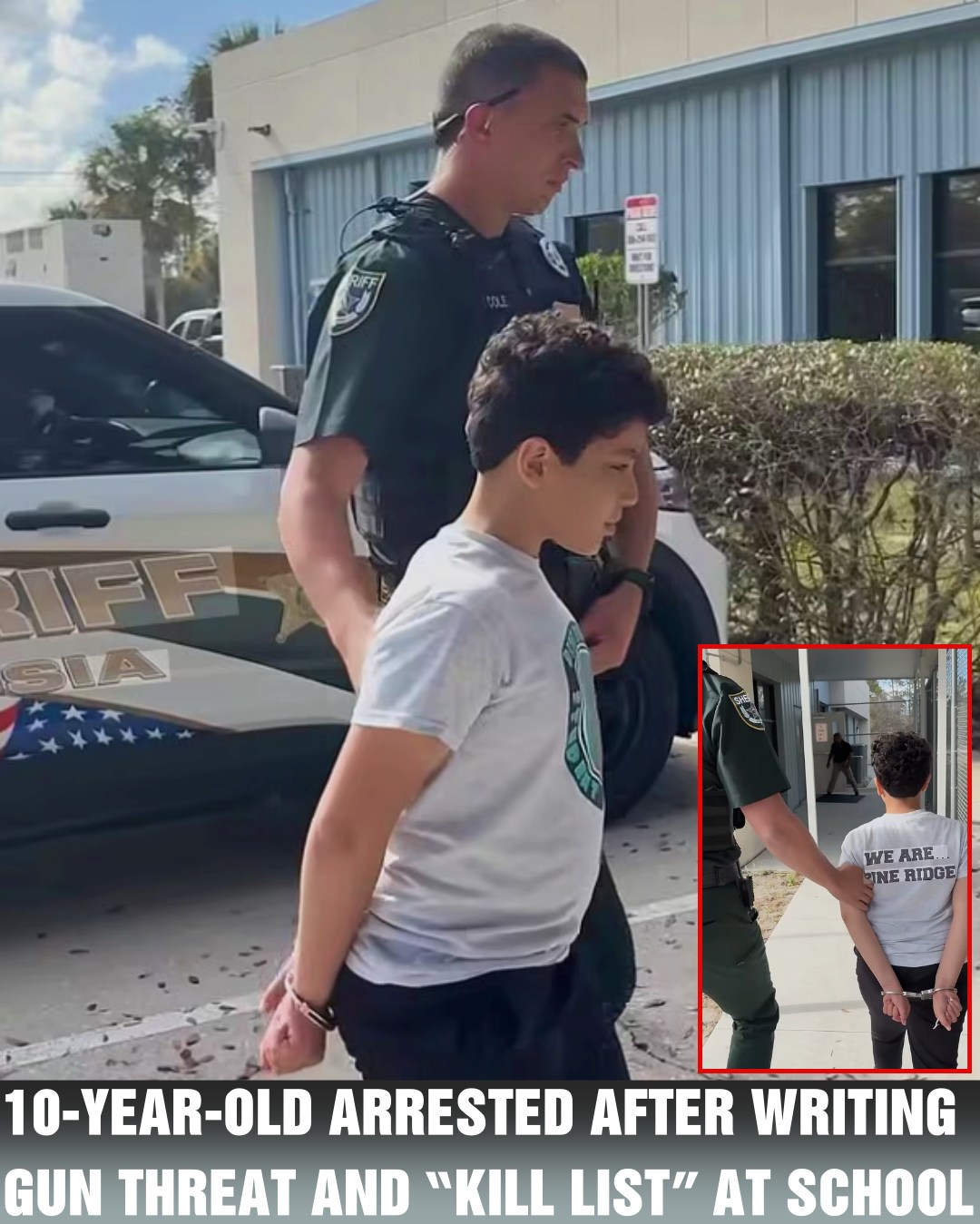
At Pride Elementary School in Florida, a concerning incident involving a 10-year-old student has led to a formal criminal case and renewed discussion about how schools respond to threats of violence.
According to investigators, the situation began when the student allegedly wrote a message indicating an intention to bring a firearm to school. While such statements are sometimes initially interpreted as immature behavior or attention-seeking, the situation escalated after school officials conducted a closer review of the student’s belongings.
Inside the student’s desk, authorities reportedly discovered a written list containing the names of three individuals, alongside language suggesting intent to kill them. This discovery significantly elevated the seriousness of the situation and prompted immediate involvement from law enforcement.
The student was taken into custody and charged with making a written threat to kill, which is classified as a felony offense under Florida law. The charge reflects the legal system’s approach to threats made in school environments, particularly when specific individuals are named.
 During questioning, the child reportedly stated that the message was not meant to be taken literally and that he “didn’t mean it.” His parents also told authorities that he did not have access to firearms. Despite these claims, investigators proceeded with the case based on the content of the written materials and the potential risk they represented.
The incident triggered a broader safety response within the school community. Administrators and law enforcement worked together to assess any ongoing risk and ensure the safety of students and staff. Even in cases where intent is unclear, schools are required to treat written threats with seriousness to prevent potential harm.
The case has left many in the school community shaken, as it involved a very young student and unfolded within an environment typically associated with safety and learning. It also highlights the increasing challenges schools face in distinguishing between impulsive statements and credible threats.
As the legal process continues, authorities will evaluate the circumstances surrounding the student’s actions, including intent, context, and risk factors. The outcome will likely depend on both legal standards and broader considerations involving juvenile justice.
Beyond the courtroom, the incident has sparked broader reflection on how children process emotions, conflict, and communication in school settings. It raises difficult questions about intervention, prevention, and the responsibility of both schools and families in addressing early warning signs.
While the case is still unfolding, one fact is clear: a written message, regardless of intent, was enough to trigger a full criminal investigation and reshape an entire school’s sense of security.