A Lifeline for Timmy: The High-Stakes Rescue of a Stranded Humpback Whale in Germany
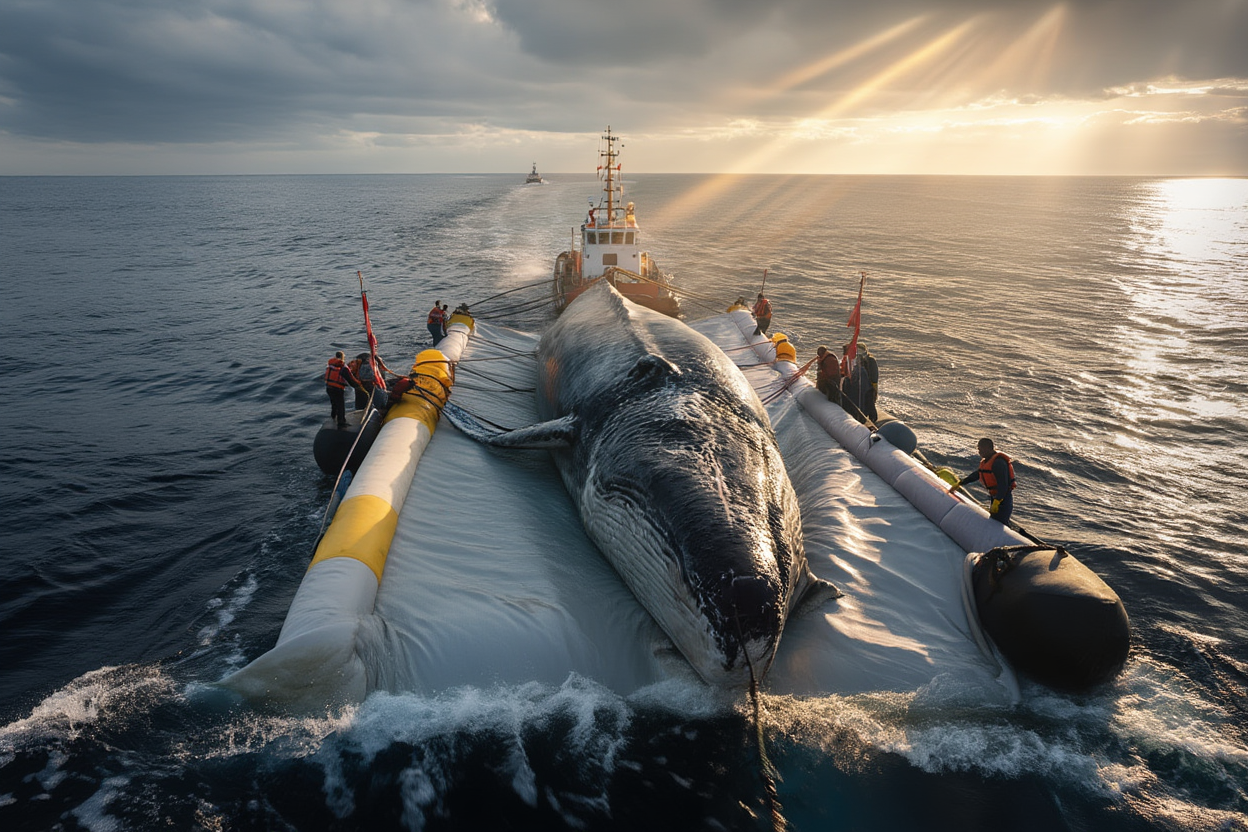
A Lifeline for Timmy: The High-Stakes Rescue of a Stranded Humpback Whale in Germany
A high-stakes and deeply emotional rescue mission is unfolding off the coast of Germany as the country rallies together to save a stranded humpback whale nicknamed “Timmy.” The 13.5-meter whale has been trapped in the shallow waters near Wismar for weeks, stirring up intense national attention and drawing concern from marine experts, animal welfare advocates, and the general public alike.
Timmy’s struggle began when he became stranded in the Baltic Sea, far from his natural migratory path, causing immense distress. Efforts to free him have been nothing short of Herculean. Police boats and excavators were deployed in previous attempts to lift the whale from the shallow water, but each endeavor ended in frustration and failure. The situation was growing dire, and the hope of saving Timmy was fading fast.
A Bold New Plan: Industrial-Grade Air Cushions and Pontoons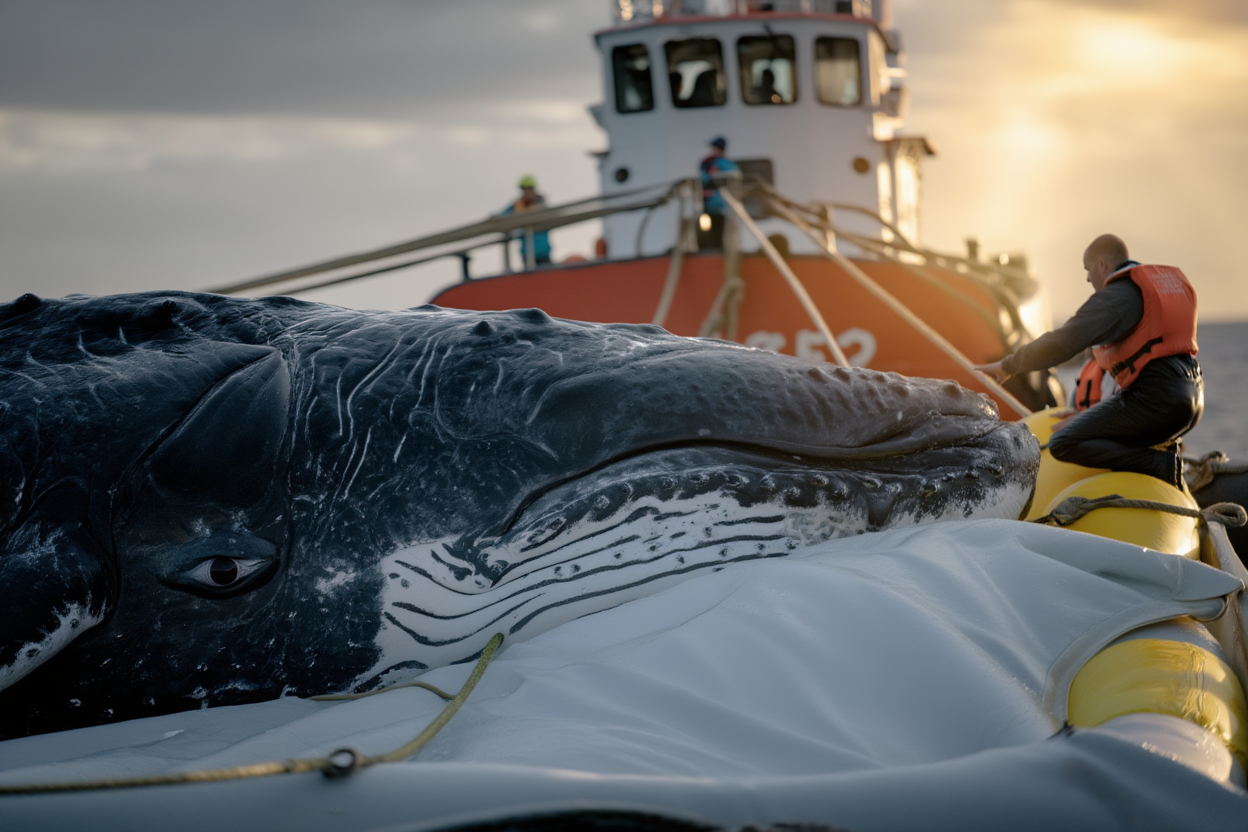
Faced with what seemed like an impossible task, marine experts and rescue teams have developed a world-first plan to transport the massive creature back to the open ocean. The rescue effort has taken an innovative turn, incorporating industrial-grade air cushions to gently lift the whale. These specialized cushions are positioned under Timmy, providing the lift needed to carefully raise the whale without causing further injury or stress.
Once lifted, the whale will be placed on a specialized tarp, which is then secured to two pontoons. A tugboat will tow the pontoons, guiding Timmy toward deeper waters. The goal: to bring the whale back to the North Sea, and ultimately, the Atlantic Ocean, where he can continue his journey and regain his health.
This approach is groundbreaking in marine rescue technology. Using air cushions as a method of lifting large mammals is a significant step forward, allowing for more controlled and precise movements, reducing the risk of physical trauma that previous methods may have caused. The operation, which has never been attempted on this scale before, is described as a race against time. Timmy, though still weak and injured, is said to have “life in him,” making this rescue mission his last, best chance for survival.
The Risks: A Carefully Planned Operation
The plan to lift and tow Timmy has been approved by state officials, who understand the significant risks involved. While the technology offers a promising way to rescue large marine animals, it remains a complex and delicate operation. Rescuers must carefully monitor the whale’s condition as they lift and move him, ensuring that the effort does not exacerbate his injuries or put unnecessary strain on his body.
In addition to the physical challenges, the rescue team faces unpredictable weather conditions and the logistical hurdles of navigating shallow coastal waters and then safely towing the whale toward the vast expanses of the open sea.
However, experts believe that with the right conditions, Timmy may have a real chance of returning to his natural habitat. The technology employed in this mission could revolutionize future marine mammal rescues, offering new hope for stranded creatures who otherwise may not have survived.
A Moment of Unity: The World Watches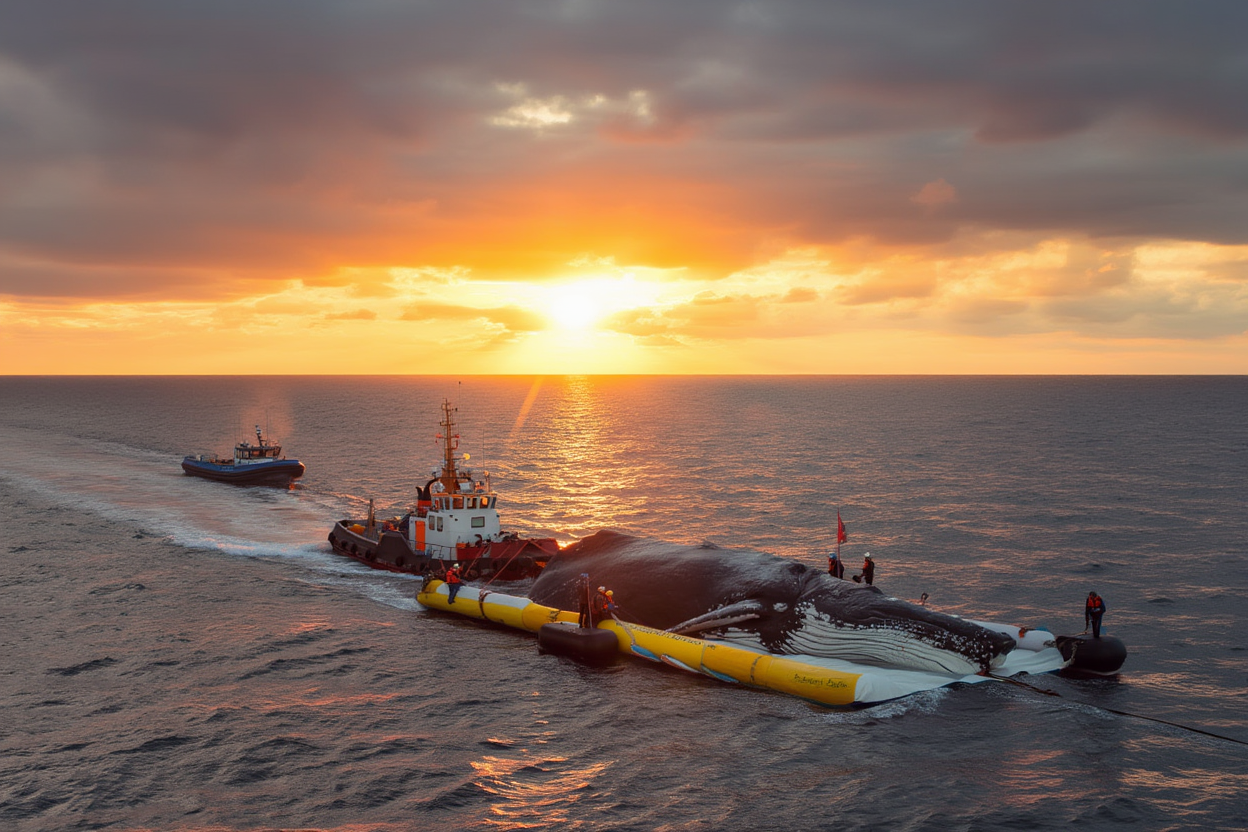
As the mission unfolds, millions across Europe are closely following the rescue. Live updates are being broadcasted, and the nation has united in its hope for a successful outcome. The operation, led by private entrepreneurs and supported by the state environment ministry, has become a symbol of determination and innovation, as well as the global commitment to marine conservation.
Timmy’s plight is not just a local issue; it has captured the hearts of many. His rescue mission has brought attention to the increasing number of marine mammals in distress due to oceanic challenges like pollution, habitat loss, and climate change. The use of air cushions and pontoons to rescue this magnificent creature could very well set a precedent for future marine rescues, offering a more humane and effective method for assisting large whales and other stranded animals.
The Final Stretch: Will Timmy Find His Way Home?
As the tugboat begins its journey, towing Timmy toward the deep, open waters, all eyes are on this monumental rescue operation. State officials, marine biologists, and the public are all holding their breath, hoping that Timmy will successfully navigate this final stretch and find his way back to the wild.
This story has become much more than just a rescue. It is a reminder of human ingenuity, hope, and the bond between humans and the natural world. For all those involved in Timmy’s rescue, this mission represents a moment of triumph over adversity, a symbol of the lengths we will go to protect the creatures of our planet.
As the world waits for Timmy to find his way home, we can only hope that this remarkable rescue mission will be remembered as a success—a beacon of hope for marine conservation and the future of wildlife rescue efforts.